Continental philosophy: Cioran to Gorz
- 1
 PhilosopherModern European1911 – 1995
Emil Cioran
Emil Mihai Cioran was a Romanian philosopher, aphorist, and essayist who published works in both Romanian and French. His work has been noted for its pervasive philosophical pessimism, style, and aphorisms.
Read the full pageEmil Mihai Cioran (; Romanian: [eˈmil tʃoˈran] ; French: [emil sjɔʁɑ̃]; 8 April 1911 – 20 June 1995) was a Romanian philosopher, aphorist, and essayist who published works in both Romanian and French. His work has been noted for its pervasive philosophical pessimism, style, and aphorisms. His works frequently engaged with issues of suffering, decay, nihilism, and antinatalism.
In 1937, Cioran moved to the Latin Quarter of Paris, which became his permanent residence, wherein he lived in seclusion with his partner, Simone Boué, until his death in 1995.
- 2
 PhilosopherModern European1913 – 1960
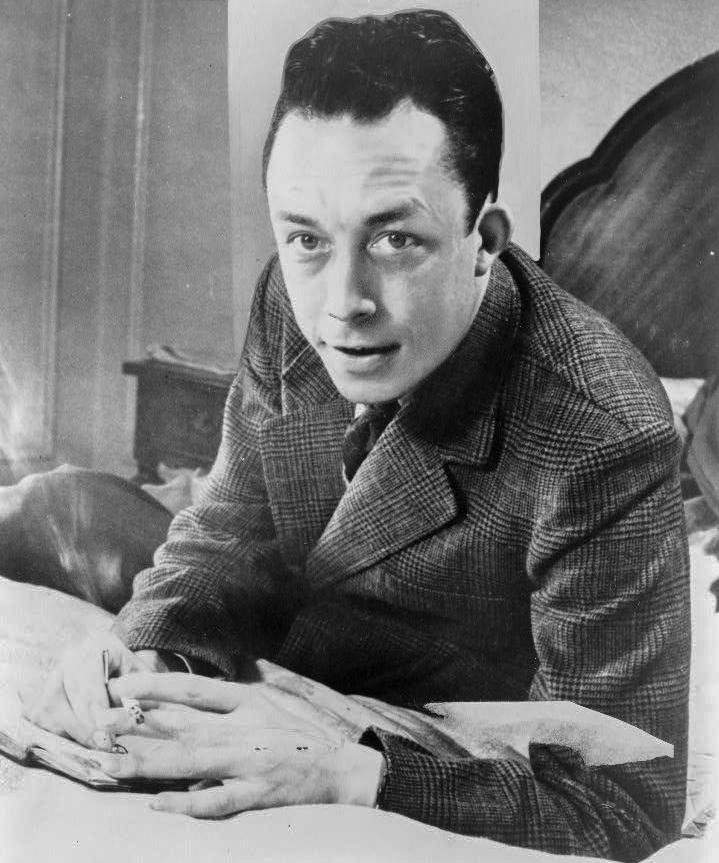
Albert Camus
Philosopher of the absurd: we must imagine Sisyphus happy.
- ◆The absurd
- ◆Revolt
- ◆Against suicide and nihilism
Read the full pageAlbert Camus ( kam-OO; French: [albɛʁ kamy] ; 7 November 1913 – 4 January 1960) was a French philosopher, writer, and political activist. He was the recipient of the 1957 Nobel Prize in Literature at the age of 44, the second-youngest recipient in history, and the first laureate in literature born in Africa. His works include The Stranger, The Plague, The Myth of Sisyphus, The Fall and The Rebel.
Camus was born in French Algeria to pied-noir parents. He spent his childhood in a poor neighbourhood and later studied philosophy at the University of Algiers. He was in Paris when the Germans invaded France during World War II in 1940. Camus tried to flee but finally joined the French Resistance where he served as editor-in-chief at Combat, an outlawed newspaper. After the war, he was a celebrity figure and gave many lectures around the world.
- 3
 PhilosopherModern European1913 – 2005
Paul Ricœur
Jean Paul Gustave Ricœur was a French philosopher best known for combining phenomenological description with hermeneutics. As such, his thought is within the same tradition as other major hermeneutic phenomenologists, such as Martin Heidegger, Hans-Georg Gadamer, and Gabriel Marcel.
- ◆hermeneutics
- ◆Subject
- ◆metaphor
- ◆Roman Jakobson
- ◆ff.
- ◆criticism of structuralism
Read the full pageJean Paul Gustave Ricœur (; French: [ʁikœʁ]; 27 February 1913 – 20 May 2005) was a French philosopher best known for combining phenomenological description with hermeneutics. As such, his thought is within the same tradition as other major hermeneutic phenomenologists, such as Martin Heidegger, Hans-Georg Gadamer, and Gabriel Marcel. In 2000, he was awarded the Kyoto Prize in Arts and Philosophy for having "revolutionized the methods of hermeneutic phenomenology, expanding the study of textual interpretation to include the broad yet concrete domains of mythology, biblical exegesis, psychoanalysis, theory of metaphor, and narrative theory."
Paul Ricœur was born in 1913 in Valence, Drôme, France, to Léon "Jules" Ricœur (23 December 1881 – 26 September 1915) and Florentine Favre (17 September 1878 – 3 October 1913), who were married on 30 December 1910 in Lyon. He came from a family of devout Huguenots (French Reformed Protestants), a religious minority in France.
- 4
 PhilosopherModern European1915 – 1980
Roland Barthes
Roland Gérard Barthes was a French literary theorist, essayist, philosopher, critic, and semiotician. His work engaged in the analysis of a variety of sign systems, mainly derived from Western popular culture.
- ◆Effect of reality
- ◆narrative
- ◆Texte lisible
- ◆texte scriptible
Read the full pageRoland Gérard Barthes (; French: [ʁɔlɑ̃ baʁt]; 12 November 1915 – 26 March 1980) was a French literary theorist, essayist, philosopher, critic, and semiotician. His work engaged in the analysis of a variety of sign systems, mainly derived from Western popular culture. His ideas explored a diverse range of fields, including structuralism, anthropology, literary theory, and post-structuralism, and influenced the development of multiple schools of theory.
Barthes is particularly notable for his 1957 essay collection Mythologies, which contained reflections on popular culture, and the 1967/1968 essay "The Death of the Author", which critiqued traditional approaches in literary criticism. During his academic career he was primarily associated with the École des Hautes Études en Sciences Sociales (EHESS) and the Collège de France.
- 5
 PhilosopherAmericas1921 – 2006
Murray Bookchin
Murray Bookchin was an American social theorist, author, orator, historian, and political philosopher. Influenced by the works of G.
- ◆Communalism
- ◆libertarian municipalism
- ◆social ecology
- ◆dialectical naturalism
Read the full pageMurray Bookchin (; January 14, 1921 – July 30, 2006) was an American social theorist, author, orator, historian, and political philosopher. Influenced by the works of G. W. F. Hegel, Karl Marx, and Peter Kropotkin, he was a pioneer in the environmental movement. Bookchin formulated and developed the theory of social ecology and urban planning within anarchist, libertarian socialist, and ecological thought. He was the author of two dozen books covering topics in politics, philosophy, history, urban affairs, and social ecology. Among the most important were Our Synthetic Environment (1962), Post-Scarcity Anarchism (1971), The Ecology of Freedom (1982), and Urbanization Without Cities (1987). In the late 1990s, he became disenchanted with what he saw as an increasingly apolitical "lifestylism" of the contemporary anarchist movement, stopped referring to himself as an anarchist, and founded his own libertarian socialist ideology called "communalism", which seeks to reconcile and expand Marxist, syndicalist, and anarchist thought.
Bookchin was a prominent anti-capitalist, anti-fascist and advocate of social decentralization along ecological and democratic lines. His ideas have influenced social movements since the 1960s, including the New Left, the anti-nuclear movement, the anti-globalization movement, Occupy Wall Street, and the democratic confederalism of the Democratic Autonomous Administration of North and East Syria (Rojava). He was a central figure in the American green movement. An autodidact who never attended college, he is considered to be one of the most important left theorists of the twentieth century.
- 6
 PhilosopherModern European1921 – 2026
Edgar Morin
Edgar Morin was a French philosopher and sociologist of the theory of information who has been recognised for his work on complexity and complex thought, and for his scholarly contributions to such diverse fields as media studies, politics, sociology, visual anthropology, ecology, education, and systems biology. He hel
- ◆Ludwig von Bertalanffy
- ◆systems theory
- ◆structuralism
- ◆François Dosse
- ◆Paradigm
- ◆Polycrisis
Read the full pageEdgar Morin (; French: [ɛdɡaʁ mɔʁɛ̃]; né Nahoum; 8 July 1921 – 29 May 2026) was a French philosopher and sociologist of the theory of information who has been recognised for his work on complexity and complex thought, and for his scholarly contributions to such diverse fields as media studies, politics, sociology, visual anthropology, ecology, education, and systems biology. He held two bachelors degrees, one in history and geography and one in law, and never did a Ph.D.
During his academic career, Morin was primarily associated with the École des hautes études en sciences sociales (EHESS) in Paris. Although less well known in the Anglophone world due to the limited availability of English translations of his over 60 books, Morin is renowned in the French-speaking world, Europe, and Latin America.
- 7
 PhilosopherModern European1922 – 1997
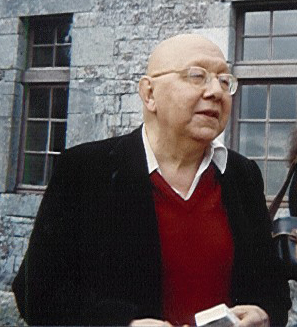
Cornelius Castoriadis
Cornelius Castoriadis was a Greek-French philosopher, sociologist, social critic, economist, psychoanalyst, author of The Imaginary Institution of Society, and co-founder of the Socialisme ou Barbarie collective. His writings on autonomy and social institutions have been influential in both academic and activist circle
- ◆project of autonomy
- ◆imaginary
- ◆social institution
- ◆imagination
- ◆social imaginary
- ◆significations
Read the full pageCornelius Castoriadis (Greek: Κορνήλιος Καστοριάδης; 11 March 1922 – 26 December 1997) was a Greek-French philosopher, sociologist, social critic, economist, psychoanalyst, author of The Imaginary Institution of Society, and co-founder of the Socialisme ou Barbarie collective.
His writings on autonomy and social institutions have been influential in both academic and activist circles.
- 8PhilosopherModern European1922 – 2006
Alexander Zinoviev
Alexander Alexandrovich Zinoviev was a Soviet philosopher, writer, sociologist and journalist. Coming from a poor peasant family, a participant in World War II, Alexander Zinoviev in the 1950s and 1960s was one of the symbols of the rebirth of philosophical thought in the Soviet Union.
- ◆Laws of sociality
- ◆Communality
- ◆[[#Cheloveynik
- ◆Westernism and Super-Society
- ◆Cheloveynik]]
- ◆Super-society
Read the full pageAlexander Alexandrovich Zinoviev (Russian: Алекса́ндр Алекса́ндрович Зино́вьев; 29 October 1922 – 10 May 2006) was a Soviet philosopher, writer, sociologist and journalist.
Coming from a poor peasant family, a participant in World War II, Alexander Zinoviev in the 1950s and 1960s was one of the symbols of the rebirth of philosophical thought in the Soviet Union. After the publication in the West of the screening book Yawning Heights, which brought Zinoviev world fame, in 1978 he was expelled from the country and deprived of Soviet citizenship. He returned to Russia in 1999.
- 9PhilosopherModern European1922 – 2017
Karl-Otto Apel
Karl-Otto Apel was a German philosopher and Professor Emeritus at the University of Frankfurt am Main. He specialized in the philosophy of language and was thus considered a communication theorist.
- ◆Transcendental pragmatics
Read the full pageKarl-Otto Apel (; German: [ˈaːpl̩]; 15 March 1922 – 15 May 2017) was a German philosopher and Professor Emeritus at the University of Frankfurt am Main. He specialized in the philosophy of language and was thus considered a communication theorist. He developed a distinctive philosophical approach which he coined transcendental pragmatics.
Apel grew up during the political crises of the Weimar Republic. In 1940, he was a war volunteer with his entire graduating class. After the Second World War, Apel studied from 1945 to 1950 at the University of Bonn, first history and intellectual history, before he committed himself as a student of Erich Rothacker to philosophy. In 1950, he received his doctorate from Bonn with a thesis on Martin Heidegger.
- 10
 PhilosopherModern European1922 – 2010
Pierre Hadot
Pierre Hadot was a French philosopher and historian of philosophy specializing in ancient philosophy, particularly Neoplatonism, Epicureanism and Stoicism.
- ◆Ancient Greek philosophy
- ◆bios
- ◆Internet Encyclopedia of Philosophy
Read the full pagePierre Hadot (, French: [pjɛʁ ado]; 21 February 1922 – 24 April 2010) was a French philosopher and historian of philosophy specializing in ancient philosophy, particularly Neoplatonism, Epicureanism and Stoicism.
In 1944, Hadot was ordained a Catholic priest, but following Pope Pius XII's encyclical Humani generis (1950) left the priesthood. He studied at the Sorbonne between 1946 and 1947. In 1961, he graduated from the École pratique des hautes études (EPHE). Hadot received his doctorat ès lettres from the Sorbonne in 1968 under Paul Henry (1906–1984), with a thesis on Porphyry and Gaius Marius Victorinus entitled Porphyre et Victorinus.
- 11
 PhilosopherModern European1923 – 2007
André Gorz
Gérard Horst, more commonly known by his pen names André Gorz (French: [ɑ̃dʁe ɡɔʁts]) and Michel Bosquet (French: [miʃɛl bɔskɛ]), was an Austrian-French social philosopher and journalist and critic of work. He co-founded Le Nouvel Observateur weekly in 1964.
- ◆Non-reformist reform
Read the full pageGérard Horst (French: [ʒeʁaʁ ɔʁst]; né Gerhart Hirsch, Austrian German: [ˈɡeːɐ̯hart hɪrʃ]; 9 February 1923 – 22 September 2007), more commonly known by his pen names André Gorz (French: [ɑ̃dʁe ɡɔʁts]) and Michel Bosquet (French: [miʃɛl bɔskɛ]), was an Austrian-French social philosopher and journalist and critic of work. He co-founded Le Nouvel Observateur weekly in 1964. A supporter of Jean-Paul Sartre's existentialist version of Marxism after World War II, he became more concerned with political ecology in the aftermath of the May 68 student riots.
In the 1960s and 1970s, he was a main theorist in the New Left movement and coined the concept of non-reformist reform. His central theme was wage labour issues such as liberation from work, the just distribution of work, social alienation, and a guaranteed basic income.