Confucianism
Moral self-cultivation through ritual, learning and humane relationships — the backbone of East Asian ethics and politics.
- 1
 SchoolChinese500 BCE – present
Confucianism
Moral self-cultivation through ritual, learning and humane relationships — the backbone of East Asian ethics and politics.
- ◆Ren — humaneness
- ◆Li — ritual propriety
- ◆The junzi (exemplary person)
- ◆Filial piety
- ◆Rectification of names
Read the full pageConfucianism grew from the teachings of Kongzi (Confucius), a minor official of the state of Lu who believed that the decline of his age could be reversed by reviving the rituals and virtues of the early Zhou dynasty.
At its heart is ren — humaneness or benevolence — expressed through li, the ritual forms that structure family, social and political life. The ideal person is the junzi, the exemplary or noble person, whose nobility comes from character rather than birth. Government should rule through virtue and example, not force and punishment.
- 2
 PhilosopherChinese551 – 479 BCE
Confucius
Teacher from Lu whose vision of humaneness, ritual and self-cultivation became the moral foundation of East Asian civilisation.
- ◆Ren — humaneness
- ◆Li — ritual propriety
- ◆The junzi, or exemplary person
- ◆Filial piety (xiao)
- ◆Rectification of names
- ◆Do not impose on others what you do not desire
Read the full pageKong Qiu, honoured as Kongzi ("Master Kong") and Latinised as Confucius, was born in the small state of Lu during a time of political chaos. He served briefly in government, then spent years travelling between states seeking a ruler who would put his ideas into practice. He never found one, and returned home to teach.
His sayings, collected by disciples in the Analects, centre on the cultivation of character. The key virtue is ren, humaneness — caring for others in the way appropriate to one's relationships. It is expressed and trained through li, ritual propriety, from ceremonies of state to everyday courtesies. Through study and practice anyone can become a junzi, an exemplary person, whose influence works like wind on grass.
- 3PhilosopherChinese551 – 479 BCE
Confucius
Teacher from Lu whose vision of humaneness, ritual and self-cultivation became the moral foundation of East Asian civilisation.
- ◆Ren — humaneness
- ◆Li — ritual propriety
- ◆The junzi, or exemplary person
- ◆Filial piety (xiao)
- ◆Rectification of names
- ◆Do not impose on others what you do not desire
Read the full pageKong Qiu, honoured as Kongzi ("Master Kong") and Latinised as Confucius, was born in the small state of Lu during a time of political chaos. He served briefly in government, then spent years travelling between states seeking a ruler who would put his ideas into practice. He never found one, and returned home to teach.
His sayings, collected by disciples in the Analects, centre on the cultivation of character. The key virtue is ren, humaneness — caring for others in the way appropriate to one's relationships. It is expressed and trained through li, ritual propriety, from ceremonies of state to everyday courtesies. Through study and practice anyone can become a junzi, an exemplary person, whose influence works like wind on grass.
- 4
 PhilosopherChinese505 – 435 BCE
Zengzi
Disciple of Confucius, credited with the Great Learning and the Classic of Filial Piety.
Read the full pageZeng Shen (505–435 BC), better known as Zengzi (Master Zeng), courtesy name Ziyu (子輿), was a Chinese philosopher and disciple of Confucius. He later taught Zisi (Kong Ji), the grandson of Confucius, who was in turn the teacher of Mencius, thus beginning a line of transmitters of orthodox Confucian traditions. He is revered as one of the Four Sages of Confucianism.
Zeng Shen was 46 years younger than Confucius. He was a native of South Wu City in the State of Lu, and was the son of Zeng Dian, one of the earliest disciples of Confucius.
- 5
 PhilosopherChinese372 – 289 BCE
Mencius
The "second sage" of Confucianism, who argued that human nature is good and contains sprouts of virtue.
- ◆Human nature is good
- ◆Four sprouts
- ◆The right to depose a tyrant
Read the full pageMencius (孟子, Mèngzǐ, MEN-shee-əs; c. 371 – c. 289 BC), born Meng Ke (孟軻), was a Chinese Confucian philosopher, often described as the Second Sage (亞聖) to reflect his traditional esteem relative to Confucius himself. He was part of Confucius's fourth generation of disciples, inheriting his ideology and developing it further. Living during the Warring States period, he is said to have spent much of his life travelling around the states offering counsel to different rulers. Conversations with these rulers form the basis of the Mencius, which would later be canonised as a Confucian classic.
One primary principle of his work is that human nature is righteous and humane. The responses of citizens to the policies of rulers embodies this principle, and a state with righteous and humane policies will flourish by nature. The citizens, if they enjoy freedom under good rulers, will willingly take the time to care for their families, learn to perform proper rites, and become better citizens. This placed him at odds with his near contemporary, Xunzi, who believed that human nature is evil.
- 6
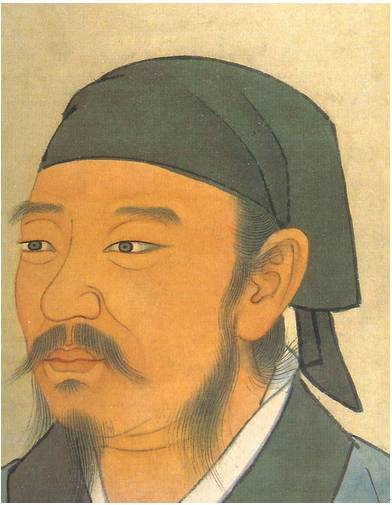 PhilosopherChinesec. 310 – 235 BCE
Xunzi
Confucian who held that human nature is bad and must be reformed by ritual and learning.
Read the full pageXunzi (荀子, Xúnzǐ, lit. 'Master Xun'; c. 310 – c. after 238 BCE), born Xun Kuang, was a late Warring States period Confucian Chinese philosopher, often ranked as the third great Confucian philosopher of antiquity after his predecessors Confucius and Mencius. By his time, Confucianism had suffered considerable criticism from Taoist and Mohist thinkers, and Xunzi is traditionally regarded as a synthesizer of these traditions with earlier Confucian thought. The result was a thorough and cohesive revision of Confucianism, which was crucial to the philosophy's ability to flourish in the Han dynasty and throughout the later history of East Asia. His works were compiled in the eponymous Xunzi, and survive in excellent condition. Unlike other ancient compilations, his authorship of these texts is generally secure, though it is likely that Western Han dynasty historian Liu Xiang organized them into their present form centuries after Xunzi's death.
Born in the state of Zhao, Xunzi studied at the prestigious Jixia Academy in Qi, where he learned about every major philosophical tradition of his time. After graduating, Xunzi traveled to Chu where he mastered poetry, returning to the academy as a highly regarded teacher. His students Han Fei and Li Si each had important political and academic careers, though some of their Legalist sentiments were at odds with his philosophy. Other students such as Fuqiu Bo, Zhang Cang and Mao Heng authored important editions and commentaries on the Confucian classics. Later in his life, Xunzi served in the court of Lord Chunshen and died sometime after Lord Chunshen's death. The constant warfare of his time informed his work profoundly, as did his interactions with leaders and witnessing the downfall of various states.
