Greek & Roman ideas, P–R
- 1ConceptGreek & Roman
Peripatetic school
The Peripatetic school (Ancient Greek: Περίπατος lit. 'walkway') was a philosophical school founded in 335 BC by Aristotle in the Lyceum in ancient Athens. It was an informal institution whose members conducted philosophical and scientific inquiries.
Read the full pageThe Peripatetic school (Ancient Greek: Περίπατος lit. 'walkway') was a philosophical school founded in 335 BC by Aristotle in the Lyceum in ancient Athens. It was an informal institution whose members conducted philosophical and scientific inquiries. The school fell into decline after the middle of the 3rd century BC, but had a revival in the Roman Empire.
The term peripatetic is a transliteration of the Ancient Greek word peripatētikós, meaning 'of walking' or 'given to walking about'. The Peripatetic school, founded by Aristotle, was actually known simply as the Peripatos. Aristotle's school came to be so named because of the peripatoi ('walkways', some covered or with colonnades) of the Lyceum where the members met. The legend that the name came from Aristotle's alleged habit of walking while lecturing may have started with Hermippus of Smyrna.
- 2ConceptGreek & Roman
Phantasiai
In Hellenistic philosophy, phantasiai (φαντασίαι) are pieces of information received from sense experience. The Pyrrhonists, Epicureans, and Stoics use the term to refer to information received through the senses and arising in thoughts.
Read the full pageIn Hellenistic philosophy, phantasiai (φαντασίαι) are pieces of information received from sense experience. The Pyrrhonists, Epicureans, and Stoics use the term to refer to information received through the senses and arising in thoughts.
In Stoicism, the phantasiai represent pre-cognitive judgments originating from our previous experiences or our subconscious thinking. The founder of Stoicism, Zeno of Citium, suggested that the soul is imprinted by the senses much in the same way as a signet ring imprints its shape in soft wax; all psychological states and activities, such as mental assent, cognition, impulse, and knowledge are all either extensions or responses to phantasiai. According to Epictetus, the sage avoids doxa, a weak or false belief, by withholding assent when conditions do not permit a clear and certain grasp of the truth of a matter. Some phantasiai experienced in perceptually ideal circumstances, however, are so clear and distinct that they could only come from a real object; these were said to be kataleptikê (fit to grasp). The kataleptic phantasiai compels assent by its very clarity and represents the criterion of truth.
- 3ConceptGreek & Roman
Plank of Carneades
In ethics, the plank of Carneades is a thought experiment first proposed by the academic skeptic philosopher Carneades of Cyrene. It explores the concept of self-defense in relation to murder.
Read the full pageIn ethics, the plank of Carneades is a thought experiment first proposed by the academic skeptic philosopher Carneades of Cyrene. It explores the concept of self-defense in relation to murder.
In the thought experiment, there are two shipwrecked sailors, A and B. They both see a plank that can only support one of them and both of them swim towards it. Sailor A gets to the plank first. Sailor B, who is going to drown, pushes A off and away from the plank and, thus, proximately, causes A to drown. Sailor B gets on the plank and is later saved by a rescue team. The thought experiment poses the question of whether Sailor B can be tried for murder because if B had to kill A in order to live, then it would arguably be in self-defense.
- 4
 ConceptGreek & Roman
Plato's theory of soul
Plato's theory of the soul, which was inspired variously by the teachings of Socrates, considered the psyche (Ancient Greek: ψῡχή, romanized: psūkhḗ) to be the essence of a person, being that which decides how people behave. Plato considered this essence to be an incorporeal, eternal occupant of a person's being.
Read the full pagePlato's theory of the soul, which was inspired variously by the teachings of Socrates, considered the psyche (Ancient Greek: ψῡχή, romanized: psūkhḗ) to be the essence of a person, being that which decides how people behave. Plato considered this essence to be an incorporeal, eternal occupant of a person's being. Plato said that even after death, the soul exists and is able to think. He believed that as bodies die, the soul is continually reborn (metempsychosis) in subsequent bodies. Plato divided the soul into three parts: the logistikon (reason), the thymoeides (spirit, which houses anger, as well as other spirited emotions), and the epithymetikon (appetite or desire, which houses the desire for physical pleasures).
The Platonic soul consists of three parts, which are located in different regions of the body:
- 5
 ConceptGreek & Roman
Platonic love
Platonic love is a type of love which is friendly, affectionate, or even passionate, but sexual desire is nonexistent, suppressed or sublimated. The term is derived from the name of the Greek philosopher Plato, although modern use of the term does not necessarily refer to his idea of love.
Read the full pagePlatonic love is a type of love which is friendly, affectionate, or even passionate, but sexual desire is nonexistent, suppressed or sublimated.
The term is derived from the name of the Greek philosopher Plato, although modern use of the term does not necessarily refer to his idea of love. Plato's concept concerned spiritual growth, expressed using the metaphor of a ladder which the lover ascends. Physical attraction to a particular beautiful body is only at the bottom; as the lover ascends the ladder, a love for absolute beauty itself is the ultimate inspiration at the top.
- 6ConceptGreek & Roman
Pneuma
Pneuma (Ancient Greek: πνεῦμα, romanized: pneûma) is an ancient Greek word for "breath", and in a religious context for "spirit". It has various technical meanings for medical writers and philosophers of classical antiquity, particularly in regard to physiology, and is also used in Greek translations of ruach רוח in th
Read the full pagePneuma (Ancient Greek: πνεῦμα, romanized: pneûma) is an ancient Greek word for "breath", and in a religious context for "spirit". It has various technical meanings for medical writers and philosophers of classical antiquity, particularly in regard to physiology, and is also used in Greek translations of ruach רוח in the Hebrew Bible, and in the Greek New Testament.
In classical philosophy, it is distinguishable from psyche (Ancient Greek: ψυχή, romanized: psūkhḗ), which originally meant "breath of life", but is regularly translated as "spirit" or most often "soul".
- 7
 ConceptGreek & Roman
Porphyrian tree
In philosophy (particularly the theory of categories), the Porphyrian tree (also spelled Porphyrean tree) or Tree of Porphyry is a classic device for illustrating a "scale of being" (Latin: scala praedicamentalis), attributed to the 3rd-century CE Greek Neoplatonist philosopher and logician Porphyry, and revived throug
Read the full pageIn philosophy (particularly the theory of categories), the Porphyrian tree (also spelled Porphyrean tree) or Tree of Porphyry is a classic device for illustrating a "scale of being" (Latin: scala praedicamentalis), attributed to the 3rd-century CE Greek Neoplatonist philosopher and logician Porphyry, and revived through the translations of Boethius.
Porphyry suggests the tree in the Isagoge, his introduction to Aristotle's Categories. Porphyry presented Aristotle's classification of categories in a way that was later adopted into tree-like diagrams of two-way divisions, which indicate that a species is defined by a genus and a differentia and that this logical process continues until the lowest species is reached, which can no longer be so defined. No illustrations or diagrams occur in editions of Porphyry's original work; diagrams were eventually made, and became associated with the scheme that Porphyry describes, following Aristotle.
- 8
 ConceptGreek & Roman
Pre-existence
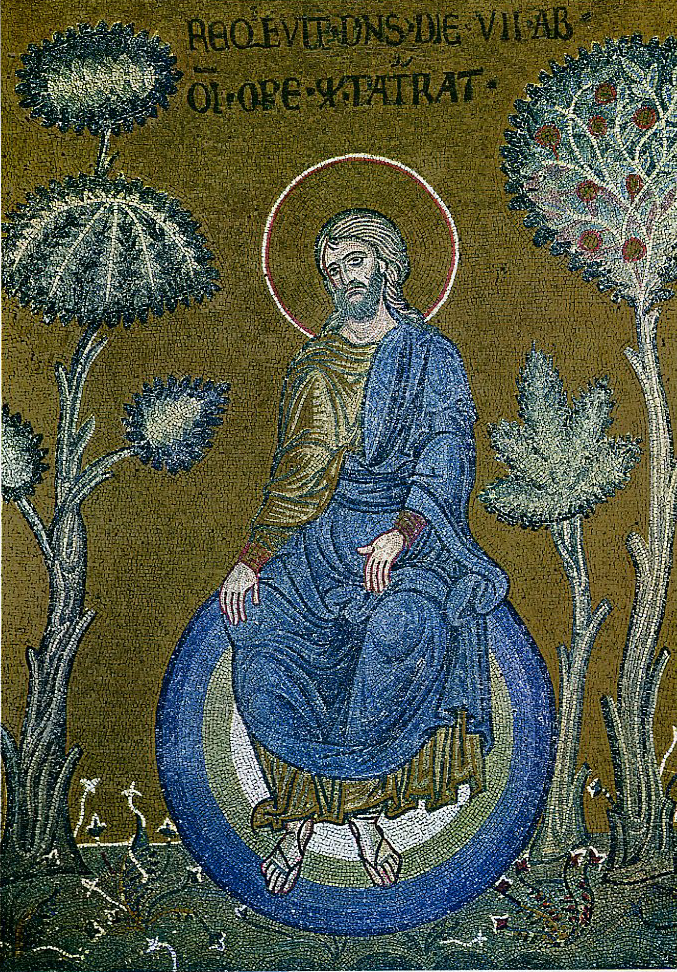
Pre-existence, premortal existence, beforelife, or life before birth, are terms for the belief that each individual human soul existed before conception, and at some point before birth enters or is placed into the body. Concepts of pre-existence can encompass either the belief that the soul came into existence at some
Read the full pagePre-existence, premortal existence, beforelife, or life before birth, are terms for the belief that each individual human soul existed before conception, and at some point before birth enters or is placed into the body. Concepts of pre-existence can encompass either the belief that the soul came into existence at some time prior to conception or the belief that the soul is eternal. Alternative positions are traducianism and creationism, which both hold that the individual human soul does not come into existence until conception or later. It is to be distinguished from preformation, which is about physical existence and applies to all living things.
Plato believed in the pre-existence of the soul, which tied in with his innatism. He thought that we are born with knowledge from a previous life that is subdued at birth and must be relearned. He saw all attainment of knowledge not as acquiring new information, but as remembering previously known information.
- 9ConceptGreek & Roman
Probabilism
In theology and philosophy, probabilism (from Latin probare, to test, approve) is an ancient Greek doctrine of academic skepticism. It holds that in the absence of certainty, plausibility or truth-likeness is the best criterion.
Read the full pageIn theology and philosophy, probabilism (from Latin probare, to test, approve) is an ancient Greek doctrine of academic skepticism. It holds that in the absence of certainty, plausibility or truth-likeness is the best criterion. The term can also refer to a 17th-century religious thesis about ethics, or a modern physical–philosophical thesis.
In ancient Greek philosophy, probabilism referred to the doctrine which gives assistance in ordinary matters to one who is skeptical in respect of the possibility of real knowledge: it supposes that though knowledge is impossible, a man may rely on strong beliefs in practical affairs. This view was held by the skeptics of the New Academy. Academic skeptics accept probabilism, while Pyrrhonian skeptics do not.
- 10ConceptGreek & Roman
Prohairesis
Prohairesis or proairesis (Ancient Greek: προαίρεσις; variously translated as "moral character", "will", "volition", "choice", "intention", or "moral choice") is a fundamental concept in the Stoic philosophy of Epictetus. It represents the choice involved in giving or withholding assent to impressions (phantasiai).
Read the full pageProhairesis or proairesis (Ancient Greek: προαίρεσις; variously translated as "moral character", "will", "volition", "choice", "intention", or "moral choice") is a fundamental concept in the Stoic philosophy of Epictetus. It represents the choice involved in giving or withholding assent to impressions (phantasiai). The use of this Greek word was first introduced into philosophy by Aristotle in the Nicomachean Ethics. To Epictetus, it is the faculty that distinguishes human beings from all other creatures. The concept of prohairesis plays a cardinal role in the Discourses and in the Manual: the terms "prohairesis", "prohairetic", and "aprohairetic" appear some 168 times.
According to Epictetus, nothing is properly considered either good, or bad, aside from those things that are within our own power to control, and the only thing fully in our power to control is our own volition (prohairesis) which exercises the faculty of choice that we use to judge our impressions. For example, if a person says something critical to us, that is not bad; or, if something complimentary is said, that is not good, because such things are externals and not in our power to control. By exerting the power of choice, it is possible to maintain equanimity in the face of either criticism and praise, which is a moral good. On the other hand, when people become troubled by criticism, or elated by praise, that is a moral evil because they have misjudged impressions by thinking that things not in their power (such as criticism or praise) have value, and by doing that they place a measure of control of their own life in the hands of others.
- 11
 ConceptGreek & Roman
Purgatory
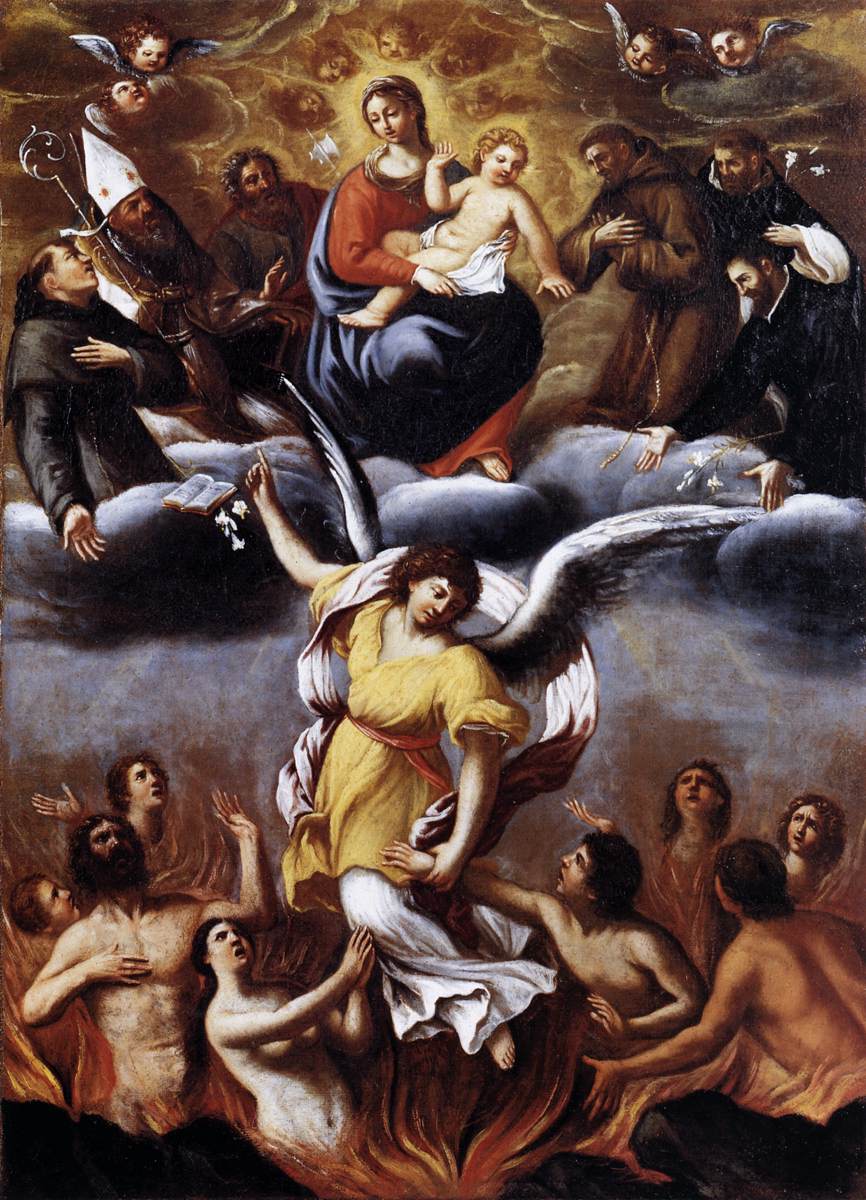
Purgatory (Latin: purgatorium, borrowed into English via Anglo-Norman and Old French) is a belief in Catholic theology. It is a passing intermediate state after physical death for purifying or purging a soul before entering Heaven.
Read the full pagePurgatory (Latin: purgatorium, borrowed into English via Anglo-Norman and Old French) is a belief in Catholic theology. It is a passing intermediate state after physical death for purifying or purging a soul before entering Heaven. A common analogy is dross being removed from gold in a furnace.
In Catholic doctrine, purgatory refers to the final cleansing of those who died in the state of grace, and leaves in them only "the holiness necessary to enter the joy of heaven"; it is entirely different from the punishment of the damned and is not related to the forgiveness of sins for salvation. A forgiven person can be freed from their "unhealthy attachment to creatures" by fervent charity in this world, and otherwise by the non-vindictive "temporal (i.e. non-eternal) punishment" of purgatory.
- 12
 ConceptGreek & Roman
Pythagorean astronomical system
An astronomical system positing that the Earth, Moon, Sun, and planets revolve around an unseen "Central Fire" was developed in the fifth century BC and has been attributed to the Pythagorean philosopher Philolaus. The system has been called "the first coherent system in which celestial bodies move in circles", anticip
Read the full pageAn astronomical system positing that the Earth, Moon, Sun, and planets revolve around an unseen "Central Fire" was developed in the fifth century BC and has been attributed to the Pythagorean philosopher Philolaus. The system has been called "the first coherent system in which celestial bodies move in circles", anticipating Copernicus in moving "the earth from the center of the cosmos [and] making it a planet". Although its concepts of a Central Fire distinct from the Sun, and a nonexistent "Counter-Earth" were erroneous, the system contained the insight that "the apparent motion of the heavenly bodies" was (in large part) due to "the real motion of the observer". How much of the system was intended to explain observed phenomena and how much was based on myth, mysticism, and religion is disputed. While the departure from traditional reasoning is impressive, other than the inclusion of the five visible planets, very little of the Pythagorean system is based on genuine observation. In retrospect, Philolaus's views are "less like scientific astronomy than like symbolical speculation."
Knowledge of contributions to Pythagorean astronomy before Philolaus is limited. Hippasus, another early Pythagorean philosopher, did not contribute to astronomy, and no evidence of Pythagoras's work on astronomy remains. None for the remaining astronomical contributions can be attributed to a single person and, therefore, Pythagoreans as whole take the credit. However, it should not be presumed that the Pythagoreans as a unanimous group agreed on a single system before the time of Philolaus.
- 13
 ConceptGreek & Roman
Ransom theory of atonement
The ransom theory of atonement is a theory in Christian theology relating to the process of Atonement in Christianity. It relates to the meaning and effect of the death of Jesus Christ.
Read the full pageThe ransom theory of atonement is a theory in Christian theology relating to the process of Atonement in Christianity. It relates to the meaning and effect of the death of Jesus Christ. It was mostly popular between the 4th and 11th centuries, with little support in recent times. It originated in the early Church, particularly in the work of Origen. The theory teaches that the death of Christ was a ransom sacrifice, usually said to have been paid to Satan, in satisfaction for the bondage and debt on the souls of humanity as a result of inherited sin.
In Matthew 20:28, Jesus says "the Son of Man...came...to give his life as a ransom for many." 1 Timothy 2:6 states that Jesus "gave himself as ransom for all."


