Modern European ideas, B–C
- 1ConceptModern European
Brouwer–Heyting–Kolmogorov interpretation
In mathematical logic, the Brouwer–Heyting–Kolmogorov interpretation, or BHK interpretation, is an explanation of the meaning of proof in intuitionistic logic, proposed by L. E.
Read the full pageIn mathematical logic, the Brouwer–Heyting–Kolmogorov interpretation, or BHK interpretation, is an explanation of the meaning of proof in intuitionistic logic, proposed by L. E. J. Brouwer and Arend Heyting, and independently by Andrey Kolmogorov. It is also sometimes called the realizability interpretation, because of the connection with the realizability theory of Stephen Kleene. It is the standard explanation of intuitionistic logic.
The interpretation states what is intended to be a proof of a given formula. This is specified by induction on the structure of that formula:
- 2ConceptModern European
Brute fact
In contemporary philosophy, a brute fact is a fact that cannot be explained in terms of a deeper, more "fundamental" fact. There are two main ways to explain something: say what "brought it about", or describe it at a more "fundamental" level.
Read the full pageIn contemporary philosophy, a brute fact is a fact that cannot be explained in terms of a deeper, more "fundamental" fact. There are two main ways to explain something: say what "brought it about", or describe it at a more "fundamental" level. For example, a cat displayed on a computer screen can be explained, more "fundamentally", in terms of certain voltages in bits of metal in the screen, which in turn can be explained, more "fundamentally", in terms of certain subatomic particles moving in a certain manner. If one were to keep explaining the world in this way and reach a point at which no more "deeper" explanations can be given, then one would have found some facts which are brute or inexplicable, in the sense that we cannot give them an ontological explanation. As it might be put, there may exist some things that just are.
To reject the existence of brute facts is to think that everything can be explained ("Everything can be explained" is sometimes called the principle of sufficient reason).
- 3
 ConceptModern European
Bulverism
Bulverism is a rhetorical fallacy that combines circular reasoning, the genetic fallacy and ad hominem with presumption or condescension. The Bulverist presumes that a speaker's argument is false or invalid and then explains why the speaker made that argument (even if said argument is actually correct) by attacking the
Read the full pageBulverism is a rhetorical fallacy that combines circular reasoning, the genetic fallacy and ad hominem with presumption or condescension. The Bulverist presumes that a speaker's argument is false or invalid and then explains why the speaker made that argument (even if said argument is actually correct) by attacking the speaker or the speaker's motive.
The term Bulverism was coined by C. S. Lewis (after "its imaginary inventor, Ezekiel Bulver") to poke fun at a serious error in thinking that, he alleged, frequently occurred in a variety of religious, political, and philosophical debates.
- 4ConceptModern European
Capitalist state
The capitalist state is the state within capitalist socioeconomic systems. Often used interchangeably with the concept of the modern state, this concept encompasses the functions of the state as well as the form of organization that it takes.
Read the full pageThe capitalist state is the state within capitalist socioeconomic systems. Often used interchangeably with the concept of the modern state, this concept encompasses the functions of the state as well as the form of organization that it takes. Despite their common functions, there are many different sociological characteristics recognized as aspects of capitalist states.
The primary functions of the capitalist state are to provide a legal framework and infrastructural framework conducive to business enterprise and the accumulation of capital. Different normative theories exist on the necessary and appropriate function of the state in a capitalist economy, with proponents of laissez-faire favoring a state limited to the provision of public goods and safeguarding private property rights while proponents of interventionism stress the importance of regulation, intervention and macroeconomic stabilization for providing a favorable environment for the accumulation of capital and business.
- 5ConceptModern European
Carceral archipelago
The concept of a carceral archipelago was first used by the French historian and philosopher Michel Foucault in his 1975 publication, Surveiller et Punir, to describe the modern penal system of the 1970s, embodied by the well-known penal institution at Mettray in France. The phrase combines the adjective "carceral", wh
Read the full pageThe concept of a carceral archipelago was first used by the French historian and philosopher Michel Foucault in his 1975 publication, Surveiller et Punir, to describe the modern penal system of the 1970s, embodied by the well-known penal institution at Mettray in France. The phrase combines the adjective "carceral", which means that which is related to jail or prison, with archipelago—a group of islands. Foucault referred to the "island" units of the "archipelago" as a metaphor for the mechanisms, technologies, knowledge systems and networks related to a carceral continuum. The 1973 English publication of the book by Solzhenitsyn called The Gulag Archipelago referred to the forced labor camps and prisons that composed the sprawling carceral network of the Soviet Gulag.
Concepts developed in Foucault's Discipline and Punish have been widely used by researchers in the growing, multi-disciplinary field of "carceral state" studies, as part of the "carceral turn" in the 1990s. Foucault, who died in the 1980s, did not witness the "unparalleled escalation of prison populations" of the carceral state in the United States. In the last quarter of the twentieth century, the incarceration rate in the US increased by a factor of five, reaching an incarceration rate of 1 in 100 by 2008. Until the carceral turn, scholars propose how what they describe as the American mass incarcerations and prison-industrial complex were almost invisible. In 1993, the international criminologist, Nils Christie, who was one of the first to warn of the perceived dangers of the alarming growth and danger of the crime control industry in the United States, compared the size and scope of the industry to Western style gulags.
- 6
 ConceptModern European
Carnivalesque
The Carnivalesque is a literary type that subverts and liberates the assumptions of the dominant style or atmosphere through humor and chaos. It originated as "carnival" in Mikhail Bakhtin's Problems of Dostoevsky's Poetics and was more developed in Rabelais and His World.
Read the full pageThe Carnivalesque is a literary type that subverts and liberates the assumptions of the dominant style or atmosphere through humor and chaos. It originated as "carnival" in Mikhail Bakhtin's Problems of Dostoevsky's Poetics and was more developed in Rabelais and His World. For Bakhtin, "carnival" (the totality of popular festivities, rituals and other carnival forms) is deeply rooted in the human psyche on both the collective and individual levels. Though historically complex and varied, it has over time worked out "an entire language of symbolic concretely sensuous forms" which express a unified "carnival sense of the world, permeating all its forms". This language, Bakhtin argues, cannot be adequately verbalized or translated into abstract concepts, but it is amenable to transposition into an artistic language that resonates with its essential qualities: it can, in other words, be "transposed into the language of literature". Bakhtin calls this transposition the carnivalization of literature. Although he considers a number of literary forms and individual writers, it is François Rabelais, the French Renaissance author of Gargantua and Pantagruel, and the 19th-century Russian author Fyodor Dostoevsky, that he considers the primary exemplars of carnivalization in literature.
Bakhtin identifies four principal categories of the carnival sense of the world.
- 7ConceptModern European
Cartesian circle
The Cartesian circle (also known as Arnauld's circle) is an example of fallacious circular reasoning attributed to French philosopher René Descartes. He argued that the existence of God is proven by reliable perception, which is itself guaranteed by God.
Read the full pageThe Cartesian circle (also known as Arnauld's circle) is an example of fallacious circular reasoning attributed to French philosopher René Descartes. He argued that the existence of God is proven by reliable perception, which is itself guaranteed by God.
Descartes argues – for example, in the third of his Meditations on First Philosophy – that whatever one clearly and distinctly perceives is true: "I now seem to be able to lay it down as a general rule that whatever I perceive very clearly and distinctly is true" (AT VII 35). He goes on in the same Meditation to argue for the existence of a benevolent God, in order to defeat his skeptical argument in the first Meditation that God might be a deceiver. He then says that without his knowledge of God's existence, none of his knowledge could be certain.
- 8ConceptModern European
Cartesian doubt
Cartesian doubt is a form of methodological skepticism associated with the writings and methodology of René Descartes. Cartesian doubt is also known as Cartesian skepticism, methodic doubt, methodological skepticism, universal doubt, systematic doubt, or hyperbolic doubt.
Read the full pageCartesian doubt is a form of methodological skepticism associated with the writings and methodology of René Descartes. Cartesian doubt is also known as Cartesian skepticism, methodic doubt, methodological skepticism, universal doubt, systematic doubt, or hyperbolic doubt.
Cartesian doubt is a systematic process of being skeptical about (or doubting) the truth of one's beliefs, which has become a characteristic method in philosophy. Additionally, Descartes's method has been seen by many as the root of the modern scientific method. This method of doubt was largely popularized in Western philosophy by René Descartes, who sought to doubt the truth of all beliefs in order to determine which he could be certain were true. It is the basis for Descartes's statement, "cogito ergo sum" ('I think, therefore I am'). A fuller version of his phrase, "dubito ergo cogito, cogito ergo sum" translates to 'I doubt therefore I think, I think therefore I exist'. Sum translated as 'I exist' (per various Latin-to-English dictionaries) presents a much larger and clearer meaning to the phrase.
- 9
 ConceptModern European
Catastrophism
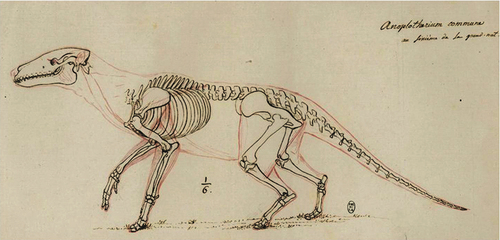
In geology, catastrophism is the theory that the Earth has largely been shaped by sudden, short-lived, violent events, possibly worldwide in scope. This contrasts with uniformitarianism (sometimes called gradualism), according to which slow incremental changes, such as erosion, brought about all the Earth's geological
Read the full pageIn geology, catastrophism is the theory that the Earth has largely been shaped by sudden, short-lived, violent events, possibly worldwide in scope.
This contrasts with uniformitarianism (sometimes called gradualism), according to which slow incremental changes, such as erosion, brought about all the Earth's geological features. The proponents of uniformitarianism held that the present was "the key to the past", and that all geological processes (such as erosion) throughout the past resembled those that can be observed today. Since the 19th-century disputes between catastrophists and uniformitarians, a more inclusive and integrated view of geologic events has developed, in which the scientific consensus accepts that some catastrophic events occurred in the geologic past, but regards these as extreme examples of explicable natural processes.
- 10
 ConceptModern European
Category (Kant)
In the philosophy of Immanuel Kant, a category (German: Kategorie; in Kant's original 18th-century spelling: Categorie) is a pure concept of the understanding (reiner Verstandesbegriff) that operates a priori within human cognition. Following the classical philosophical tradition of Aristotle, Kant adopted the term "ca
Read the full pageIn the philosophy of Immanuel Kant, a category (German: Kategorie; in Kant's original 18th-century spelling: Categorie) is a pure concept of the understanding (reiner Verstandesbegriff) that operates a priori within human cognition. Following the classical philosophical tradition of Aristotle, Kant adopted the term "category" to designate the most fundamental concepts that apply to objects of intuition in general prior to any specific empirical experience.
Kant defines the categories as "concepts of an object in general, by means of which its intuition is regarded as determined with regard to one of the logical functions for judgments." Rather than being empirical properties abstracted from sensory experience, Kantian categories are active, structural rules of synthesis contributed by the faculty of understanding (Verstand). Their function is to organize, unite, and transform the chaotic manifold of raw sensory intuitions into a coherent, objective world of experience. Without categories, sensory perceptions would remain disjointed, blind, and meaningless, as expressed in Kant's famous epistemological dictum:
- 11ConceptModern European
Category mistake
A category mistake (or category error, categorical mistake, or mistake of category) is a semantic or ontological error in which things belonging to a particular category are presented as if they belong to a different category, or, alternatively, a property is ascribed to a thing that could not possibly have that proper
Read the full pageA category mistake (or category error, categorical mistake, or mistake of category) is a semantic or ontological error in which things belonging to a particular category are presented as if they belong to a different category, or, alternatively, a property is ascribed to a thing that could not possibly have that property. An example is a person learning that the game of cricket involves team spirit, and after being given a demonstration of each player's role, asking which player performs the "team spirit".
Al Martinich claims that the philosopher Thomas Hobbes was the first to discuss a propensity among philosophers to mistakenly combine words taken from different and incompatible categories.
- 12ConceptModern European
Christian Kabbalah
Christian Kabbalah arose during the Renaissance due to Christian scholars' interest in the mysticism of Jewish Kabbalah, which they interpreted according to Christian theology. Often spelled Cabala to distinguish it from the Jewish form and from Hermetic Qabalah, it sought to link Kabbalistic concepts with Christian do
Read the full pageChristian Kabbalah arose during the Renaissance due to Christian scholars' interest in the mysticism of Jewish Kabbalah, which they interpreted according to Christian theology. Often spelled Cabala to distinguish it from the Jewish form and from Hermetic Qabalah, it sought to link Kabbalistic concepts with Christian doctrines, particularly the Trinity. Early proponents included Giovanni Pico della Mirandola and Johann Reuchlin, who adapted Kabbalistic ideas to Christian beliefs, sometimes using them as a tool for conversion.
The movement drew from earlier Christian interest in Jewish mysticism, including the work of Spanish conversos and scholars, though it gained prominence in the 15th and 16th centuries. Christian Kabbalists proposed interpretations that linked Jesus and Mary to the Sefirot and saw hidden Christian messages in Kabbalistic texts. Figures such as Athanasius Kircher and Christian Knorr von Rosenroth further expanded these ideas, influencing later esoteric traditions.
- 13ConceptModern European
Christian Morals
Christian Morals is a prose work written by the physician Sir Thomas Browne as advice for his eldest children. It was published posthumously in 1716 and consists, as its title implies, of meditations upon Christian values and conduct.
Read the full pageChristian Morals is a prose work written by the physician Sir Thomas Browne as advice for his eldest children. It was published posthumously in 1716 and consists, as its title implies, of meditations upon Christian values and conduct.
The work is divided into three sections with many of the numbered paragraphs standing-alone as text, with unique and startling imagery involving optics, perspective and appearance. A work of a lifetime's study and understanding of the human condition, in psychological terms, Browne's last major work may be considered as advice on obtaining individuation and self-realization as much as Christian virtue.
- 14
 ConceptModern European
Christian mortalism
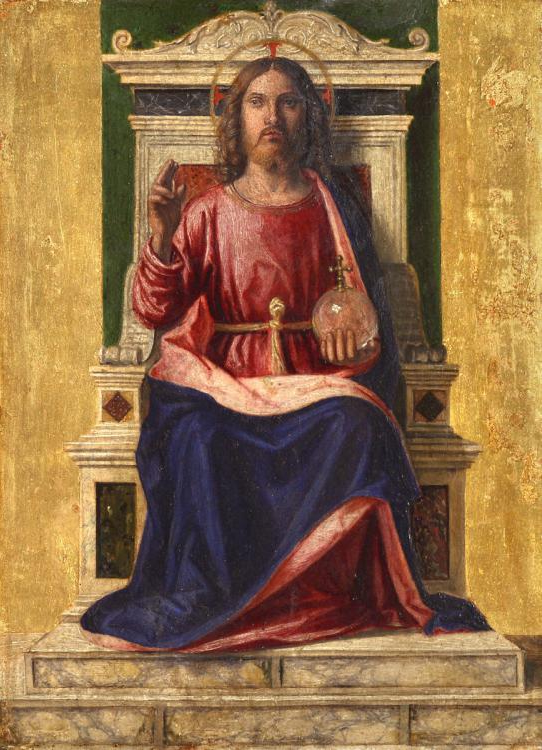
Christian mortalism is the Christian belief that the human soul is not naturally immortal, and may include the belief that the soul is "sleeping" after death until the Resurrection of the Dead and the Last Judgment, a time known as the intermediate state. "Soul sleep" is often used as a pejorative term, so the more neu
Read the full pageChristian mortalism is the Christian belief that the human soul is not naturally immortal, and may include the belief that the soul is "sleeping" after death until the Resurrection of the Dead and the Last Judgment, a time known as the intermediate state. "Soul sleep" is often used as a pejorative term, so the more neutral term "mortalism" was also used in the nineteenth century, and "Christian mortalism" since the 1970s. Historically the term psychopannychism was also used, despite problems with the etymology and application. The opposite term thnetopsychism has also been used; for example, Gordon Campbell (2008) identified John Milton as believing in the latter.
Christian mortalism stands in contrast with the traditional Christian belief that the souls of the dead immediately go to heaven, or hell, or (in Catholicism) purgatory. Christian mortalism has been taught by several theologians and church organizations throughout history, while also facing opposition from aspects of Christian organized religion. The Catholic Church condemned such thinking in the Fifth Council of the Lateran as "erroneous assertions". Supporters include eighteenth-century religious figure Henry Layton, among many others.

