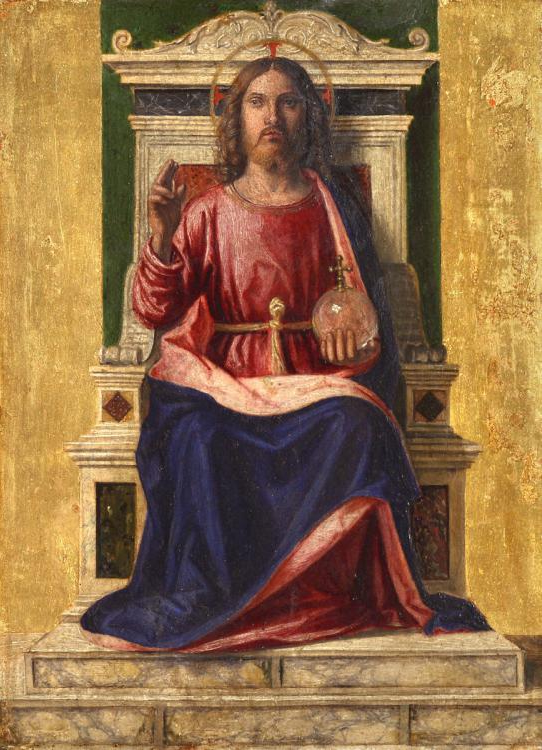
Christian mortalism
Christian mortalism is the Christian belief that the human soul is not naturally immortal, and may include the belief that the soul is "sleeping" after death until the Resurrection of the Dead and the Last Judgment, a time known as the intermediate state. "Soul sleep" is often used as a pejorative term, so the more neu
Christian mortalism is the Christian belief that the human soul is not naturally immortal, and may include the belief that the soul is "sleeping" after death until the Resurrection of the Dead and the Last Judgment, a time known as the intermediate state. "Soul sleep" is often used as a pejorative term, so the more neutral term "mortalism" was also used in the nineteenth century, and "Christian mortalism" since the 1970s. Historically the term psychopannychism was also used, despite problems with the etymology and application. The opposite term thnetopsychism has also been used; for example, Gordon Campbell (2008) identified John Milton as believing in the latter.
Christian mortalism stands in contrast with the traditional Christian belief that the souls of the dead immediately go to heaven, or hell, or (in Catholicism) purgatory. Christian mortalism has been taught by several theologians and church organizations throughout history, while also facing opposition from aspects of Christian organized religion. The Catholic Church condemned such thinking in the Fifth Council of the Lateran as "erroneous assertions". Supporters include eighteenth-century religious figure Henry Layton, among many others.
Etymology and terminology
Since the phrases "soul sleep" or "soul death" do not occur either in the Bible or in early Patristic materials, an explanation is required for the origin of the term. Additionally, several other terms have been introduced which relate to the view. Modern theologians have used the term "Christian mortalism" and related wordings from the 21st century onwards.
This term does not literally describe a sleep in the physiological sense, but rather a state of inactivity and the absence of active consciousness. The doctrine maintains the continuation and subsistence of a spiritual element after death (Eccl. 12:7; Ps. 104:29; Ps. 146:4; Acts 7:59), which is endowed with personal characteristics and memories, so that the “I” of the person continues to exist, even though in the interim it lacks its full physicality and rests. Accordingly, the deceased have no perception of the passage of time and no connection to the living until they are “awakened” on the day of the Last Judgment by the power of God and united with the (restored) body (Apostles’ Creed, resurrection of the flesh, Latin carnis resurrectionem).
Soul sleep
The phrase soul sleep appears to have been popularized by John Calvin in the subtitle to his Latin tract Psychopannychia (Psychopannychia (manuscript), Orléans, 1534, Psychopannychia (print) (in Latin), Strasbourg, 1542, Psychopannychia (in French) (2nd ed.), Geneva, 1558 [1545], Psychopannychia, 1581). The title of the booklet comes from Greek psyche (soul, mind) with pan-nychis (παν-νυχίς, all-night vigil, all-night banquet), so Psychopannychia, originally, represents Calvin's view that the soul was conscious and active after death.
The title and subtitle of the 1542 Strasbourg 1st edition read: Vivere apud Christum non-dormire animas sanctas qui in fide Christi decedunt. Assertio. [That the holy souls of those who die in the faith of Christ live with Christ and do not sleep. An Assertion.] (in Latin).
The title and subtitle of the 1545 2nd Latin edition read: Psychopannychia – qua repellitur quorundam imperitorum error qui animas post mortem usque ad ultimum iudicium dormire putant. [Psychopannychia – Or a refutation of the error entertained by some unskillful persons, who ignorantly imagine that in the interval between death and the judgment the soul sleeps.] (in Latin).
The 1558 French edition was a translation of that of the 1545 2nd edition: Psychopannychie – traitté par lequel est prouvé que les âmes veillent et vivent après qu'elles sont sorties des corps; contre l'erreur de quelques ignorans qui pensent qu'elles dorment jusque au dernier jugement.
Other terms
"Psychopannychism" – In the Latin it is clearer that Psychopannychia is actually the refutation of, the opposite of, the idea of soul sleep. The version Psychopannychie – La nuit ou le sommeil de l'âme [Psychopannychia – the night or the sleep of the soul] (in French), Geneva, 1558 may have caused the confusion that by -pannychis Calvin meant sleep (in Greek -hypnos, sleep, not -pannychis, vigil). The subtitle le sommeil de l'âme (in French) was taken up as Seelenschlaf [Soul-sleep] (in German). The tract first appeared in English as An excellent treatise of the Immortalytie of the Soule, translated by Stocker, T., London, 1581.
Luther's use of similar language (but this time defending the view) appears in print only a few years after Calvin:
…so the soul after death enters its chamber and peace, and sleeping does not feel its sleep
"Hypnopsychism" – from hypno- + psyche ("sleep of soul") was a more correct coinage from Greek than that of Calvin's editor. Eustratios of Constantinople (after 582) denounced mortalism as a heresy using this term.
"Thnetopsychism" – A contrasting phrase is thnetopsychism (from Greek thnetos [mortal] + psyche [soul, mind]). The term has its origin in the descriptions of Eusebius of Caesarea and John of Damascus of mortalist views among Arab Christians, In the 1600s also this phrase was applied also to the views of Tyndale, Luther and other mortalists, from awareness that Calvin's term Psychopannychia originally described his own belief, not the belief he was calling error. The term is also used of the view of the Anabaptists. Their view is that the soul dies, with the body to be recalled to life at the resurrection of the dead, or that the soul is not separate from the body and so there is no "spiritual" self to survive bodily death. In both cases, the deceased does not begin to enjoy a reward or suffer a punishment until Judgment Day.
Mortalist arguments
Historically, Christian mortalists have advanced theological, lexical, and scientific arguments in support of their position.
Theological arguments
Theological arguments that contended that the continued existence of the soul was not taught in the Bible were made by mortalists such as Francis Blackburne, Joseph Priestley, and Samuel Bourne. Mortalists such as Richard Overton advanced a combination of theological and philosophical arguments in favor of soul sleep. Thomas Hobbes likewise made extensive use of theological argumentation. Some mortalists viewed their beliefs as a return to original Christian teaching. Mortalists’ theological arguments were also used to contest the Catholic doctrine of purgatory and masses for the dead.
The 2000 British Evangelical Alliance ACUTE report states the doctrine of soul sleep is a "significant minority evangelical view" that has "grown within evangelicalism in recent years". Although in modern times some have attempted to introduce the concept of soul sleep into Eastern Orthodox thought about life after death, it has never been a part of traditional Eastern Orthodox teaching, and it even contradicts the Eastern Orthodox understanding of the intercession of the Saints.
Mortalists argue for soul sleep using Bible verses such as Psalm 6:5, 115:17, 146:4, Ecclesiastes 9:5, Luke 8:52-53, John 11:11–14, 1 Corinthians 15:51-54, and 1 Thessalonians 4:16-17. Mortalists point to Genesis 2 and Revelation 22, where the Tree of Life is mentioned. It is argued that these passages, along with Genesis 3:22–24 teach that human beings will naturally die without continued access to God's life-giving power.
As a general rule, soul sleep goes hand in hand with annihilationism, that is, the belief that the souls of the wicked will be completely destroyed. The two ideas are not exactly equivalent, however, because in principle God may annihilate a soul that was previously created immortal. While annihilationism places emphasis on the active destruction of a person, soul sleep places emphasis on a person's dependence upon God for life; the extinction of the person is thus a passive consequence of separation from God, much like natural death is a consequence of prolonged separation from food, water, and air.
Mortalist writers, such as Thomas Hobbes in Leviathan, have often argued that the doctrine of natural (or innate) immortality stems not from Hebrew thought as presented in the Bible, but rather from pagan influence, particularly Greek philosophy and the teachings of Plato, or Christian tradition. Bishop of Durham N.T. Wright noted that 1 Timothy 6:15-16 teaches "God… alone is immortal," while in 2 Timothy 1:10 it says that immortality only comes to human beings as a gift through the gospel. Immortality is something to be sought after (Romans 2:7) therefore it is not inherent to all humanity.
Adapted from the Wikipedia article Christian mortalism, available under CC BY-SA 4.0.
Connections
Proposed by
1
You might also explore
 Natural philosophyGreek & RomanNatural philosophy, philosophy of nature (from Latin philosophia naturalis), or experimental philosophy, until the late…
 Naturalism (philosophy)AmericasIn philosophy, naturalism is the position that only natural laws and forces (as opposed to supernatural ones) operate…A Critique of Pure ToleranceModern EuropeanA Critique of Pure Tolerance is a 1965 book by the philosopher Robert Paul Wolff, the sociologist Barrington Moore Jr.…A History of Philosophy (Copleston)Modern EuropeanA History of Philosophy is a history of Western philosophy written by the English Jesuit priest Frederick Charles…Absolute (philosophy)Modern EuropeanIn philosophy (often specifically metaphysics), the absolute, in most common usage, is an absolute perfect…Abstract object theoryModern EuropeanAbstract object theory (AOT) is a branch of metaphysics regarding abstract objects. Originally devised by metaphysician…