Modern European ideas, T
- 1ConceptModern European
The Fourth Political Theory
The Fourth Political Theory is a book by the Russian philosopher and political analyst Aleksandr Dugin, first published in 2009. In the book, Dugin states that he is laying the foundations for an entirely new political ideology, the fourth political theory, which integrates and supersedes liberalism, communism, and fas
Read the full pageThe Fourth Political Theory is a book by the Russian philosopher and political analyst Aleksandr Dugin, first published in 2009. In the book, Dugin states that he is laying the foundations for an entirely new political ideology, the fourth political theory, which integrates and supersedes liberalism, communism, and fascism. In this theory, the main subject of politics is not individualism, class struggle, or nation, but rather Dasein (existence itself).
In the book, Dugin states that he wishes to devise an entirely new political theory to replace what he identifies as the previous three dominant political theories: liberalism, fascism and communism. According to Dugin, his aim is to take elements from all three, 'neutralise and decontaminate' negative aspects such as racism, and incorporate them into this new ideology. He refers to this ideology as a 'timeless, non-modern theory' valid for all time.
- 2
 ConceptModern European
The Garden of Cyrus
The Garden of Cyrus, or The Quincuncial Lozenge, or Network Plantations of the Ancients, naturally, artificially, mystically considered, is a discourse by the English polymath Thomas Browne concerned with the quincunx—a pattern of five points arranged in an X (⁙), as on a die —in art and nature. First published in 1658
Read the full pageThe Garden of Cyrus, or The Quincuncial Lozenge, or Network Plantations of the Ancients, naturally, artificially, mystically considered, is a discourse by the English polymath Thomas Browne concerned with the quincunx—a pattern of five points arranged in an X (⁙), as on a die —in art and nature. First published in 1658, along with its companion Urn-Burial, in modern times it has been recognised as Browne's major literary contribution to Hermetic wisdom.
The book draws its primary influences from the Book of Genesis and Plato's Timaeus, initially covering Browne's speculation about the location of the mythical Garden of Eden. Browne proceeds to explore the role of the number 5 and the quincunx in art and human design, in natural patterns, in botany, and in mysticism. He offers Neoplatonic and Neopythagorean arguments about the interconnection of art and nature. Browne was concerned with finding evidence of intelligent design in nature. The book uses a number of neologisms from Browne's era, including the then-new terms prototype and archetype.
- 3ConceptModern European
The Imaginary (Sartre)
The Imaginary: A Phenomenological Psychology of the Imagination (French: L'Imaginaire: Psychologie phénoménologique de l'imagination), also published under the title The Psychology of the Imagination, is a 1940 book by the philosopher Jean-Paul Sartre, in which the author propounds his concept of the imagination and di
Read the full pageThe Imaginary: A Phenomenological Psychology of the Imagination (French: L'Imaginaire: Psychologie phénoménologique de l'imagination), also published under the title The Psychology of the Imagination, is a 1940 book by the philosopher Jean-Paul Sartre, in which the author propounds his concept of the imagination and discusses what the existence of imagination shows about the nature of human consciousness.
Sartre argues that while some believe imagining to be like an internal perception, imagination is nothing like perception. Perception is our study over time of a particular object with our senses. It is necessarily incomplete; one can only see one side of a chair at a time, for example. Thus, perception involves observation. By contrast, imagination is total. In the chair that appears in our imagination, we have all sides of the chair given to us at once. However, Sartre points out that imaginary objects cannot teach us anything. The totality of the chair that appears in our imagination comes from a synthesis of our knowledge of the chair and our intention toward it. We expect the chair to be X or Y, therefore, in our imagination, it appears to us this way. Thus, Sartre calls what goes on when we picture something imaginary, "quasi-observation". Imaginary objects are a "melange of past impressions and recent knowledge" (The Imaginary 90). In short, imaginary objects are what we intend them to be. Because imaginary objects appear to us in a way which is like perception but is not perception, we have a tendency to treat them as if they were real. That is not to say we are deluded; we know that they're imaginary. But we tend to ascribe emotions, traits, and beliefs to these irreal objects as if they were real.
- 4ConceptModern European
The Last Messiah
"The Last Messiah" (Norwegian: "Den sidste Messias") is a 1933 essay by the Norwegian philosopher Peter Wessel Zapffe. One of his most significant works, this approximately 10-page-long essay would later be expanded upon in Zapffe's book On the Tragic, and, as a theory, describes a reinterpretation of Friedrich Nietzsc
Read the full page"The Last Messiah" (Norwegian: "Den sidste Messias") is a 1933 essay by the Norwegian philosopher Peter Wessel Zapffe. One of his most significant works, this approximately 10-page-long essay would later be expanded upon in Zapffe's book On the Tragic, and, as a theory, describes a reinterpretation of Friedrich Nietzsche's Übermensch. Zapffe believed that existential crisis or angst in humanity was the result of an overly evolved intellect, and that people overcome this by "artificially limiting the content of consciousness".
Zapffe views the human condition as tragically overdeveloped, calling it "a biological paradox, an abomination, an absurdity, an exaggeration of disastrous nature". Zapffe viewed the world as beyond humanity's need for meaning, unable to provide any of the answers to the fundamental existential questions.
- 5ConceptModern European
The Missing Shade of Blue
"The Missing Shade of Blue" is an example introduced by the Scottish philosopher David Hume to show that it is at least conceivable that the mind can generate an idea without first being exposed to the relevant sensory experience. It is regarded as a problem by philosophers because it appears to stand in direct contrad
Read the full page"The Missing Shade of Blue" is an example introduced by the Scottish philosopher David Hume to show that it is at least conceivable that the mind can generate an idea without first being exposed to the relevant sensory experience. It is regarded as a problem by philosophers because it appears to stand in direct contradiction to what Hume had previously written.
In both A Treatise of Human Nature and An Enquiry Concerning Human Understanding, philosopher David Hume argues that all perceptions of the mind can be classed as either 'Impressions' or 'Ideas'. He further argues that:
- 6ConceptModern European
The Principle of Hope
The Principle of Hope (German: Das Prinzip Hoffnung) is a book by the Marxist philosopher Ernst Bloch, published in three volumes in 1954, 1955, and 1959, in which the author explores utopianism, studying the utopian impulses present in art, literature, religion and other forms of cultural expression, and envisages a f
Read the full pageThe Principle of Hope (German: Das Prinzip Hoffnung) is a book by the Marxist philosopher Ernst Bloch, published in three volumes in 1954, 1955, and 1959, in which the author explores utopianism, studying the utopian impulses present in art, literature, religion and other forms of cultural expression, and envisages a future state of absolute perfection. The Principle of Hope has become fundamental to dialogue between Christians and Marxists.
Originally written between 1938 and 1947 in the United States, an enlarged and revised version of The Principle of Hope was published successively in three volumes in 1954, 1955, and 1959. Bloch, who had emigrated to the United States in 1938, returned to Europe in 1949 and became a Professor of Philosophy in East Germany. Despite having initially supported the regime, Bloch came under attack for his philosophical unorthodoxy, and support for greater cultural freedom in East Germany, and publication of The Principle of Hope was delayed for political reasons.
- 7ConceptModern European
The Real
In continental philosophy, the Real refers to reality in its unmediated form. In Lacanian psychoanalysis, it is an "impossible" category because of its inconceivability and opposition to expression.
Read the full pageIn continental philosophy, the Real refers to reality in its unmediated form. In Lacanian psychoanalysis, it is an "impossible" category because of its inconceivability and opposition to expression.
The Real is the intelligible form of the horizon of truth of the field-of-objects that has been disclosed. As the Real Order of the Borromean knot in Lacanianism, it is opposed in the unconscious to the Imaginary, which encompasses fantasy, dreams and hallucinations. In depth psychology, the Real can be described as a "negative space", analogous to a "black hole", a philosophical void of sociality and subjectivity, a traumatic consensus of intersubjectivity, or as an absolute noumenalness between signifiers. Lewis states that the Real can be a presence or is a substance and cites Derrida's claim that the real is authenticity.
- 8
 ConceptModern European
The Senses and the Intellect
The Senses and the Intellect is a book by Alexander Bain that was first published in 1855 and published by John William Parker in London. In this treatise, Bain described two principal divisions of the mind, the senses and the intellect.
Read the full pageThe Senses and the Intellect is a book by Alexander Bain that was first published in 1855 and published by John William Parker in London. In this treatise, Bain described two principal divisions of the mind, the senses and the intellect. The discussion on the other two aspects of the mind, the emotions and the will, was published by Bain four years later, in 1859, under the title The Emotions and the Will.
Bain had an academic background in moral philosophy and logic and is considered to be an associationist, alongside figures like John Locke, David Hume and his friend - John Stuart Mill.
- 9ConceptModern European
The Structural Transformation of the Public Sphere
The Structural Transformation of the Public Sphere: An Inquiry into a Category of Bourgeois Society (German: Strukturwandel der Öffentlichkeit. Untersuchungen zu einer Kategorie der bürgerlichen Gesellschaft) is a 1962 book by the philosopher Jürgen Habermas.
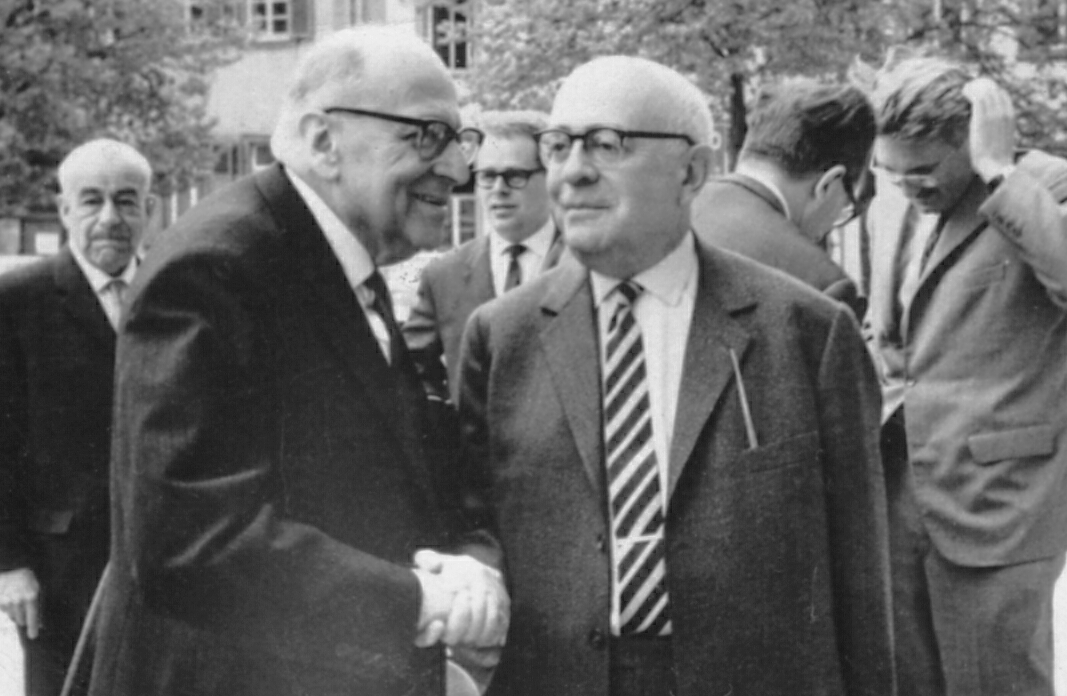
Read the full pageThe Structural Transformation of the Public Sphere: An Inquiry into a Category of Bourgeois Society (German: Strukturwandel der Öffentlichkeit. Untersuchungen zu einer Kategorie der bürgerlichen Gesellschaft) is a 1962 book by the philosopher Jürgen Habermas. It was translated into English in 1989 by Thomas Burger and Frederick Lawrence. An important contribution to modern understanding of democracy, it is notable for "transforming media studies into a hard-headed discipline." In 2022 Habermas published a brief sequel, A New Structural Transformation of the Public Sphere and Deliberative Politics.
According to Habermas, the notion of the "public sphere" began evolving during the Renaissance in Western Europe. Brought on partially by merchants' need for accurate information about distant markets as well as by the growth of democracy and individual liberty and popular sovereignty, the public sphere was a place between private individuals and government authorities in which people could meet and have critical debates about public matters. Such discussions served as a counterweight to political authority and happened physically in face-to-face meetings in coffee houses and cafes and public squares as well as in the media in letters, books, drama, and art. Habermas saw a vibrant public sphere as a positive force keeping authorities within bounds lest their rulings be ridiculed. According to the journalist David Randall, "In Habermasian theory, the bourgeois public sphere was preceded by a literary public sphere whose favored genres revealed the interiority of the self and emphasized an audience-oriented subjectivity."
- 10
 ConceptModern European
The Theory of Communicative Action
The Theory of Communicative Action (German: Theorie des kommunikativen Handelns) is a two-volume 1981 book by the philosopher Jürgen Habermas, in which the author continues his project of finding a way to ground "the social sciences in a theory of language", which had been set out in On the Logic of the Social Sciences
Read the full pageThe Theory of Communicative Action (German: Theorie des kommunikativen Handelns) is a two-volume 1981 book by the philosopher Jürgen Habermas, in which the author continues his project of finding a way to ground "the social sciences in a theory of language", which had been set out in On the Logic of the Social Sciences (1967). The two volumes are Reason and the Rationalization of Society (Handlungsrationalität und gesellschaftliche Rationalisierung), in which Habermas establishes a concept of communicative rationality, and Lifeworld and System: A Critique of Functionalist Reason (Zur Kritik der funktionalistischen Vernunft), in which Habermas creates the two level concept of society and lays out the critical theory for modernity.
The book originated from a series of lectures presented by Habermas at the University of California, Berkeley. After writing The Theory of Communicative Action, Habermas expanded upon the theory of communicative action by using it as the basis of his theory of morality, democracy, and law. The work has inspired many responses by social theorists and philosophers, and in 1998 was listed by the International Sociological Association as the eighth most important sociological book of the 20th century.
- 11ConceptModern European
The Unity of Philosophical Experience
The Unity of Philosophical Experience is a 1937 book by Étienne Gilson in which the author provides a critique of Western philosophy, focused in turn on medieval philosophy, Cartesianism, and modern Kantianism and Comtean positivism.
Read the full pageThe Unity of Philosophical Experience is a 1937 book by Étienne Gilson in which the author provides a critique of Western philosophy, focused in turn on medieval philosophy, Cartesianism, and modern Kantianism and Comtean positivism.
Philosopher and theologian Benedict M. Ashley compared Copleston's A History of Philosophy to some of the most famous histories of philosophy including Gilson's as follows: "Some histories of philosophy, like the admirable one of Frederick Copleston, only attempt to give an accurate account of various philosophies in their general historical setting. Others, like Bertrand Russell in his absurd History of Western Philosophy or Etienne Gilson in his brilliant The Unity of Philosophical Experience proffer an argument for a particular philosophical position."
- 12
 ConceptModern European
Theodicy
A theodicy (from Ancient Greek θεός theos, "god" and δίκη dikē, "justice"), meaning 'vindication of God', is an argument in the philosophy of religion that attempts to resolve the problem of evil, which arises when all power (omnipotence) and all goodness (omnibenevolence) are attributed to God simultaneously. Unlike a
Read the full pageA theodicy (from Ancient Greek θεός theos, "god" and δίκη dikē, "justice"), meaning 'vindication of God', is an argument in the philosophy of religion that attempts to resolve the problem of evil, which arises when all power (omnipotence) and all goodness (omnibenevolence) are attributed to God simultaneously.
Unlike a defense, which tries only to demonstrate that God and evil can logically coexist, a theodicy additionally provides a framework in which God and evil's existence are considered plausible. The German philosopher and mathematician Gottfried Leibniz coined the term theodicy in his book Théodicée (1710), though numerous responses to the problem of evil had previously been offered.
- 13ConceptModern European
Theodor Elsenhans
Theodor Elsenhans was a German psychologist and neo-Kantian philosopher. He was born in Stuttgart and died in Dresden.
Read the full pageTheodor Elsenhans (German: [ˈɛlzənhans]; 7 March 1862 – 3 January 1918) was a German psychologist and neo-Kantian philosopher. He was born in Stuttgart and died in Dresden.
Elsenhans started studying theology at the University of Tübingen, but became interested in philosophy. He received his doctorate in 1885. In 1902 he completed his Habilitationsschrift at Heidelberg University, with a monograph on Kant and the post-Kantian Jakob Friedrich Fries. In 1908 he took up a professorship at Dresden University, where he continued to work on epistemology.
- 14ConceptModern European
Theoretical philosophy
The modern division of philosophy into theoretical philosophy and practical philosophy has its origin in Aristotle's categories of natural philosophy and moral philosophy. The one has theory for its object, and the other practice.
Read the full pageThe modern division of philosophy into theoretical philosophy and practical philosophy has its origin in Aristotle's categories of natural philosophy and moral philosophy. The one has theory for its object, and the other practice.
In Denmark, Finland, Germany, the Netherlands, Sweden, and the United States, courses in theoretical and practical philosophy are taught separately, and are separate degrees. Other countries may use a similar scheme—some Scottish universities, for example, divide philosophy into logic, metaphysics, and ethics—but in most universities around the world philosophy is taught as a single subject. There is also a unified philosophy subject in some Swedish universities, such as Södertörns Högskola.


