Modern European ideas, S–T
- 1
 ConceptModern European
Subordinationism
Subordinationism is a Trinitarian doctrine wherein the Son (and sometimes also the Holy Spirit) is subordinate to the Father, not only in submission and role, but with actual ontological subordination to varying degrees. It posits a hierarchical ranking of the persons of the Social Trinity, implying ontological subordi
Read the full pageSubordinationism is a Trinitarian doctrine wherein the Son (and sometimes also the Holy Spirit) is subordinate to the Father, not only in submission and role, but with actual ontological subordination to varying degrees. It posits a hierarchical ranking of the persons of the Social Trinity, implying ontological subordination of the persons of the Son and the Holy Spirit. It was condemned as heretical in the Second Council of Constantinople.
Subordinationism is not to be confused with Arianism; Subordinationism, as opposed to Arianism, confesses the eternal and necessary existence of the Son and Holy Spirit alongside the Father, and has been generally viewed as closer to the Nicene-Constantinopolitan view than Arianism.
- 2ConceptModern European
Substance theory
Substance theory, or substance–attribute theory, is an ontological theory positing that objects are constituted each by a substance and properties borne by the substance but distinct from it. In this role, a substance can be referred to as a substratum or a thing-in-itself.
Read the full pageSubstance theory, or substance–attribute theory, is an ontological theory positing that objects are constituted each by a substance and properties borne by the substance but distinct from it. In this role, a substance can be referred to as a substratum or a thing-in-itself. Substances are particulars that are ontologically independent: they are able to exist all by themselves. Another defining feature often attributed to substances is their ability to undergo changes. Changes involve something existing before, during and after the change. They can be described in terms of a persisting substance gaining or losing properties. Attributes or properties, on the other hand, are entities that can be exemplified by substances. Properties characterize their bearers; they express what their bearer is like.
Substance is a key concept in ontology, the latter in turn part of metaphysics, which may be classified into monist, dualist, or pluralist varieties according to how many substances or individuals are said to populate, furnish, or exist in the world. According to monistic views, there is only one substance. Stoicism and Spinoza, for example, hold monistic views, that pneuma or God, respectively, is the one substance in the world. These modes of thinking are sometimes associated with the idea of immanence. Dualism sees the world as being composed of two fundamental substances (for example, the Cartesian substance dualism of mind and matter). Pluralist philosophies include Plato's Theory of Forms and Aristotle's hylomorphic categories.
- 3ConceptModern European
Subversive affirmation
Subversive affirmation is an artistic performance that overemphasizes prevailing ideologies and thereby calls them into question. Simultaneously with affirmation, the affirmed concepts are revealed, and artists distance themselves from those concepts.
Read the full pageSubversive affirmation is an artistic performance that overemphasizes prevailing ideologies and thereby calls them into question. Simultaneously with affirmation, the affirmed concepts are revealed, and artists distance themselves from those concepts. Strategies of subversive affirmation include "over-identification", "over-affirmation" and "yes revolution".
According to Inke Arns and Sylvia Sasse the methods of subversive affirmation have been developing in Eastern European art since the 1960s. Subversive affirmation was initially chosen because of the necessity to conform to socialist ideology, which is then adopted deliberately. In the late 80s these tactics were carried over to Western art and activism. The term "affirmation" was introduced by Moscow conceptualists to describe Vladimir Sorokin's novels. Sorokin exaggerated serious realism in the style of the 19th-century novel or in the style of socialist realism. Subversive affirmation is not a form of reverse psychology, in part, because it involves mimesis, but mostly because it does not operate according to a predetermined outcome and instead treats The Symbolic as part of the unconscious. It functions therefore in relation to an anonymous symbolic order and not in terms of individual ego psychology.
- 4
 ConceptModern European
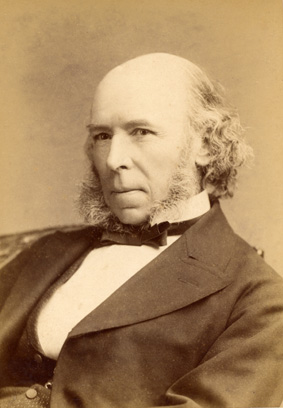
Survival of the fittest
"Survival of the fittest" is a phrase that originated from Darwinian evolutionary theory as a way of describing the mechanism of natural selection. The biological concept of fitness is defined as reproductive success.
Read the full page"Survival of the fittest" is a phrase that originated from Darwinian evolutionary theory as a way of describing the mechanism of natural selection. The biological concept of fitness is defined as reproductive success. In Darwinian terms, the phrase is best understood as "survival of the form that in successive generations will leave most copies of itself."
Herbert Spencer first used the phrase, after reading Charles Darwin's On the Origin of Species, in his Principles of Biology (1864), in which he drew parallels between his own economic theories and Darwin's biological ones: "This survival of the fittest, which I have here sought to express in mechanical terms, is that which Mr. Darwin has called 'natural selection', or the preservation of favoured races in the struggle for life."
- 5ConceptModern European
Tacit knowledge
Tacit knowledge or implicit knowledge is knowledge that is difficult to extract or articulate—as opposed to conceptualized, formalized, codified, or explicit knowledge—and is therefore more difficult to convey to others through verbalization or writing. Examples of tacit knowledge include individual wisdom, experience,
Read the full pageTacit knowledge or implicit knowledge is knowledge that is difficult to extract or articulate—as opposed to conceptualized, formalized, codified, or explicit knowledge—and is therefore more difficult to convey to others through verbalization or writing. Examples of tacit knowledge include individual wisdom, experience, insight, motor skill, and intuition. An example of "explicit" information that can be recorded, conveyed, and understood by the recipient is the knowledge that London is in the United Kingdom. On the other hand, speaking a language, riding a bicycle, kneading dough, playing an instrument, or designing and operating sophisticated machinery, each require a variety of knowledge that is difficult or impossible to transfer readily to other people and is not always known "explicitly", even by skilled practitioners.
The term tacit knowing is attributed to Michael Polanyi's Personal Knowledge (1958). In his later work, The Tacit Dimension (1966), Polanyi made the assertion that "we can know more than we can tell." He states not only that there is knowledge that cannot be adequately articulated by verbal means, but also that all knowledge is rooted in tacit knowledge. While this concept made most of its impact on philosophy of science, education and knowledge management—all fields involving humans—it was also, for Polanyi, a means to show humankind's evolutionary continuity with animals. Polanyi describes that many animals are creative, some even have mental representations, but can only possess tacit knowledge. This excludes humans, however, who developed the capability of articulation and therefore can transmit partially explicit knowledge. This relatively modest difference then turns into a big practical advantage, but there is no unexplained evolutionary gap.
- 6ConceptModern European
Technological rationality
Technological rationality or technical rationality posits that rational decisions to incorporate technological advances into society can, once the technology is ubiquitous, change what is considered rational within that society. The philosophical idea was first postulated by the Frankfurt School philosopher Herbert Mar
Read the full pageTechnological rationality or technical rationality posits that rational decisions to incorporate technological advances into society can, once the technology is ubiquitous, change what is considered rational within that society.
The philosophical idea was first postulated by the Frankfurt School philosopher Herbert Marcuse in his 1941 article "Some Social Implications of Modern Technology," published first in the journal Studies in Philosophy and Social Sciences, Vol. IX. It gained mainstream repute and a more holistic treatment in his 1964 book One-Dimensional Man.
- 7
 ConceptModern European
Tektology
Tektology (sometimes transliterated as tectology) is a term used by Alexander Bogdanov to describe a new universal science that consisted of unifying all social, biological and physical sciences by considering them as systems of relationships and by seeking the organizational principles that underlie all systems. Tekto
Read the full pageTektology (sometimes transliterated as tectology) is a term used by Alexander Bogdanov to describe a new universal science that consisted of unifying all social, biological and physical sciences by considering them as systems of relationships and by seeking the organizational principles that underlie all systems. Tektology is now regarded as a precursor of systems theory and related aspects of synergetics. The word "tectology" was introduced by Ernst Haeckel, but Bogdanov used it for a different purpose.
His work Tektology: Universal Organization Science, published in Russia between 1912 and 1917, anticipated many of the ideas that were popularized later by Norbert Wiener in Cybernetics and Ludwig von Bertalanffy in the General Systems Theory. There are suggestions that both Wiener and von Bertalanffy might have read the German edition of Tektology which was published in 1928.
- 8
 ConceptModern European
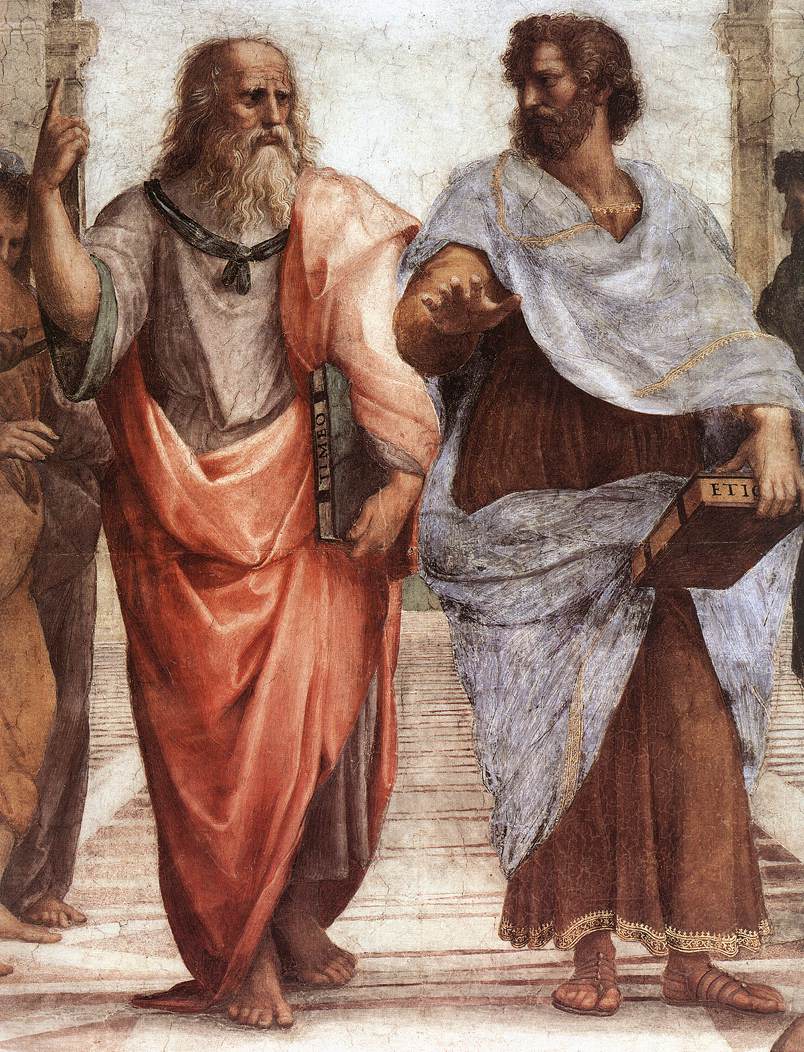
Teleology
Teleology (from τέλος, telos, 'end', 'aim', or 'goal', and λόγος, logos, 'explanation' or 'reason') or finality is a philosophical approach that explains causality in terms of ends, purposes, or goals. A purpose that is imposed by human use, such as the purpose of a fork to hold food, is called extrinsic.
Read the full pageTeleology (from τέλος, telos, 'end', 'aim', or 'goal', and λόγος, logos, 'explanation' or 'reason') or finality is a philosophical approach that explains causality in terms of ends, purposes, or goals.
A purpose that is imposed by human use, such as the purpose of a fork to hold food, is called extrinsic. Natural teleology, common in classical philosophy, though controversial today, contends that natural entities also have intrinsic purposes, regardless of human use or opinion. For instance, Aristotle claimed that an acorn's intrinsic telos is to become a fully grown oak tree. Though ancient materialists rejected the notion of natural teleology, teleological accounts of non-personal or non-human nature were explored and often endorsed in ancient and medieval philosophies, but fell into disfavor during the modern era (1600–1900).
- 9ConceptModern European
Teletransportation paradox
The teletransportation paradox or teletransport paradox (also known in alternative forms as the duplicates paradox) is a thought experiment on philosophy of identity that challenges common intuitions on the nature of self and consciousness. It was formulated by Derek Parfit in his 1984 book Reasons and Persons.
Read the full pageThe teletransportation paradox or teletransport paradox (also known in alternative forms as the duplicates paradox) is a thought experiment on philosophy of identity that challenges common intuitions on the nature of self and consciousness. It was formulated by Derek Parfit in his 1984 book Reasons and Persons. The thought experiment concerns the question of whether or not a person who undergoes teletransportation would be the same person afterwards.
Derek Parfit and others consider a hypothetical "teletransporter", a machine that puts a person to sleep, records their molecular/atomic composition and relays the recording to Mars at the speed of light. On Mars, another machine re-creates the person (from local stores of carbon, hydrogen, and so on), each atom in exactly the same relative position. Parfit poses the question of whether or not the teletransporter is actually a method of travel, or if it simply kills and makes an exact replica of the user.
- 10ConceptModern European
Tellurocracy
Tellurocracy (from Latin: tellus, lit. 'land' and Greek: κράτος, romanized: krátos, lit. 'state') is a concept proposed by Aleksandr Dugin to describe a type of civilization or state system that is defined by the development of land territories and consistent penetration into inland territories. Tellurocratic states po
Read the full pageTellurocracy (from Latin: tellus, lit. 'land' and Greek: κράτος, romanized: krátos, lit. 'state') is a concept proposed by Aleksandr Dugin to describe a type of civilization or state system that is defined by the development of land territories and consistent penetration into inland territories. Tellurocratic states possess a set state-territory in which the state-forming ethnic majority lives, around this territory further land expansion occurs. Tellurocracy is conceived of as an antonym to thalassocracy.
Most states display an amalgam of tellurocratic and thalassocratic features. In political geography, geopolitics and geo-economics, the term is used to explain the power of a country through its control over land. For example, prior to their merger, the Sultanate of Muscat was thalassocratic, but the Imamate of Oman was landlocked and purely tellurocratic. It could be suggested that most or all landlocked states are tellurocracies.
- 11ConceptModern European
Temporal logic
In logic, a temporal logic is any system of rules and symbolism for representing, and reasoning about, propositions qualified in terms of time (for example, "I am always hungry", "I will eventually be hungry", or "I will be hungry until I eat something"). Temporal logic has found an important application in formal veri
Read the full pageIn logic, a temporal logic is any system of rules and symbolism for representing, and reasoning about, propositions qualified in terms of time (for example, "I am always hungry", "I will eventually be hungry", or "I will be hungry until I eat something").
Temporal logic has found an important application in formal verification, where it is used to state requirements of hardware or software systems. For instance, one may wish to say that whenever a request is made, access to a resource is eventually granted, but it is never granted to two requestors simultaneously. Such a statement can conveniently be expressed in a temporal logic.
- 12ConceptModern European
Term logic
In logic and formal semantics, term logic, also known as traditional logic, syllogistic logic or Aristotelian logic, is a loose name for an approach to formal logic that began with Aristotle and was developed further in ancient history mostly by his followers, the Peripatetics. It was revived after the third century CE
Read the full pageIn logic and formal semantics, term logic, also known as traditional logic, syllogistic logic or Aristotelian logic, is a loose name for an approach to formal logic that began with Aristotle and was developed further in ancient history mostly by his followers, the Peripatetics. It was revived after the third century CE by Porphyry's Isagoge.
Term logic revived in medieval times, first in Islamic logic by Alpharabius in the tenth century, and later in Christian Europe in the twelfth century with the advent of new logic, remaining dominant until the advent of predicate logic in the late nineteenth century.
- 13ConceptModern European
The Archaeology of Knowledge
The Archaeology of Knowledge (French: L’archéologie du savoir) by Michel Foucault is a 1969 treatise about the methodology and historiography of the systems of thought (epistemes) and of knowledge (discursive formations). Foucault argues that these systems follow hidden rules that shape the limits of language and thoug
Read the full pageThe Archaeology of Knowledge (French: L’archéologie du savoir) by Michel Foucault is a 1969 treatise about the methodology and historiography of the systems of thought (epistemes) and of knowledge (discursive formations). Foucault argues that these systems follow hidden rules that shape the limits of language and thought in any period or domain. The archaeology of knowledge is the analytical method that Foucault used in Madness and Civilization: A History of Insanity in the Age of Reason (1961), The Birth of the Clinic: An Archaeology of Medical Perception (1963), and The Order of Things: An Archaeology of the Human Sciences (1966).
The contemporary study of the history of Ideas concerns the transitions between historical world-views, but ultimately depends upon narrative continuities that break down under close inspection. The history of ideas marks points of discontinuity between broadly defined modes of knowledge, but those existing modes of knowledge are not discrete structures among the complex relations of historical discourse. Discourses emerge and transform according to a complex set of relationships (discursive and institutional) defined by discontinuities and unified themes.
- 14ConceptModern European
The Concept of the Political
The Concept of the Political (German: Der Begriff des Politischen) is a 1932 book by the German philosopher and jurist Carl Schmitt, in which the author examines the fundamental nature of the "political" and its place in the modern world. The Concept of the Political was published in the last days of Weimar Germany.
Read the full pageThe Concept of the Political (German: Der Begriff des Politischen) is a 1932 book by the German philosopher and jurist Carl Schmitt, in which the author examines the fundamental nature of the "political" and its place in the modern world.
The Concept of the Political was published in the last days of Weimar Germany. Schmitt joined the Nazi Party in 1933, the year after its publication.
