Modern European ideas, P
- 1
 ConceptModern European
Pedagogy
Pedagogy (), most commonly understood as the approach to teaching, is the theory and practice of learning, and how this process influences, and is influenced by, the social, political, and psychological development of learners. Pedagogy, taken as an academic discipline, is the study of how knowledge and skills are impa
Read the full pagePedagogy (), most commonly understood as the approach to teaching, is the theory and practice of learning, and how this process influences, and is influenced by, the social, political, and psychological development of learners. Pedagogy, taken as an academic discipline, is the study of how knowledge and skills are imparted in an educational context, and it considers the interactions that take place during learning. Both the theory and practice of pedagogy vary greatly as they reflect different social, political, and cultural contexts.
Pedagogy is often described as the act of teaching. The pedagogy adopted by teachers shapes their actions, judgments, and teaching strategies by taking into consideration theories of learning, understandings of students and their needs, and the backgrounds and interests of individual students. Its aims may range from furthering liberal education (the general development of human potential) to the narrower specifics of vocational education (the imparting and acquisition of specific skills).
- 2
 ConceptModern European
Penology
Penology (also penal theory) is a subfield of criminology that deals with the philosophy and practice of various societies in their attempts to repress criminal activities, and satisfy public opinion via an appropriate treatment regime for persons convicted of criminal offences. The Oxford English Dictionary defines pe
Read the full pagePenology (also penal theory) is a subfield of criminology that deals with the philosophy and practice of various societies in their attempts to repress criminal activities, and satisfy public opinion via an appropriate treatment regime for persons convicted of criminal offences.
The Oxford English Dictionary defines penology as "the study of the punishment of crime and prison management," and in this sense it is equivalent with corrections. The term penology comes from "penal", Latin poena, "punishment" and the Greek suffix -logia, "study of".
- 3ConceptModern European
Pensée unique
"Pensée unique" (French pronunciation: [pɑ̃se ynik];French for 'single thought') is a pejorative expression for perceived ideological conformism or consensus, particularly when the speaker considers alternative views to be excluded from mainstream debate. The expression implies that public debate is constrained by prev
Read the full page"Pensée unique" (French pronunciation: [pɑ̃se ynik];French for 'single thought') is a pejorative expression for perceived ideological conformism or consensus, particularly when the speaker considers alternative views to be excluded from mainstream debate. The expression implies that public debate is constrained by prevailing ideological assumptions about what is possible or legitimate. Originating in France, it came to be used in particular to criticise the perceived dominance of neoliberalism and the assumption that market-oriented policies were the only viable approach to organising society.
The invention of the term pensée unique is generally attributed to journalist Jean-François Kahn, who used the expression in L'Événement du jeudi in 1990. He later popularised it during the 1994 presidential contest between Jacques Chirac and Édouard Balladur and his 1995 book La pensée unique. French political theorist Alain de Benoist also used the expression in 1993 to criticise the post-Cold War consensus in western democracies. An editorial published in January 1995 by Ignacio Ramonet in Le Monde diplomatique also participated in popularising the term, where he used it to criticise the ideological dominance of international capitalism.
- 4ConceptModern European
Performative contradiction
A performative contradiction (German: performativer Widerspruch) arises when the making of an utterance rests on necessary presuppositions that contradict the proposition asserted in the utterance. The term was coined by Jürgen Habermas and Karl-Otto Apel, who attribute the first elaboration of the concept to Jaakko Hi
Read the full pageA performative contradiction (German: performativer Widerspruch) arises when the making of an utterance rests on necessary presuppositions that contradict the proposition asserted in the utterance.
The term was coined by Jürgen Habermas and Karl-Otto Apel, who attribute the first elaboration of the concept to Jaakko Hintikka, in his analysis of Descartes' cogito ergo sum argument. Hintikka concluded that cogito ergo sum relies on performance rather than logical inference.
- 5ConceptModern European
Performative utterance
In the philosophy of language and speech acts theory, performative utterances are sentences which not only describe a given reality, but also change the social reality they are describing. In a 1955 lecture series, later published as How to Do Things with Words, J.
Read the full pageIn the philosophy of language and speech acts theory, performative utterances are sentences which not only describe a given reality, but also change the social reality they are describing.
In a 1955 lecture series, later published as How to Do Things with Words, J. L. Austin argued against a positivist philosophical claim that the utterances always "describe" or "constate" something and are thus always true or false. After mentioning several examples of sentences which are not so used, and not truth-evaluable (among them nonsensical sentences, interrogatives, directives and "ethical" propositions), he introduces "performative" sentences or illocutionary act as another instance.
- 6
 ConceptModern European
Personalism
Personalism is an intellectual stance that emphasizes the importance of the human person. Personalism exists in many different versions, and this makes it somewhat difficult to define as a philosophical and theological movement.
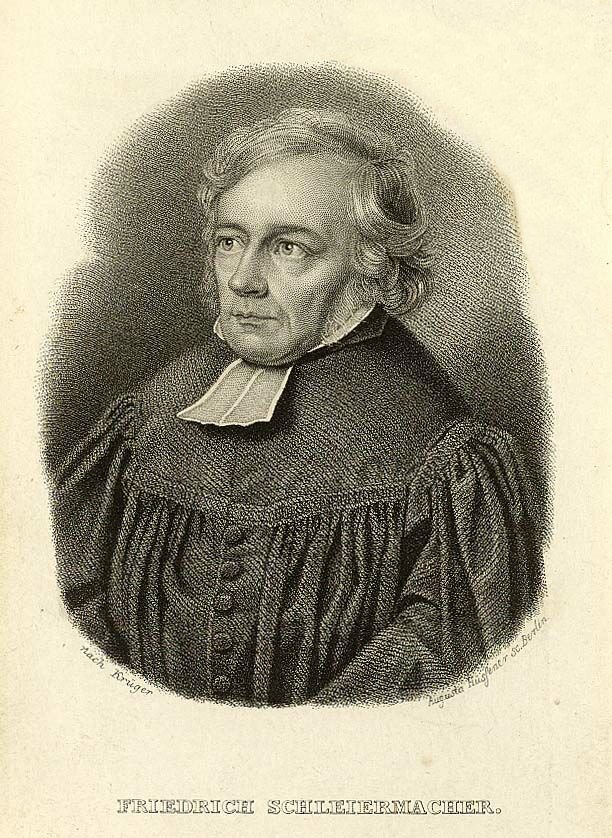
Read the full pagePersonalism is an intellectual stance that emphasizes the importance of the human person. Personalism exists in many different versions, and this makes it somewhat difficult to define as a philosophical and theological movement. Friedrich Schleiermacher first used the term personalism (German: Personalismus) in print in 1799. One can trace the concept back to earlier thinkers in various parts of the world.
Writing in the Stanford Encyclopedia of Philosophy, Thomas D. Williams and Jan Olof Bengtsson cite a plurality of "schools" holding to a "personalist" ethic and "Weltanschauung", arguing:
- 7ConceptModern European
Perspectivism
Perspectivism (also called perspectivalism) is the epistemological principle that perception and knowledge are completely dependent on perspective. Perspectivism holds that no one has access to a God's-eye view of the world and that no perspective or interpretation is of equal truth or value.
Read the full pagePerspectivism (also called perspectivalism) is the epistemological principle that perception and knowledge are completely dependent on perspective. Perspectivism holds that no one has access to a God's-eye view of the world and that no perspective or interpretation is of equal truth or value. Rather than determining truth by correspondence, perspectivism generally determines truth through comparing and evaluating different perspectives. Perspectivism is sometimes regarded as an early form of epistemological pluralism, though occasionally includes treatment of value theory, moral psychology, and realist metaphysics.
Early forms of perspectivism are found in the philosophies of Protagoras, Michel de Montaigne, and Gottfried Leibniz; however, perspectivism's first major development comes from Friedrich Nietzsche who was influenced by Gustav Teichmüller's prior use of the term. Nietzsche's perspectivism is a realist antimetaphysics rejecting both the correspondence theory of truth and the notion that truth-value always constitutes ultimate worth-value. Nietszsche believed that objective truth can be found through asymptotically studying the differences between perspectives, which contrasts Platonic notions that objective truth is completely independent from perspective.
- 8
 ConceptModern European
Phalanstère
A phalanstère (or phalanstery) was a type of building designed for a self-contained utopian community, ideally consisting of 500–2,000 people working together for mutual benefit, and developed in the early 19th century by Charles Fourier. Fourier chose the name by combining the French word phalange (phalanx, an emblema
Read the full pageA phalanstère (or phalanstery) was a type of building designed for a self-contained utopian community, ideally consisting of 500–2,000 people working together for mutual benefit, and developed in the early 19th century by Charles Fourier. Fourier chose the name by combining the French word phalange (phalanx, an emblematic military unit in ancient Greece) with the word monastère (monastery).
Fourier believed that cooperation was key to the wellbeing of a society, and that workers would be recompensed for their labor according to their contribution. Fourier saw such cooperation occurring in Phalanstères, four-level apartment complexes where the richest had the uppermost apartments and the poorest had ground-floor residences. Wealth would be determined by one's job, and jobs would be assigned based on interest and desire. There were incentives: jobs people might not enjoy doing would receive higher pay. Fourier considered trade, which he associated with Jews, the "source of all evil", and advocated that Jews be forced to perform farm work in the phalansteries. Fourier believed that the traditional house was a place of exile and oppression of women. He believed gender roles could progress by shaping them within community, more than by pursuits of sexual freedom or other Simonian concepts.
- 9ConceptModern European
Phallocentrism
Phallocentrism is the ideology that the phallus, or male sexual organ, is the central element in the organization of the social world. Phallocentrism has been analyzed in literary criticism, psychoanalysis and psychology, linguistics, medicine and health care, and philosophy.
Read the full pagePhallocentrism is the ideology that the phallus, or male sexual organ, is the central element in the organization of the social world. Phallocentrism has been analyzed in literary criticism, psychoanalysis and psychology, linguistics, medicine and health care, and philosophy.
The term was coined in 1927 by Ernest Jones, as part of his debate with Freud over the role of the phallic stage in childhood development, when he argued that "men analysts have been led to adopt an unduly phallocentric view". Drawing on the earlier arguments of Karen Horney, Jones, in a series of articles, maintained the position that women were not disappointed creatures driven by penis envy. Instead, this belief was itself a theoretical defense against castration anxiety. Freud, however, remained unmoved in his opposition to the Horney/Jones thesis, and his was the predominant psychoanalytic position after that, though some like Janet Malcolm would modify his position to the effect that "Freud's concept, of course, is... a description of phallocentrism, not a recommendation of it".
- 10ConceptModern European
Pharmakon
In critical theory, pharmakon is a concept introduced by Jacques Derrida. It is derived from the Greek source term φάρμακον (phármakon), a word that can mean either remedy or poison.
Read the full pageIn critical theory, pharmakon is a concept introduced by Jacques Derrida. It is derived from the Greek source term φάρμακον (phármakon), a word that can mean either remedy or poison. The term is closely related to pharmakos, which means ritual of human sacrifice.
In his essay "Plato's Pharmacy", Derrida explores the notion that writing is a pharmakon in a composite sense of these meanings as "a means of producing something". Derrida uses pharmakon to highlight the connection between its traditional meanings and the philosophical notion of indeterminacy. "[T]ranslational or philosophical efforts to favor or purge a particular signification of pharmakon [and to identify it as either "cure" or "poison"] actually do interpretive violence to what would otherwise remain undecidable." Whereas a straightforward view on Plato's treatment of writing (in Phaedrus) suggests that writing is to be rejected as strictly poisonous to the ability to think for oneself in dialogue with others (i.e. to anamnesis), Bernard Stiegler argues that "the hypomnesic appears as that which constitutes the condition of the anamnesic"—in other words, externalised time-bound communication is necessary for original creative thought, in part because it is the primordial support of culture.
- 11ConceptModern European
Phenomenalism
In metaphysics, phenomenalism is the view that physical objects cannot justifiably be said to exist as "things-in-themselves", but only as perceptual phenomena or sensory stimuli situated in time and in space. In particular, some forms of phenomenalism reduce all talk about physical objects in the external world to tal
Read the full pageIn metaphysics, phenomenalism is the view that physical objects cannot justifiably be said to exist as "things-in-themselves", but only as perceptual phenomena or sensory stimuli (e.g. redness, hardness, softness, sweetness, etc.) situated in time and in space. In particular, some forms of phenomenalism reduce all talk about physical objects in the external world to talk about bundles of sense data.
Phenomenalism is a radical form of empiricism. Its roots as an ontological view of the nature of existence can be traced back to George Berkeley and his subjective idealism, upon which David Hume further elaborated. John Stuart Mill had a theory of perception which is commonly referred to as classical phenomenalism. This differs from Berkeley's idealism in its account of how objects continue to exist when no one is perceiving them. Berkeley claimed that an omniscient God perceived all objects and that this was what kept them in existence, whereas Mill claimed that permanent possibilities of experience were sufficient for an object's existence. These permanent possibilities could be analysed into counterfactual conditionals, such as "if I were to have y-type sensations, then I would also have x-type sensations".
- 12ConceptModern European
Phenomenological life (Michel Henry)
Phenomenological life (French: vie phénoménologique) is life considered from a philosophical and rigorously phenomenological point of view. The relevant philosophical project is called "radical phenomenology of life" (phénoménologie radicale de la vie) or "material phenomenology of life" (phénoménologie matérielle de l
Read the full pagePhenomenological life (French: vie phénoménologique) is life considered from a philosophical and rigorously phenomenological point of view. The relevant philosophical project is called "radical phenomenology of life" (phénoménologie radicale de la vie) or "material phenomenology of life" (phénoménologie matérielle de la vie). This part of phenomenology has been developed by the French philosopher Michel Henry, since his fundamental book on The Essence of Manifestation; it studies the subjective life of individuals in their pathetic and affective reality as pure impression.
The philosopher Michel Henry defines life from a phenomenological point of view as that which possesses the faculty and the power "of feeling and experiencing oneself in each point of its being".
- 13
 ConceptModern European
Philosophical anthropology
Philosophical anthropology, sometimes called anthropological philosophy, is a discipline within philosophy that inquires into the essence of human nature. It deals with questions of metaphysics and phenomenology of the human person.
Read the full pagePhilosophical anthropology, sometimes called anthropological philosophy, is a discipline within philosophy that inquires into the essence of human nature. It deals with questions of metaphysics and phenomenology of the human person.
Philosophical anthropology is distinct from philosophy of anthropology, the study of the philosophical conceptions underlying anthropological work.
- 14ConceptModern European
Philosophical logic
Understood in a narrow sense, philosophical logic is the area of logic that studies the application of logical methods to philosophical problems, often in the form of extended logical systems like modal logic. Some theorists conceive of philosophical logic in a broader sense as the study of the scope and nature of logi
Read the full pageUnderstood in a narrow sense, philosophical logic is the area of logic that studies the application of logical methods to philosophical problems, often in the form of extended logical systems like modal logic. Some theorists conceive of philosophical logic in a broader sense as the study of the scope and nature of logic in general. In this sense, philosophical logic can be seen as identical to the philosophy of logic, which includes additional topics like how to define logic or a discussion of the fundamental concepts of logic. The current article treats philosophical logic in the narrow sense, in which it forms one field of inquiry within the philosophy of logic.
An important issue for philosophical logic is the question of how to classify the great variety of non-classical logical systems, many of which are of rather recent origin. One form of classification often found in the literature is to distinguish between extended logics and deviant logics. Logic itself can be defined as the study of valid inference. Classical logic is the dominant form of logic and articulates rules of inference in accordance with logical intuitions shared by many, like the law of excluded middle, the double negation elimination, and the bivalence of truth.


