Modern European ideas, O
- 1ConceptModern European
Object of the mind
An object of the mind is an object that exists in the mind or imagination, but which, in the real world, can only be represented or modelled. Some such objects are abstractions, concepts and scenarios in literature and fiction.
Read the full pageAn object of the mind is an object that exists in the mind or imagination, but which, in the real world, can only be represented or modelled. Some such objects are abstractions, concepts and scenarios in literature and fiction.
Closely related are intentional objects, which are what thoughts and feelings are about (intentionality), even if they are not about anything real (such as thoughts about unicorns, or feelings of apprehension about a dental appointment which is subsequently cancelled). However, intentional objects may coincide with real objects (as in thoughts about horses, or a feeling of regret about a missed appointment).
- 2
 ConceptModern European
Object permanence
Object permanence is the understanding that whether an object can be sensed has no effect on whether it continues to exist. This is a fundamental concept studied in the field of developmental psychology, the subfield of psychology that addresses the development of young children's social and mental capacities.
Read the full pageObject permanence is the understanding that whether an object can be sensed has no effect on whether it continues to exist. This is a fundamental concept studied in the field of developmental psychology, the subfield of psychology that addresses the development of young children's social and mental capacities. There is not yet scientific consensus on when the understanding of object permanence emerges in human development.
Jean Piaget, the Swiss psychologist who first studied object permanence in infants, argued that it is one of an infant's most important accomplishments, as, without this concept, objects would have no separate, permanent existence. In Piaget's theory of cognitive development, infants develop this understanding by the end of the "sensorimotor stage", which lasts from birth to about two years of age. Piaget thought that an infant's perception and understanding of the world depended on their motor development, which was required for the infant to link visual, tactile and motor representations of objects. According to this view, it is through touching and handling objects that infants develop object permanence.
- 3ConceptModern European
Objection (argument)
In argumentation, an objection is a reason arguing against a premise, argument, or conclusion. Definitions of objection vary in whether an objection is always an argument (or counterargument) or may include other moves such as questioning.
Read the full pageIn argumentation, an objection is a reason arguing against a premise, argument, or conclusion. Definitions of objection vary in whether an objection is always an argument (or counterargument) or may include other moves such as questioning.
An objection to an objection is sometimes known as a rebuttal.
- 4ConceptModern European
Obligation
An obligation is a course of action which someone is required to take, be it a legal obligation or a moral obligation. Obligations are constraints; they limit freedom.
Read the full pageAn obligation is a course of action which someone is required to take, be it a legal obligation or a moral obligation. Obligations are constraints; they limit freedom. People who are under obligations may choose to freely act under obligations. Obligation exists when there is a choice to do what is morally good and what is morally unacceptable. There are also obligations in other normative contexts, such as obligations of etiquette, social obligations, religious, and possibly in terms of politics, where obligations are requirements which must be fulfilled. These are generally legal obligations, which can incur a penalty for non-fulfilment, although certain people are obliged to carry out certain actions for other reasons as well, whether as a tradition or for social reasons.
Obligations vary from person to person: for example, a person holding a political office will generally have far more obligations than an average adult citizen, who themselves will have more obligations than a child. Obligations are generally granted in return for an increase in an individual's rights or power.
- 5ConceptModern European
Oikophobia
Oikophobia (Ancient Greek: οἶκος, romanized: oîkos, lit. 'house, household' + φόβος, phóbos, 'fear'; related to domatophobia and ecophobia) is a tendency to criticise or reject one's own home or home society while praising others. It has been used in political contexts to refer critically to political ideologies that a
Read the full pageOikophobia (Ancient Greek: οἶκος, romanized: oîkos, lit. 'house, household' + φόβος, phóbos, 'fear'; related to domatophobia and ecophobia) is a tendency to criticise or reject one's own home or home society while praising others. It has been used in political contexts to refer critically to political ideologies that are held to repudiate one's own culture. This usage of the term was popularized by the English conservative writer Roger Scruton in his 2004 book England and the Need for Nations.
In 1808 the English Romantic poet and essayist Robert Southey used it to describe a desire (particularly by the English people) to leave one's home and travel. Southey's usage is a synonym for wanderlust.
- 6ConceptModern European
On the Content and Object of Presentations
On the Content and Object of Presentations (German: Zur Lehre vom Inhalt und Gegenstand der Vorstellungen, "On the Doctrine of the Content and Object of Presentations") is an 1894 book by the Polish philosopher Kazimierz Twardowski, a student of the philosopher Franz Brentano.
Read the full pageOn the Content and Object of Presentations (German: Zur Lehre vom Inhalt und Gegenstand der Vorstellungen, "On the Doctrine of the Content and Object of Presentations") is an 1894 book by the Polish philosopher Kazimierz Twardowski, a student of the philosopher Franz Brentano.
The philosopher Reinhardt Grossmann has observed that On the Content and Object of Presentations greatly influenced the course of philosophy. The philosopher Alexius Meinong adopted Twardowski's distinction between the individual mental act, its content and its object, and his contention that there are many objects of acts that do not exist. This helped Meinong to clearly separate presentations from the objects which they intend.
- 7ConceptModern European
On What Matters
On What Matters is a three-volume book of moral philosophy by Derek Parfit. The first two volumes were published in 2011 and the third in 2017.
Read the full pageOn What Matters is a three-volume book of moral philosophy by Derek Parfit. The first two volumes were published in 2011 and the third in 2017. It is a follow-up to Parfit's 1984 book Reasons and Persons. It has an introduction by Samuel Scheffler.
Parfit defends an objective ethical theory and suggests that we have reasons to act that cannot be accounted for by subjective ethical theories. Furthermore, it attempts to present a moral theory that combines three traditional approaches in moral and political philosophy: Kantian deontology, consequentialism, and contractualism (of the sort advocated by T. M. Scanlon, and from the tradition of Thomas Hobbes, John Locke, Jean-Jacques Rousseau and John Rawls). According to Parfit, these theories converge rather than disagree, "climbing the same mountain on different sides", in Parfit's metaphor.
- 8
 ConceptModern European
One-Dimensional Man
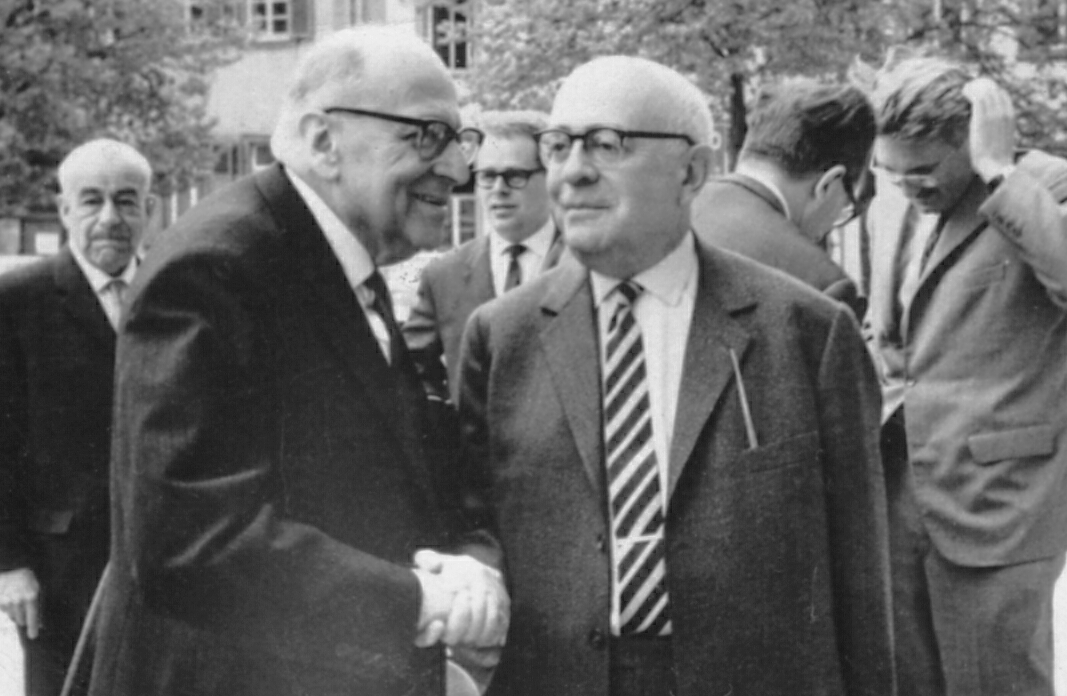
One-Dimensional Man: Studies in the Ideology of Advanced Industrial Society is a 1964 book by the German–American philosopher and critical theorist Herbert Marcuse, in which the author offers a wide-ranging critique of both the contemporary capitalist society of the Western Bloc and the communist society of the Soviet
Read the full pageOne-Dimensional Man: Studies in the Ideology of Advanced Industrial Society is a 1964 book by the German–American philosopher and critical theorist Herbert Marcuse, in which the author offers a wide-ranging critique of both the contemporary capitalist society of the Western Bloc and the communist society of the Soviet Union, documenting the parallel rise of new forms of social repression in both of these societies, and the decline of revolutionary potential in the West. He argues that the "advanced industrial society" created false needs, which integrate individuals into the existing system of production and consumption via mass media, advertising, industrial management, and contemporary modes of thought.
This results in a "one-dimensional" universe of thought and behavior, in which aptitude and ability for critical thought and oppositional behavior wither away. Against this prevailing climate, Marcuse promotes the "great refusal" (described at length in the book) as the only adequate opposition to all-encompassing methods of control. Much of the book is a defense of "negative thinking" as a disrupting force against the prevailing positivism.
- 9ConceptModern European
Onlife
Onlife is a neologism coined by philosopher Luciano Floridi in 2012. The concept is a portmanteau of online and life referring to "the new experience of a hyperconnected reality within which it is no longer sensible to ask whether one may be online or offline".
Read the full pageOnlife is a neologism coined by philosopher Luciano Floridi in 2012. The concept is a portmanteau of online and life referring to "the new experience of a hyperconnected reality within which it is no longer sensible to ask whether one may be online or offline". The term has taken inspiration from Hannah Arendt's The Human Condition (1958) "to better understand and articulate the interactions of [Information and communications technology] with notions of public space in particular and our contemporary lifeworld more generally". The manifesto brought together academics from across Europe to discuss the social effects, policy-making, ethical implications, and legal advancements related to hyperconnectivity in Europe and beyond. The term gained significant recognition with the publication of the 2015 Onlife Manifesto, edited by Floridi himself.
Onlife as concept has been used internationally by scholar Mireille Hildebrandt in the fields of criminal justice, as well as by Surveillance Studies expert David Lyon within sociology. It also significantly contributed to conceptualise the effects of hyperconnectivity in psychology, technology and law, and criminology.
- 10ConceptModern European
Ontologism
Ontologism is a philosophical system most associated with Nicholas Malebranche which maintains that God and divine ideas are the first object of our intelligence and the intuition of God the first act of our intellectual knowledge. Nicolas Malebranche was a source for many later philosophers of Ontologism such as Anton
Read the full pageOntologism is a philosophical system most associated with Nicholas Malebranche (1638–1715) which maintains that God and divine ideas are the first object of our intelligence and the intuition of God the first act of our intellectual knowledge. Nicolas Malebranche was a source for many later philosophers of Ontologism such as Antonio Rosmini. The Holy Office condemned Ontologism in 1861 as unsafe for teaching (tuto tradi non possunt).
- 11ConceptModern European
Ontology
Ontology is the philosophical study of being. It is traditionally understood as the subdiscipline of metaphysics focused on the most general features of reality.
Read the full pageOntology is the philosophical study of being. It is traditionally understood as the subdiscipline of metaphysics focused on the most general features of reality. As one of the most fundamental concepts, being encompasses all of reality and every entity within it. To articulate the basic structure of being, ontology examines the shared characteristics among all things and investigates their classification into basic types, such as the categories of particulars and universals. Particulars are unique, non-repeatable entities, such as the person Socrates, whereas universals are general, repeatable entities, like the color green. Another distinction exists between concrete objects existing in space and time, such as a tree, and abstract objects existing outside space and time, like the number 5. Systems of categories aim to provide a comprehensive inventory of reality by employing categories such as substance, property, relation, state of affairs, and event.
Ontologists disagree regarding which entities exist at the most basic level. Platonic realism asserts that universals have objective existence, while conceptualism maintains that universals exist only in the mind, and nominalism denies their existence altogether. Similar disputes pertain to mathematical objects, unobservable objects assumed by scientific theories, and moral facts. Materialism posits that fundamentally only matter exists, whereas dualism asserts that mind and matter are independent principles. According to some ontologists, objective answers to ontological questions do not exist, with perspectives shaped by differing linguistic practices.
- 12ConceptModern European
Open society
Open society (French: société ouverte) is a term coined by French philosopher Henri Bergson in 1932, and describes a dynamic system inclined to moral universalism. Bergson contrasted an open society with what he called a closed society, a closed system of law, morality or religion.
Read the full pageOpen society (French: société ouverte) is a term coined by French philosopher Henri Bergson in 1932, and describes a dynamic system inclined to moral universalism. Bergson contrasted an open society with what he called a closed society, a closed system of law, morality or religion. Bergson suggests that if all traces of civilization were to disappear, the instincts of the closed society for including or excluding others would remain.
The idea of an open society was further developed during World War II by the Austrian-born Jewish philosopher Karl Popper. Popper saw it as part of a historical continuum reaching from the organic, tribal, or closed society, through the open society (marked by a critical attitude to tradition) to the abstract or depersonalized society lacking all face-to-face interaction transactions.
- 13ConceptModern European
Open-question argument
The open-question argument is a philosophical argument put forward by British philosopher G. E.
Read the full pageThe open-question argument is a philosophical argument put forward by British philosopher G. E. Moore in §13 of Principia Ethica (1903), to refute the equating of the property of goodness with some non-moral property, X, whether natural (e.g. pleasure) or supernatural (e.g. God's command). That is, Moore's argument attempts to show that no moral property is identical to a natural property. The argument takes the form of a modus tollens:
Premise 1: If X is good by definition, then the question "Is it true that X is good?" is meaningless.
- 14ConceptModern European
Ordinary language philosophy
Ordinary language philosophy (OLP) is a philosophical methodology that sees traditional philosophical problems as rooted in misunderstandings philosophers develop by distorting or forgetting how words are ordinarily used to convey meaning in non-philosophical contexts. "Such 'philosophical' uses of language, on this vi
Read the full pageOrdinary language philosophy (OLP) is a philosophical methodology that sees traditional philosophical problems as rooted in misunderstandings philosophers develop by distorting or forgetting how words are ordinarily used to convey meaning in non-philosophical contexts. "Such 'philosophical' uses of language, on this view, create the very philosophical problems they are employed to solve."
This approach typically involves eschewing philosophical "theories" in favor of close attention to the details of the use of everyday "ordinary" language. Its earliest forms are associated with the later work of Ludwig Wittgenstein and a number of mid-20th century philosophers who can be split into two main groups, neither of which could be described as an organized "school". In its earlier stages, contemporaries of Wittgenstein at Cambridge University such as Norman Malcolm, Alice Ambrose, Friedrich Waismann, Oets Kolk Bouwsma and Morris Lazerowitz started to develop ideas recognisable as ordinary language philosophy. These ideas were further elaborated from 1945 onwards through the work of some Oxford University philosophers led initially by Gilbert Ryle, then followed by J. L. Austin and Paul Grice. This Oxford group also included H. L. A. Hart, Geoffrey Warnock, J. O. Urmson and P. F. Strawson. The close association between ordinary language philosophy and these later thinkers has led to it sometimes being called "Oxford philosophy". The posthumous publication of Wittgenstein's Philosophical Investigations in 1953 further solidified the notion of ordinary language philosophy. Philosophers a generation after Austin who made use of the method of ordinary language philosophy include Antony Flew, Stanley Cavell, John Searle and Oswald Hanfling. Today, Alice Crary, Nancy Bauer, Sandra Laugier, as well as literary theorists Toril Moi, Rita Felski, and Shoshana Felman have adopted the teachings of Cavell in particular, generating a resurgence of interest in ordinary language philosophy.
