Modern European ideas, G–H
- 1ConceptModern European
Growth of knowledge
In Karl Popper's philosophy, the main problem of methodology and philosophy of science is to explain and promote the growth of knowledge. To this purpose, Popper advocated his theory of falsifiability, testability and testing.
Read the full pageIn Karl Popper's philosophy, the main problem of methodology and philosophy of science is to explain and promote the growth of knowledge. To this purpose, Popper advocated his theory of falsifiability, testability and testing. He wrote in The Logic of Scientific Discovery: "The central problem of epistemology has always been and still is the problem of the growth of knowledge. And the growth of knowledge can be studied best by studying the growth of scientific knowledge."
- 2ConceptModern European
Gunk (mereology)
In mereology, an area of metaphysics, the term gunk applies to any whole whose parts all have further proper parts. That is, a gunky object is not made of indivisible atoms or simples.
Read the full pageIn mereology, an area of metaphysics, the term gunk applies to any whole whose parts all have further proper parts. That is, a gunky object is not made of indivisible atoms or simples. Because parthood is transitive, any part of gunk is itself gunk. The term was first used by David Lewis in his work Parts of Classes (1991), in which he conceived of the possibility of "atomless gunk", which was shortened to "gunk" by later writers. Dean W. Zimmerman defends the possibility of atomless gunk.
If point-sized objects are always simple, then a gunky object does not have any point-sized parts, and may be best described by an approach such as Whitehead's point-free geometry. By usual accounts of gunk, such as Alfred Tarski's in 1929, three-dimensional gunky objects also do not have other degenerate parts shaped like one-dimensional curves or two-dimensional surfaces.
- 3
 ConceptModern European
Habitus (sociology)
In sociology, habitus () is the way that people perceive and respond to the social world they inhabit, by way of their personal habits, skills, and disposition of character. People with a common cultural background (social class, religion, and nationality, ethnic group, education, and profession) share a habitus as the
Read the full pageIn sociology, habitus () is the way that people perceive and respond to the social world they inhabit, by way of their personal habits, skills, and disposition of character.
People with a common cultural background (social class, religion, and nationality, ethnic group, education, and profession) share a habitus as the way that group culture and personal history shape the mind of a person; consequently, a person's habitus influences and shapes their social actions.
- 4
 ConceptModern European
Haecceity
Haecceity (; from the Latin haecceitas, 'thisness') is a term from medieval scholastic philosophy, coined by followers of Duns Scotus to denote a concept that he seems to have originated: the irreducible determination of a thing that makes it this particular thing. Haecceity is a person's or object's thisness, the indi
Read the full pageHaecceity (; from the Latin haecceitas, 'thisness') is a term from medieval scholastic philosophy, coined by followers of Duns Scotus to denote a concept that he seems to have originated: the irreducible determination of a thing that makes it this particular thing. Haecceity is a person's or object's thisness, the individualising difference between the concept "a person" and the concept "Socrates" (i.e., a specific person). In modern philosophy of physics, it is sometimes referred to as primitive thisness.
The term haecceity derives from the Latin word haecceitas, which was used by the medieval scholastics as a literal translation of the equivalent term in Aristotle's Greek to ti esti (τὸ τί ἐστι)
- 5
 ConceptModern European
Hauntology
Hauntology (a portmanteau of haunting and ontology, also spectral studies, spectralities, or the spectral turn) is a range of ideas referring to the return or persistence of elements from the social or cultural past, as if to haunt the present. The term is a neologism first introduced by French philosopher Jacques Derr
Read the full pageHauntology (a portmanteau of haunting and ontology, also spectral studies, spectralities, or the spectral turn) is a range of ideas referring to the return or persistence of elements from the social or cultural past, as if to haunt the present. The term is a neologism first introduced by French philosopher Jacques Derrida in his 1993 book Spectres of Marx. It has since been invoked in fields such as visual arts, philosophy, electronic music, anthropology, criminology, politics, fiction, and literary criticism.
While Christine Brooke-Rose had previously punned "dehauntological" (on "deontological") in Amalgamemnon (1984), Derrida initially used "hauntology" for his idea of the atemporal nature of Marxism and its tendency to "haunt Western society from beyond the grave". It describes a situation of temporal and ontological disjunction in which presence, especially socially and culturally, is replaced by a deferred non-origin. The concept is derived from deconstruction, in which any attempt to locate the origin of identity or history must inevitably find itself dependent on an always-already existing set of linguistic conditions. Despite being the central focus of Spectres of Marx, the word hauntology appears only three times in the book, and there is little consistency in how other writers define the term.
- 6
 ConceptModern European
Hedonism
Hedonism is a family of philosophical views that prioritize pleasure. Psychological hedonism is the theory that all human behavior is motivated by the desire to maximize pleasure and minimize pain.
Read the full pageHedonism is a family of philosophical views that prioritize pleasure. Psychological hedonism is the theory that all human behavior is motivated by the desire to maximize pleasure and minimize pain. As a form of egoism, it suggests that people only help others if they expect a personal benefit. Axiological hedonism is the view that pleasure is the sole source of intrinsic value. It asserts that other things, like knowledge and money, only have value insofar as they produce pleasure and reduce pain. This view divides into quantitative hedonism, which only considers the intensity and duration of pleasures, and qualitative hedonism, which identifies quality as another relevant factor. The closely related position of prudential hedonism states that pleasure and pain are the only factors of well-being. Ethical hedonism applies axiological hedonism to morality, arguing that people have a moral duty to pursue pleasure and avoid pain. Utilitarian versions assert that the goal is to increase overall happiness for everyone, whereas egoistic versions state that each person should only pursue their own pleasure. Outside the academic context, hedonism is sometimes used as a pejorative term for an egoistic lifestyle seeking short-term gratification.
Hedonists typically understand pleasure and pain broadly to include any positive or negative experience. While traditionally seen as bodily sensations, some contemporary philosophers view them as attitudes of attraction or aversion toward objects or contents. Hedonists often use the term "happiness" for the balance of pleasure over pain. The subjective nature of these phenomena makes it difficult to measure this balance and compare it between different people. The paradox of hedonism and the hedonic treadmill are proposed psychological barriers to the hedonist goal of long-term happiness.
- 7ConceptModern European
Heideggerian terminology
Martin Heidegger, the 20th-century German philosopher, produced a large body of work that intended a profound change of direction for philosophy. Such was the depth of change that he found it necessary to introduce many neologisms, often connected to idiomatic words and phrases in the German language.
Read the full pageMartin Heidegger, the 20th-century German philosopher, produced a large body of work that intended a profound change of direction for philosophy. Such was the depth of change that he found it necessary to introduce many neologisms, often connected to idiomatic words and phrases in the German language.
(Ancient Greek: ἀλήθεια)
- 8ConceptModern European
Hempel's dilemma
Hempel's dilemma is a question first asked (at least on record) by the philosopher Carl Hempel in 1969. It has relevance to naturalism and physicalism in philosophy, and to philosophy of mind.
Read the full pageHempel's dilemma is a question first asked (at least on record) by the philosopher Carl Hempel in 1969. It has relevance to naturalism and physicalism in philosophy, and to philosophy of mind.
The dilemma questions how the language of physics can be used to accurately describe existence, given that it relies on imperfect human linguistics, or as Hempel stated: "The thesis of physicalism would seem to require a language in which a true theory of all physical phenomena can be formulated. But it is quite unclear what is to be understood here by a physical phenomenon, especially in the context of a doctrine that has taken a determinedly linguistic turn."
- 9ConceptModern European
Henology
Henology (from Ancient Greek ἕν (hen) 'one') stems from the pre-Socratic philosophical search for an arche or First principle, or the reduction of the variety of existences back to a single stuff or substance. The Multiple and Being are the One which is not a subspecies of anything.
Read the full pageHenology (from Ancient Greek ἕν (hen) 'one') stems from the pre-Socratic philosophical search for an arche or First principle, or the reduction of the variety of existences back to a single stuff or substance. The Multiple and Being are the One which is not a subspecies of anything.
Plato addresses the One and the plurality as a dialectical problem, the One is a generic form which extends through many forms that lie apart, i.e. the One is identified as the transcendent Good. In Neoplatonic tradition, Parmenides' primary bodies or substances are considered a transcendent One.
- 10ConceptModern European
Here is one hand
Here is one hand, here is another hand is an epistemological argument formulated by G. E.
Read the full pageHere is one hand, here is another hand is an epistemological argument formulated by G. E. Moore against philosophical skepticism about the external world and in support of common sense.
The argument takes the following form:
- 11ConceptModern European
Hermeneutic Communism
Hermeneutic Communism: from Heidegger to Marx is a 2011 book of political philosophy and Marxist hermeneutics by Gianni Vattimo and Santiago Zabala.
Read the full pageHermeneutic Communism: from Heidegger to Marx is a 2011 book of political philosophy and Marxist hermeneutics by Gianni Vattimo and Santiago Zabala.
The authors explain the book as follows "Although the material published here has never been released before, there are two books that have determined the production of this text: Gianni’s Ecce Comu: Come si diventa cio che si era (2007) and Santiago’s The Remains of Being: Hermeneutic Ontology After Metaphysics (2009). In the former, Vattimo emphasized the political necessity of reevaluating communism; in the latter, Zabala insisted on the progressive nature of hermeneutics. Hermeneutic Communism can be considered a radical development of both." In 2004, after leaving the party of the Democrats of the Left, he endorsed Marxism, reassessing positively its projectual principles and wishing for a "return" to the thought of Karl Marx and to a communism, rid of distorted Soviet developments, which have to be dialectically overcome. Vattimo asserts the continuity of his new choices with the "weak thought," thus having changed "many of his ideas." He namely refers to a "weakened Marx," as ideological basis capable of showing the real nature of communism. The new Marxist approach, therefore, emerges as a practical development of the "weak thought" into the frame of a political perspective.
- 12
 ConceptModern European
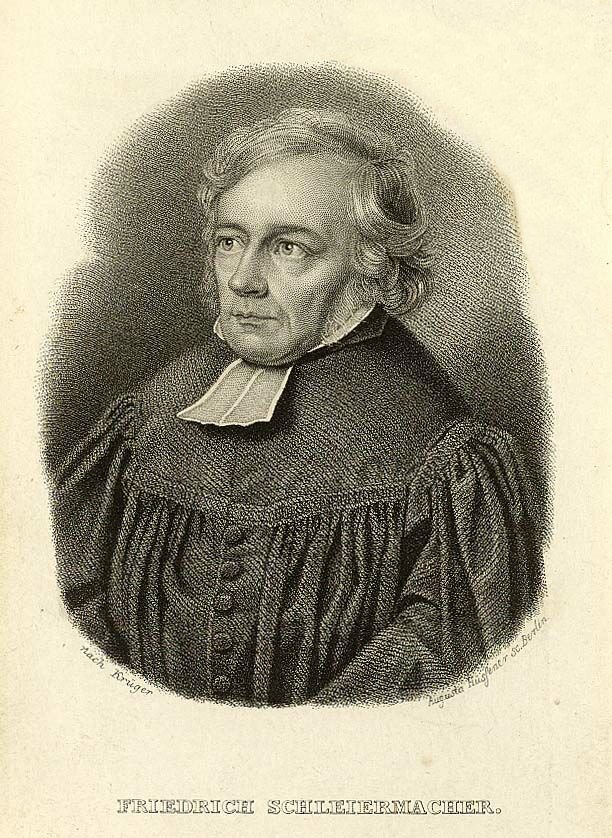
Hermeneutics
Hermeneutics () is the study of the methodological principles of interpretation, especially the interpretation of biblical texts, wisdom literature, and philosophical texts. As necessary, hermeneutics may include the art of understanding and communication.
Read the full pageHermeneutics () is the study of the methodological principles of interpretation, especially the interpretation of biblical texts, wisdom literature, and philosophical texts. As necessary, hermeneutics may include the art of understanding and communication.
Modern hermeneutics includes both verbal and non-verbal communication, as well as semiotics, presuppositions, and pre-understandings. Hermeneutics has been broadly applied in the humanities, especially in law, history and theology.
- 13
 ConceptModern European
Hermes
Hermes (; Ancient Greek: Ἑρμῆς) is an Olympian deity in ancient Greek religion and mythology considered the herald of the gods. He is also widely considered the protector of human heralds, travelers, thieves, merchants, and orators.
Read the full pageHermes (; Ancient Greek: Ἑρμῆς) is an Olympian deity in ancient Greek religion and mythology considered the herald of the gods. He is also widely considered the protector of human heralds, travelers, thieves, merchants, and orators. He is able to move quickly and freely between the worlds of the mortal and the divine aided by his winged sandals. Hermes plays the role of the psychopomp or "soul guide"—a conductor of souls into the afterlife.
In myth, Hermes functions as the emissary and messenger of the gods, and is often presented as the son of Zeus and Maia, the Pleiad. He is regarded as "the divine trickster", about which the Homeric Hymn to Hermes offers the most well-known account.
- 14ConceptModern European
Heyting arithmetic
In mathematical logic, Heyting arithmetic 𝖧𝖠 is an axiomatization of arithmetic in accordance with the philosophy of intuitionism. It is named after Arend Heyting, who first proposed it.
Read the full pageIn mathematical logic, Heyting arithmetic 𝖧𝖠 is an axiomatization of arithmetic in accordance with the philosophy of intuitionism. It is named after Arend Heyting, who first proposed it.
Heyting arithmetic can be characterized just like the first-order theory of Peano arithmetic 𝖯𝖠, except that it uses the intuitionistic predicate calculus 𝖨𝖰𝖢 for inference. In particular, this means that the double-negation elimination principle, as well as the principle of the excluded middle PEM, do not hold. Note that to say PEM does not hold exactly means that the excluded middle statement is not automatically provable for all propositions—indeed many such statements are still provable in 𝖧𝖠 and the negation of any such disjunction is inconsistent. 𝖯𝖠 is strictly stronger than 𝖧𝖠 in the sense that all 𝖧𝖠-theorems are also 𝖯𝖠-theorems.


