Modern European ideas, D–E
- 1ConceptModern European
Discourse ethics
Discourse ethics is a philosophical theory of morality, attempting to update Kantian ethics for modern egalitarian intuitions and social epistemology. The theory originated with German philosophers Jürgen Habermas and Karl-Otto Apel, and variations have been used by Frank Van Dun and Habermas' student Hans-Hermann Hopp
Read the full pageDiscourse ethics is a philosophical theory of morality, attempting to update Kantian ethics for modern egalitarian intuitions and social epistemology. The theory originated with German philosophers Jürgen Habermas and Karl-Otto Apel, and variations have been used by Frank Van Dun and Habermas' student Hans-Hermann Hoppe.
Kant extracted moral principles from the necessities forced upon a rational subject reflecting on the world. Habermas extracted moral principles from the necessities forced upon individuals engaged in the discursive justification of validity claims, from the inescapable presuppositions of communication and argumentation.
- 2ConceptModern European
Disenchantment
In social science, disenchantment (German: Entzauberung) is the cultural rationalization and devaluation of religion apparent in modern society. The term was borrowed from Friedrich Schiller by Max Weber to describe the character of a modernized, bureaucratic, secularized Western society.
Read the full pageIn social science, disenchantment (German: Entzauberung) is the cultural rationalization and devaluation of religion apparent in modern society. The term was borrowed from Friedrich Schiller by Max Weber to describe the character of a modernized, bureaucratic, secularized Western society. In Western society, according to Weber, scientific understanding is more highly valued than belief, and processes are oriented toward rational goals, as opposed to traditional society, in which "the world remains a great enchanted garden".
Weber's ambivalent appraisal of the process of disenchantment as both positive and negative was taken up by the Frankfurt School in their examination of the self-destructive elements in Enlightenment rationalism.
- 3ConceptModern European
Dispositif
Dispositif is one of the most prevalent concepts in 20th and 21st century philosophy, especially in Continental philosophy. As a philosophical term, dispositif has been introduced into the English language via the work of Michel Foucault, although there is now an extensive literature covering the much broader genealogy
Read the full pageDispositif is one of the most prevalent concepts in 20th and 21st century philosophy, especially in Continental philosophy. As a philosophical term, dispositif has been introduced into the English language via the work of Michel Foucault, although there is now an extensive literature covering the much broader genealogy of dispositifs in contemporary philosophy. In general, they are a complex arrangement of discursive and non-discursive elements, which produce our world, subject positions, and ways of understanding. In the words of Gilles Deleuze, they are "machines that make one see and speak." Power is productive in dispositifs, which not only capture, control, and orient subjects, but also create openings for resistance (either through counter-dispositifs or by rendering them inoperative). Dispositifs are used by scholars in a number of disciplines, including anthropology, art history, communication studies, cultural studies, feminism, film studies, geography, linguistics, literary theory, organization theory, political science, queer theory, science and technology studies, and sociology.
Translation issues remain a key point of contention in the English literature on dispositifs. Various translations have been used for this French word such as "apparatus", "assemblage", "arrangement", "construction", "deployment", "device", "enframing", "formation", "machinery", "mechanism", "procedure", "syntactic", and "system".
- 4
 ConceptModern European
Divine providence
In theology, divine providence, or simply providence, is God's intervention in the universe. The term Divine Providence (usually capitalized) is also used as a title of God.
Read the full pageIn theology, divine providence, or simply providence, is God's intervention in the universe. The term Divine Providence (usually capitalized) is also used as a title of God. A distinction is usually made between "general providence", which refers to God's continuous upholding of the existence and natural order of the universe, and "special providence", which refers to God's extraordinary intervention in the life of people. Miracles, and even retribution, generally fall into the latter category.
The word providence comes from Latin providentia meaning foresight or prudence, and that in turn from pro- 'ahead' and videre 'to see', while divine evolved in the late 14th century to mean "pertaining to, in the nature of or proceeding from God or a god". This word came from the Old French devin, with a similar meaning, and that from the Latin divinus, meaning 'of a god', in turn from divus, with similar meaning, which was related the Latin deus, meaning god or deity. The current use of the word "providence" in a secular sense refers to foresight, or to "timely preparation for eventualities", or (if one is a deist or an atheist) "nature as providing protective care".
- 5
 ConceptModern European
Divine right of kings
The divine right of kings is a political and religious doctrine of political legitimacy of a monarchy in post-Reformation Western Christianity, culminating in the Age of Absolutism. It is also known as the divine-right theory of kingship.
Read the full pageThe divine right of kings is a political and religious doctrine of political legitimacy of a monarchy in post-Reformation Western Christianity, culminating in the Age of Absolutism (c. 1610 – c. 1789). It is also known as the divine-right theory of kingship.
The doctrine asserts that a monarch is not accountable to any earthly authority (such as a parliament or the Pope) because their right to rule is derived from divine authority. Thus, the monarch is not subject to the will of the people, of the aristocracy, or of any other estate of the realm. It follows that only divine authority can judge a monarch, and that any attempt to depose, dethrone, resist or restrict their powers runs contrary to God's will and may constitute a sacrilegious act. It does not imply that their power is absolute.
- 6ConceptModern European
Doctrine of internal relations
The doctrine of internal relations is the philosophical doctrine that all relations are internal to their bearers, in the sense that they are essential to them and the bearers would not be what they are without them. It was a term used in British philosophy around in the early 1900s.
Read the full pageThe doctrine of internal relations is the philosophical doctrine that all relations are internal to their bearers, in the sense that they are essential to them and the bearers would not be what they are without them. It was a term used in British philosophy around in the early 1900s.
Some relations are clearly internal in the sense that, for example, four would not be four unless it were related to two in the way it is. Some relations are internal to their bearers under one description but not under another, for example, a wife would not be a wife unless suitably related to a husband, but Mary would still be Mary had she not married. Or take the internal relation where Jack is taller than his wife, Joan. Here the relation is internal to both of them together; in symbolic form, it can be given as Jack(R)Joan, where R is the ordered relation of "taller than".
- 7ConceptModern European
Double negation
In propositional logic, the double negation of a statement states that "it is not the case that the statement is not true". In classical logic, every statement is logically equivalent to its double negation, but this is not true in intuitionistic logic; this can be expressed by the formula A ≡ ~(~A) where the sign ≡ ex
Read the full pageIn propositional logic, the double negation of a statement states that "it is not the case that the statement is not true". In classical logic, every statement is logically equivalent to its double negation, but this is not true in intuitionistic logic; this can be expressed by the formula A ≡ ~(~A) where the sign ≡ expresses logical equivalence and the sign ~ expresses negation.
Like the law of the excluded middle, this principle is considered to be a law of thought in classical logic, but it is disallowed by intuitionistic logic. The principle was stated as a theorem of propositional logic by Russell and Whitehead in Principia Mathematica as:
- 8
 ConceptModern European
Doxa
Doxa (Ancient Greek: δόξα; from verb δοκεῖν, dokein, 'to appear, to seem, to think, to accept') is a common belief or popular opinion. In classical rhetoric, doxa is contrasted with episteme ('knowledge').
Read the full pageDoxa (Ancient Greek: δόξα; from verb δοκεῖν, dokein, 'to appear, to seem, to think, to accept') is a common belief or popular opinion. In classical rhetoric, doxa is contrasted with episteme ('knowledge').
The term doxa is an ancient Greek noun (δόξα) related to the verb dokein (δοκεῖν), meaning 'to appear, to seem, to think, to accept'.
- 9
 ConceptModern European
Duration (philosophy)
Duration (French: la durée) is a theory of time and consciousness posited by the French philosopher Henri Bergson. Bergson sought to improve upon inadequacies he perceived in the philosophy of Herbert Spencer, due, he believed, to Spencer's lack of comprehension of mechanics, which led Bergson to the conclusion that ti
Read the full pageDuration (French: la durée) is a theory of time and consciousness posited by the French philosopher Henri Bergson. Bergson sought to improve upon inadequacies he perceived in the philosophy of Herbert Spencer, due, he believed, to Spencer's lack of comprehension of mechanics, which led Bergson to the conclusion that time eluded mathematics and science. Bergson became aware that the moment one attempted to measure a moment, it would be gone: one measures an immobile, complete line, whereas time is mobile and incomplete. For the individual, time may speed up or slow down, whereas, for science, it would remain the same. Hence Bergson decided to explore the inner life of man, which is a kind of duration, neither a unity nor a quantitative multiplicity. Duration is ineffable and can only be shown indirectly through images that can never reveal a complete picture. It can only be grasped through a simple intuition of the imagination.
Bergson first introduced his notion of duration in his essay Time and Free Will: An Essay on the Immediate Data of Consciousness. It is used as a defense of free will in a response to Immanuel Kant, who believed free will was only possible outside time and space.
- 10
 ConceptModern European
Duty
A duty (from "due" meaning "that which is owing"; Old French: deu, did, past participle of devoir; Latin: debere, debitum, whence "debt") is a commitment or expectation to perform some action in general or if certain circumstances arise. A duty may arise from a system of ethics or morality, especially in an honor cultu
Read the full pageA duty (from "due" meaning "that which is owing"; Old French: deu, did, past participle of devoir; Latin: debere, debitum, whence "debt") is a commitment or expectation to perform some action in general or if certain circumstances arise. A duty may arise from a system of ethics or morality, especially in an honor culture. Many duties are created by law, sometimes including a codified punishment or liability for non-performance. Performing one's duty may require some sacrifice of self-interest.
A sense-of-duty is also a virtue or personality trait that characterizes someone who is diligent about fulfilling individual duties or who confidently knows their calling. A sense-of-duty can also come from a need to fulfill familial pressures and desires. This is typically seen in a militaristic or patriotic way. A distinction is commonly made between "positive duties", which a person must undertake, and "negative duties", which relate to actions from which a person must refrain. Michael Freeman notes that negative duties may be easier to fulfill as they do not require any action.
- 11
 ConceptModern European
Eclipse of Reason (Horkheimer)
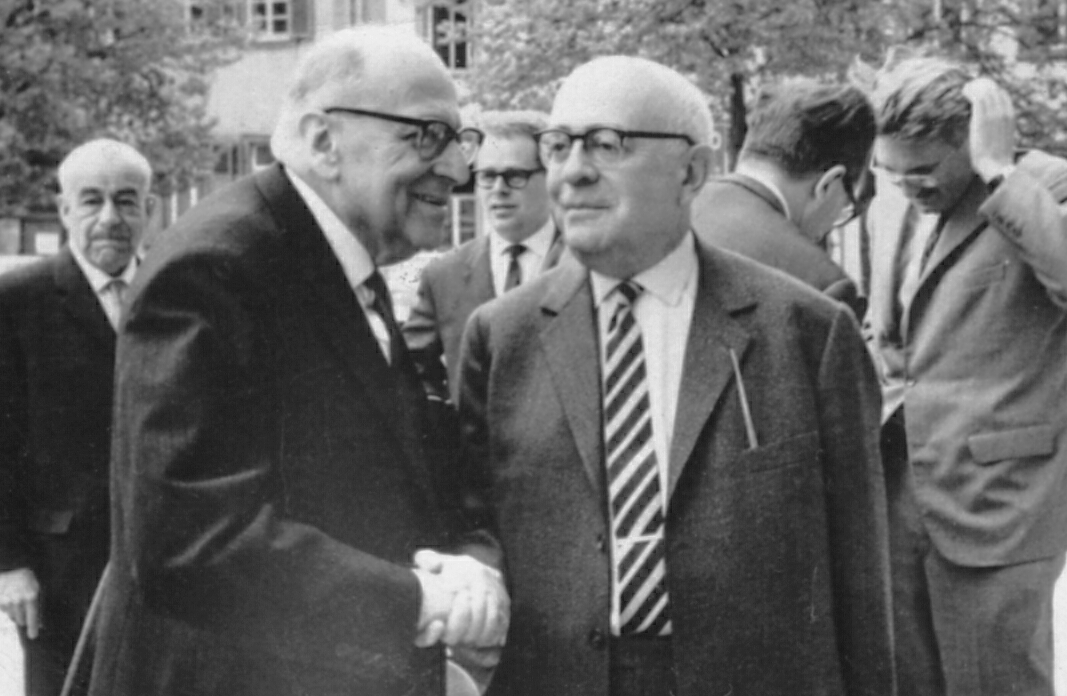
Eclipse of Reason is a 1947 book by Max Horkheimer, a Frankfurt School philosopher, arguing that in modernity, the concept of objective reason has been transformed from a truth-seeking means of ethical understanding into a tool for achieving practical goals. He calls this shift the "eclipse of reason", where reason bec
Read the full pageEclipse of Reason is a 1947 book by Max Horkheimer, a Frankfurt School philosopher, arguing that in modernity, the concept of objective reason has been transformed from a truth-seeking means of ethical understanding into a tool for achieving practical goals. He calls this shift the "eclipse of reason", where reason becomes instrumental, and contends that it has led to the rise of authoritarianism and to the dominance of a manipulative culture industry that serves the interests of those in power. He asserts that to counter these trends, it is necessary to develop a more substantive and critical form of reason that is grounded in a commitment to human emancipation and the pursuit of a more just society.
Horkheimer deals with the concept of reason within the history of Western philosophy. He defines true reason as rationality, which can only be fostered in an environment of free, critical thinking. He details the differences between objective, subjective, and instrumental reason, and writes that we have moved from the former through the center and into the latter, and that subjective and instrumental reason are interrelated.
- 12ConceptModern European
Ecosophy
Ecosophy or ecophilosophy (a portmanteau of ecological philosophy) is a philosophy of ecological harmony or equilibrium. The term was coined by the French post-structuralist philosopher Félix Guattari and the Norwegian philosopher Arne Næss, father of deep ecology, around 1992.
Read the full pageEcosophy or ecophilosophy (a portmanteau of ecological philosophy) is a philosophy of ecological harmony or equilibrium. The term was coined by the French post-structuralist philosopher Félix Guattari and the Norwegian philosopher Arne Næss, father of deep ecology, around 1992.
Ecosophy also refers to a field of practice introduced by psychoanalyst, poststructuralist philosopher, and political activist Félix Guattari. In part Guattari's use of the term demarcates a necessity for the proponents of social liberation, whose struggles in the 20th century were dominated by the paradigm of social revolution, to embed their arguments within an ecological framework which understands the interconnections of social and environmental spheres.
- 13
 ConceptModern European
Ecumenism
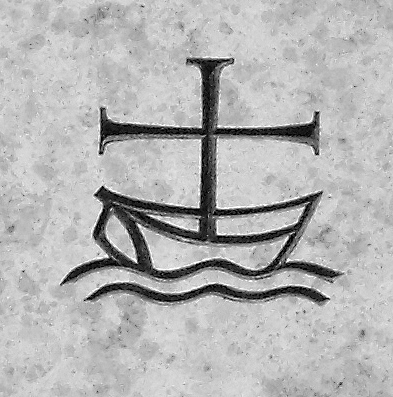
Ecumenism ( ih-KEW-mə-niz-əm; alternatively spelled oecumenism) – also called interdenominationalism, or ecumenicalism – is the concept and principle that Christians who belong to different Christian denominations and theological traditions should work together to develop closer relationships among their churches and p
Read the full pageEcumenism ( ih-KEW-mə-niz-əm; alternatively spelled oecumenism) – also called interdenominationalism, or ecumenicalism – is the concept and principle that Christians who belong to different Christian denominations and theological traditions should work together to develop closer relationships among their churches and promote Christian unity. The adjective ecumenical is thus applied to any inter-denominational initiative which encourages greater cooperation and union among Christian denominations and churches. Ecumenical dialogue is a central feature of contemporary ecumenism.
The reception of the sacrament of baptism and faith in Jesus is seen as the basis of ecumenism and its goal for Christian unity. Ecumenists cite John 17:20–23 as the biblical grounds of striving for church unity, in which Jesus prays "may all be one" in order "that the world may know" and believe the Gospel message.
- 14
 ConceptModern European
Edward N. Zalta
Edward Nouri Zalta is an American philosopher who is a senior research scholar at the Center for the Study of Language and Information at Stanford University. He received his BA from Rice University in 1975 and his PhD from the University of Massachusetts Amherst in 1981, both in philosophy.
Read the full pageEdward Nouri Zalta (; born March 16, 1952) is an American philosopher who is a senior research scholar at the Center for the Study of Language and Information at Stanford University. He received his BA from Rice University in 1975 and his PhD from the University of Massachusetts Amherst in 1981, both in philosophy. Zalta has taught courses at Stanford University, Rice University, the University of Salzburg, and the University of Auckland. Zalta is also the Principal Editor of the Stanford Encyclopedia of Philosophy.
Zalta's most notable philosophical position is descended from the positions of Alexius Meinong and Ernst Mally, who suggested that there are many non-existent objects. On Zalta's account, some objects (the ordinary concrete ones around us, like tables and chairs) exemplify properties, while others (abstract objects like numbers, and what others would call "non-existent objects", like the round square, and the mountain made entirely of gold) merely encode them.


