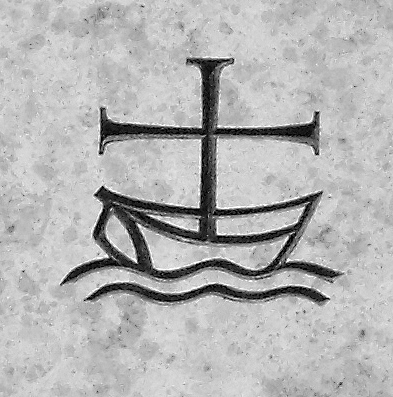
Ecumenism
Ecumenism ( ih-KEW-mə-niz-əm; alternatively spelled oecumenism) – also called interdenominationalism, or ecumenicalism – is the concept and principle that Christians who belong to different Christian denominations and theological traditions should work together to develop closer relationships among their churches and p
Ecumenism ( ih-KEW-mə-niz-əm; alternatively spelled oecumenism) – also called interdenominationalism, or ecumenicalism – is the concept and principle that Christians who belong to different Christian denominations and theological traditions should work together to develop closer relationships among their churches and promote Christian unity. The adjective ecumenical is thus applied to any inter-denominational initiative which encourages greater cooperation and union among Christian denominations and churches. Ecumenical dialogue is a central feature of contemporary ecumenism.
The reception of the sacrament of baptism and faith in Jesus is seen as the basis of ecumenism and its goal for Christian unity. Ecumenists cite John 17:20–23 as the biblical grounds of striving for church unity, in which Jesus prays "may all be one" in order "that the world may know" and believe the Gospel message.
In 1920, the Ecumenical Patriarch of the Eastern Orthodox Church, Germanus V of Constantinople, wrote a letter "addressed 'To all the Churches of Christ, wherever they may be', urging closer co-operation among separated Christians, and suggesting a 'League of Churches', parallel to the newly founded League of Nations". In 1937, Christian leaders from mainstream Christian churches resolved to establish the World Council of Churches, to work for the cause of Christian unity; it today includes churches from most major traditions of Christianity as full members, including the Assyrian Church of the East, the Old Catholic Church, the Oriental Orthodox Churches, the Lutheran World Federation, the Anglican Communion, the Baptist World Alliance, the Mennonite churches, the World Methodist Council, the Moravian Church, the Pentecostal churches and the World Communion of Reformed Churches, as well as almost all jurisdictions of the Eastern Orthodox Church; the Roman Catholic Church participates as an observer, sending delegates to official gatherings. Substantial agreement between various Christian denominations, especially those of Catholicism and Protestantism, has led to a unified presentation of the Christian religion in The Common Catechism.
Many regional councils affiliated with the World Council of Churches, such as the Middle East Council of Churches, National Council of Churches in Australia and Christian Churches Together, work for the cause of Christian unity on the domestic level, with member denominations including churches from the Oriental Orthodox, Evangelical-Lutheran, Roman Catholic, Eastern Orthodox, Methodist, Anglican, and Reformed traditions, among others.
On a local level, ecumenical initiatives occur through holding prayer services and Bible studies, with members of various denominations present, as well as the undertaking of service activities together. A number of Christian religious orders, monasteries and convents are ecumenical, with believers of a number of denominations praying together and living under a common rule of life (a prominent example is the Taizé Community). Each year, Christians observe the Week of Prayer for Christian Unity for the goal of ecumenism, which is coordinated by the World Council of Churches and adopted by many of its member churches.
Terminology
According the Roman Catholic Church, ecumenism refers to cooperation or efforts towards unity among Christian denominations, while interfaith dialogue (interreligious dialogue) refers to developing an understanding between Christianity and non-Christian religions, such as Hinduism and Shintoism.
The terms ecumenism and ecumenical come from the Greek οἰκουμένη (oikoumene), which means "the whole inhabited world", and was historically used with specific reference to the Roman Empire. The ecumenical vision comprises both the search for the visible unity of the Christian Church (Ephesians 4:3) and the "whole inhabited earth" (Matthew 24:14) as the concern of all Christians. In Christianity, the qualification ecumenical was originally used, and still is, in terms such as "ecumenical council" and "Ecumenical Patriarch", in the meaning of pertaining to the totality of the larger church (such as the Catholic Church or the Eastern Orthodox Church) rather than being restricted to one of its constituent local churches or dioceses. Used in this sense, the term carries no connotation of re-uniting the historically separated Christian denominations but presumes a unity of local congregations in a worldwide communion.
Purpose and goal
The term ecumenism as it is now commonly used refers to interdenominational cooperation between different Christian churches. These initiatives can range from local churches of different denominations operating a soup kitchen for the poor, hosting an ecumenical Bible study with participants from different Christian traditions, inviting all baptized Christians to partake in a Lovefeast when churches celebrate them, to holding an ecumenical Stations of the Cross service on Fridays during the Christian liturgical season of Lent with the service being held at a different local church each Friday (e.g. Catholic, Lutheran, Moravian, Anglican, Reformed and Methodist). A number of Christian religious orders, convents, and monasteries are ecumenical, accepting believers from various denominations; associated with these are oblates and third orders that are ecumenical as well. These Christians live according to a common rule of life and pray with one another.
The ultimate goal of ecumenism is the recognition of sacramental validity, eucharistic sharing, and the reaching of full communion between different Christian denominations. There are a variety of different expectations of what that Christian unity looks like, how it is brought about, what ecumenical methods ought to be engaged, and what both short- and long-term objectives of the ecumenical movement should be.
Baptism according to the Trinitarian formula, which is done in most mainstream Christian denominations, is seen as being the grounds for Christian ecumenism, the concept of unity amongst Christians. With respect to ecumenism, A. W. Tozer maintained that "Unity in Christ is not something to be achieved; it is something to be recognized." Ecumenists cite John 17:20–23 as the Biblical basis of striving for church unity, in which Jesus prays that Christians "may all be one" in order "that the world may know" and believe the Gospel message. As such, ecumenism has a strong implication for the Christian Church's mission of evangelism, which is referenced in John 13:35: "By this all men will know that you are my disciples, if you love one another". Additionally, Jesus emphasized that the ties of Christians to one another are much greater than those to blood relatives.
Historically, the term "ecumenism" was originally used in the context of the larger ecumenical councils organised with the support of the Roman Emperor. The aim of these councils was to clarify matters of Christian theology and doctrine, leading to the meaning of unity behind the term "ecumenical". The ecumenical councils brought together bishops from across the Roman Empire, with a total of seven ecumenical councils accepted to have been held by both the Eastern Orthodox and Catholic churches before the Great Schism dividing the two churches; the first four ecumenical councils are recognized by the Lutheran churches, Anglican Communion and Reformed churches though they are "considered subordinate to Scripture". The Assyrian Church of the East acknowledges the first two ecumenical councils, while Oriental Orthodox Churches accept the first three ecumenical councils.
Christian denominations today
Christianity has not been a monolithic faith since the first century, also known as the "Apostolic Age", and in the present day, a number of widely varied Christian groups exist, both within and without mainstream Christianity. Despite the division between these groups, a number of commonalities exist throughout their traditions, understanding of theology, governing church systems, doctrine and language. As such, many of these groups are visibly divided into different communions or denominations, groupings of Christians and their churches in full communion with one another, but to some degree set apart from other Christians.
The World Council of Churches counts 348 member churches, representing more than half a billion members of the major Christian traditions. This, with the Catholic Church's 1.25 billion Christians, indicates that 349 churches/denominations already account for nearly 80% of the world's Christian population.
One problem with the larger numbers is that single denominations can be counted multiple times. For example, the Catholic Church is a single church, or communion, comprising 24 distinct self-governing particular churches in full communion with the bishop of Rome (the largest being the Latin Church, commonly called "Roman Catholic"). Further, the Catholic Church's presence in each country is counted as a different denomination—though this is in no way an ecclesiologically accurate definition. This can result in the one Catholic Church being counted as 242 distinct denominations, as in the World Christian Encyclopedia.
Additionally, single nondenominational congregations or megachurches without denominational affiliation are effectively counted each as its own denomination, resulting in cases where entire "denominations" may account for only a handful of people. Other denominations may be very small remnants of once larger churches. The United Society of Believers in Christ's Second Appearing (Shakers) have only two full members, for example, yet are a distinct denomination.
Most current divisions are the result of historical schisms—a break in the full communion between previously united churches, bishops, or communities. Some historical schisms proved temporary and were eventually healed, others have hardened into the denominations of today. However individual denominations are counted, it is generally acknowledged that they fall into the following major "families" of churches (though certain parts of some Christian denominations, such as Quakerism, may fall into the mainline category though the majority are evangelical Quakers):
The Eastern Orthodox Church, the Oriental Orthodox Churches, and the Church of the East;
The Catholic Church (the Catholic Church is a hierarchical religious institution of universal scope, and sees itself and proclaims itself as the one commissioned by Jesus Christ to help walk the spiritual path to God);
Mainline Protestant (including the Lutheran churches, Moravian Church, Anglican Communion, Reformed churches, Waldensian churches, among others) and Old Catholic churches;
Evangelical (including the Baptist, Methodist and Plymouth Brethren churches) and Pentecostal churches;
Restorationist sects (Irvingians, Swedenborgians, Latter-day Saints, Jehovah's Witnesses, Christadelphians, La Luz del Mundo, Iglesia ni Cristo etc.) (Non-Nicene Christianity)
In the United States, the historic racial/ethnic churches are sometimes counted as a distinct family of churches, though they may otherwise fit into any one of the previous categories.
Some of these families are in themselves a single communion, such as the Catholic Church. Other families are a very general movement with no universal governing authority. Protestantism, for example, includes such diverse groups as Adventists, Anabaptists, Baptists, Congregationalists, Evangelicals, Hussites, Lutherans, Messianic Jews, Methodists (inclusive of the Holiness movement), Moravians, Pentecostals, Presbyterians, Reformed, and Waldensians. Many of these have, as a result of ecumenical dialogue, established full or partial communion agreements.
Ancient apostolic churches
The oldest lasting schism in Christianity resulted from fifth-century disagreements on Christology, heightened by philosophical, linguistic, cultural, and political differences.
The first significant, lasting split in historic Christianity, the so-called Nestorian Schism, came from the Church of the East, consisting largely of Eastern Syriac churches outside the Roman Empire, who left full communion after 431 in response to misunderstandings and personality conflicts at the Council of Ephesus. After fifteen centuries of estrangement, the Assyrian Church of the East and the Catholic Church entered into an ecumenical dialogue in the 1980s, resulting in agreement on the very issue that split them asunder, in the 1994 Common Christological Declaration, which identifies the origin of the schism as largely linguistic, due to problems of translating very delicate and precise terminology from Latin to Aramaic and vice versa.
As part of the then-ongoing Christological controversy, following the Council of Chalcedon in 451, the next large split came with the Syriac and Coptic churches dividing themselves. The churches dissented from Chalcedon, becoming today's Oriental Orthodox Churches. These also include the Armenian Apostolic Church, the Ethiopian Orthodox Tewahedo Church, and the Malankara Orthodox Syrian Church in India. In modern times, there have also been moves towards healing this division, with common Christological statements being made between Pope John Paul II and Syriac patriarch Ignatius Zakka I Iwas, as well as between representatives of both Oriental Orthodoxy and the Eastern Orthodox Church.
Great Schism
Although the Christian world as a whole did not experience any major church divisions for centuries afterward, the Eastern, predominantly Greek-speaking and Western, predominantly Latin-speaking, cultural divisions drifted toward isolation, culminating in the mutual excommunication of Patriarch of Constantinople Michael I Cerularius and the legate of then-deceased Pope of Rome Leo IX in 1054, in what is known as the Great Schism. The canonical separation was sealed by the Latin sacking of Constantinople (1204) during the Fourth Crusade and through the poor reception of the Council of Florence (1449) among the Orthodox Eastern churches.
The political and theological reasons for the schism are complex. Aside from the natural rivalry between the Eastern Roman or Byzantine Empire and the Franco-Latin Holy Roman Empire, one major controversy was the inclusion and acceptance in the West in general—and in the diocese of Rome in particular—of the Filioque clause ("and the Son") into the Nicene-Constantinopolitan Creed, which the East viewed as a violation of ecclesiastical procedure at best, an abuse of papal authority as only an Ecumenical Council could amend what had been defined by a previous council, and a heresy at worst, inasfar as the Filioque implies that the essential divinity of the Holy Spirit is derived not from the Father alone as arche (singular head and source), but from the perichoretic union between the Father and the Son. That the hypostasis or persona of the Spirit either is or is produced by the mutual, pre-eternal love between God and His Word is an explanation which Eastern Christian detractors have alleged is rooted in the medieval Augustinian appropriation of Plotinian Neoplatonism. (See Augustine of Hippo, De Trinitate.)
Both West and East agreed that the patriarch of Rome was owed a "primacy of honour" by the other patriarchs (those of Alexandria, Antioch, Constantinople and Jerusalem), but the West also contended that this primacy extended to jurisdiction, a position rejected by the Eastern patriarchs. Various attempts at dialogue between the two groups would occur, but it was only in the 1960s, under Pope Paul VI and Patriarch Athenagoras, that significant steps began to be made to mend the relationship between the two. In 1965, the excommunications were "committed to oblivion".
The resulting division remains, however, providing the Catholic Church and the Eastern Orthodox Church, both of which are globally distributed bodies and no longer restricted geographically or culturally to the "West" or "East", respectively. (There exist both Eastern Rite Roman Catholicism and Western Rite Orthodoxy, for example.) There is an ongoing and fruitful Catholic-Orthodox dialogue.
Western schisms and reformations
In Western Christianity, there were a handful of geographically isolated movements that preceded in the spirit of the Protestant Reformation. The Cathars were a very strong movement in medieval southwestern France, but did not survive into modern times, largely as a result of the Albigensian Crusade. In northern Italy and southeastern France, Peter Waldo founded the Waldensians in the 12th century, which remains the largest non-Catholic church in Italy and is in full communion with the Italian Methodist Church. In Bohemia, a movement in the early 15th century by Jan Hus called the Hussites called for reform of Catholic teaching and still exists to this day, known as the Moravian Church. Though generally counted among Protestant churches, groups such as the Waldensians and Moravians pre-exist Protestantism proper.
The Protestant Reformation began, symbolically, with the posting of Martin Luther's "Ninety-Five Theses" in Saxony on October 31, 1517, written as a set of grievances to reform the Western Church. Luther's writings, combined with the work of Swiss theologian Huldrych Zwingli and French theologian and politician John Calvin, sought to reform existing problems in doctrine and practice. Due to the reactions of ecclesiastical office holders at the time of the reformers, the Catholic Church separated from them, instigating a rift in Western Christianity. This schism created the Mainline Protestant churches, including especially the Lutheran and Reformed traditions.
In England, Henry VIII of England declared himself to be supreme head of the Church of England with the Act of Supremacy in 1531, repressing both Lutheran reformers and those loyal to the pope. Thomas Cranmer as Archbishop of Canterbury introduced the English Reformation in a form compromising between the Calvinists and Lutherans, being theologically Reformed though drawing close to Lutherans in liturgy. This schism created today's Anglican Communion.
The Radical Reformation, also mid-sixteenth century, moved beyond the Magisterial Reformation, emphasizing the invisible, spiritual reality of the Church, apart from any visible ecclesial manifestation. A significant group of Radical reformers were the Anabaptists, people such as Menno Simons and Jakob Ammann, whose movements resulted in today's communities of Mennonites, Amish, Hutterites, and Brethren churches, and to some extent, the Bruderhof Communities.
Further reform movements within Anglicanism during the 16th through 18th centuries, with influence from the Radical Reformation, produced the Puritans and Separatists, creating today's Baptists, Congregationalists, Quakers, and eventually Unitarian Universalism.
The Methodist churches, which uphold Wesleyan-Arminian theology, grew out of a revival within Anglicanism, especially in England and the American colonies, under the leadership of the brothers John Wesley and Charles Wesley, both priests in the Church of England. Within Methodism arose the holiness movement; while the majority of those aligned with the holiness movement remained within major Methodist denominations, new denominations were formed too.
The Old Catholic Church split from the Catholic Church in the 1870s because of the promulgation of the dogma of Papal Infallibility as promoted by the First Vatican Council of 1869–1870. The term "Old Catholic" was first used in 1853 to describe the members of the See of Utrecht who were not under Papal authority. The Old Catholic movement grew in America but has not maintained ties with Utrecht, although talks are under way between some independent Old Catholic bishops and Utrecht.
Adapted from the Wikipedia article Ecumenism, available under CC BY-SA 4.0.
Connections
Proposed by
1
You might also explore
 Christian philosophyModern EuropeanChristian philosophy encompasses the philosophical ideas and systems developed by Christians or in direct relation to…Christian universalismModern EuropeanChristian universalism is a school of Christian theology focused around the doctrine of universal reconciliation – the…A Critique of Pure ToleranceModern EuropeanA Critique of Pure Tolerance is a 1965 book by the philosopher Robert Paul Wolff, the sociologist Barrington Moore Jr.…A History of Philosophy (Copleston)Modern EuropeanA History of Philosophy is a history of Western philosophy written by the English Jesuit priest Frederick Charles…Absolute (philosophy)Modern EuropeanIn philosophy (often specifically metaphysics), the absolute, in most common usage, is an absolute perfect…Abstract object theoryModern EuropeanAbstract object theory (AOT) is a branch of metaphysics regarding abstract objects. Originally devised by metaphysician…