Confucius and the Hundred Schools
As the Zhou order collapsed, Chinese thinkers competed to explain how to restore harmony. Confucius taught humaneness, ritual and self-cultivation; Mencius that human nature is good, Xunzi that it is bad; Mozi demanded impartial care; the Legalists put their faith in law and punishment.
- 1
 TraditionChinese600 BCE – present
Chinese philosophy
Born in the "Hundred Schools of Thought" era, Chinese philosophy focuses on how to live and govern well — harmony, ritual, virtue and the Way (Dao).
- ◆Ethics and politics as cultivating harmony
- ◆The Dao — the Way things and people ought to go
- ◆Self-cultivation through ritual, learning and practice
- ◆Correlative thinking: yin–yang and the five phases
Read the full pageChinese philosophy took shape during the Warring States period, when rival states patronised thinkers who could tell rulers how to bring order to a fractured world. The resulting "Hundred Schools" — Confucians, Mohists, Daoists, Legalists, Logicians and more — framed philosophy as a question of the Way (dao): how a person, a family and a state should move through the world.
Confucianism stressed ritual, family relationships and moral cultivation; Daoism urged spontaneity and returning to the uncarved simplicity of nature; Mohism argued for impartial care and utility; Legalism for strict laws and state power. Buddhism arrived from India in the first centuries CE and was transformed into distinctly Chinese schools like Chan (Zen). Neo-Confucianism, from Zhu Xi to Wang Yangming, then wove these strands into a metaphysics of principle (li) and vital energy (qi) that shaped East Asia for a millennium.
- 2
 PhilosopherChinese551 – 479 BCE
Confucius
Teacher from Lu whose vision of humaneness, ritual and self-cultivation became the moral foundation of East Asian civilisation.
- ◆Ren — humaneness
- ◆Li — ritual propriety
- ◆The junzi, or exemplary person
- ◆Filial piety (xiao)
- ◆Rectification of names
- ◆Do not impose on others what you do not desire
Read the full pageKong Qiu, honoured as Kongzi ("Master Kong") and Latinised as Confucius, was born in the small state of Lu during a time of political chaos. He served briefly in government, then spent years travelling between states seeking a ruler who would put his ideas into practice. He never found one, and returned home to teach.
His sayings, collected by disciples in the Analects, centre on the cultivation of character. The key virtue is ren, humaneness — caring for others in the way appropriate to one's relationships. It is expressed and trained through li, ritual propriety, from ceremonies of state to everyday courtesies. Through study and practice anyone can become a junzi, an exemplary person, whose influence works like wind on grass.
Confucius saw the family as the root of social order, and filial piety as the root of virtue. Good government depends on rulers who lead by moral example and on "rectifying names" so that a ruler truly acts as a ruler, a father as a father. His Golden Rule — "do not impose on others what you yourself do not desire" — is one of the earliest on record.
- 3
 WorkChinesec. 475 – 221 BCE
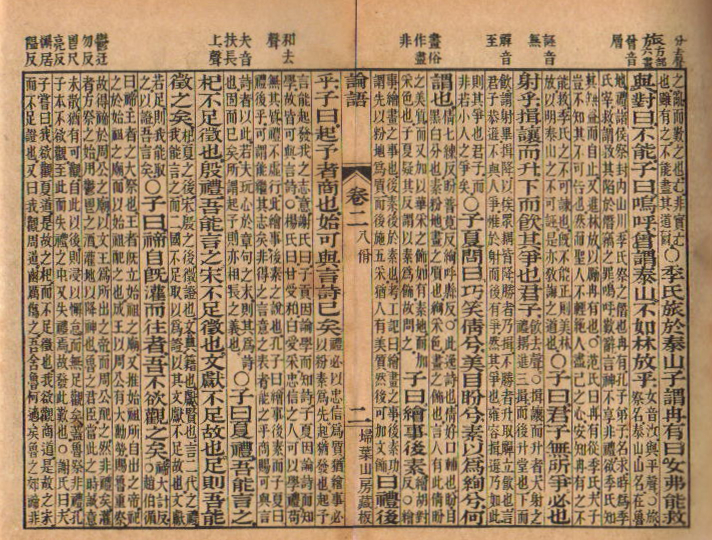
Analects
Sayings of Confucius and his disciples on virtue, ritual, learning and government.
Read the full pageThe Analects, also known as the Sayings of Confucius, is an ancient Chinese philosophical text composed of sayings and ideas attributed to Confucius and his contemporaries, traditionally believed to have been compiled by his followers.
The consensus among scholars is that large portions of the text were composed during the Warring States period (475–221 BCE), and that the work achieved its final form during the mid-Han dynasty (206 BCE – 220 CE). During the early Han, the Analects was merely considered to be a commentary on the Five Classics. However, by the dynasty's end the status of the Analects had grown to become a central text of Confucianism.
During the late Song dynasty (960–1279 CE) the importance of the Analects as a Chinese philosophy work was raised above that of the older Five Classics, and it was recognized as one of the "Four Books". The Analects has been one of the most widely read and studied books in China for more than two millennia; its ideas continue to have a substantial influence on East Asian thought and values.
- Read the full page
Ren (Chinese: 仁, meaning "co-humanity" or "humaneness") is the highest Confucian virtue meaning the good quality of a virtuous human when reaching for higher ideals or when being altruistic. According to Confucius, Ren does not have a singular definition; it encompasses benevolence, trustworthiness, courage, compassion, empathy, and reciprocity. It is expressed through interpersonal relationships and can be cultivated through the observance of proper ritual (li). Ren is also a central principle in Confucian political theory: a ruler with the Mandate of Heaven is one of great virtue, who leads by moral example and prioritizes the well-being of the people.
The single logogram for ren is a composite of two distinct common hanzi, 人 (people or a person) and 二 (two), with 人 assuming its common form inside another character, to which various interpretations have been assigned. Internally ren can mean "to look up" meaning "to aspire to higher principles or ideals" and, externally one often hears that ren means "how two people should treat one another". While such folk etymologies are common in discussions of Chinese characters, they are often misleading.
In the case of ren—usually translated as "benevolence" or "humaneness"—humaneness is human-ness, the essence of being human. For Confucius, the interaction of a completely dependent infant and caring parent is the most emotionally charged human interaction, "To love a thing means wanting it to live...". The Way of humaneness is human interaction and, through shared experience, knowing one's family. "Fan Chi asked about humaneness. The Master said it is loving people. Fan Chi asked about wisdom. The Master said it is knowing people." In other words, human love and interaction is the source of humaneness, the source of the human self.
- 5
 ConceptChinese
Li (ritual propriety)
Ritual, etiquette and the proper forms of conduct that cultivate virtue and order society.
Read the full pageIn traditional Confucian philosophy, li is an ethical concept broadly translatable as 'rite'. According to Wing-tsit Chan, li originally referred to religious sacrifices, but has come to mean 'ritual' in a broad sense, with possible translations including 'ceremony', 'ritual', 'decorum', 'propriety', and 'good form'. Hu Shih notes that li has "even been equated with natural law" by some western scholars. In Chinese cosmology, li refers to rites through which human agency participates in the larger order of the universe. One of the most common definitions of 'rite' is a performance transforming the invisible into the visible: through the performance of rites at appropriate occasions, humans make the underlying order visible. Correct ritual practice focuses and orders the social world in correspondence with the terrestrial and celestial worlds, keeping all three in harmony.
Throughout the Sinosphere, li was thought of as the abstract force that made government possible—along with the Mandate of Heaven it metaphysically combined with—and it ensured "worldly authority" would bestow itself onto competent rulers. The effect of ritual has been described as "centering", and was among the duties of the emperor, who was called the 'Son of Heaven'. However, rites were performed by all those involved in the affairs of state. Rites also involve ancestral and life-cycle dimensions. Daoists who conducted the rites of local gods as a centering of the forces of exemplary history, of liturgical service, of the correct conduct of human relations, and of the arts of divination such as the earliest of all Chinese classics—the I Ching—joining textual learning to bodily practices for harmonization of exogenous and endogenous origins of energy qi for a longer healthier life.
The graphic root of the character for li represents a type of ritual vessel (called a li), to which is added the graph for "altar stand", an element commonly marking graphs for religious objects or activities.
- Read the full page
The word junzi (Chinese: 君子; pinyin: jūn zǐ; lit. 'person of high stature' or "Son of the Vassal, or Monarch") is a Chinese philosophical term often translated as "gentleman", "superior person", or "noble man". Since the characters are overtly gendered, the term is frequently translated as "gentleman"; gentry and distinguished/moral person are common gender-neutral translations. Traditionally referring to the "aristocratic nobility of the Zhou", Junzi is employed in the Book of Changes to mean a superior, ideal person who constantly cultivates virtue and improves their character, and by Confucius in his works to describe a virtuous person with noble characters.
In Confucianism, the ideal personality is the shèng (聖), translated as saint or sage. However, since sagehood is unattainable for most people, Confucius articulated a less demanding ideal of a cultured and moral life, using the term junzi—originally denoting a member of the nobility—to refer to anyone who embodies this ideal, regardless of social status. Junzi acts according to "proper conduct" (禮; li) to bring about "harmony" (和; hé), which Confucianism maintains should rule the home, society, and the state. Li primarily has to do with social expectations, both in terms of the formal behavior and the execution of religious rites and imperial ceremonies also proper conduct in human relationships. Confucius considered a junzi to be someone who embodies humanity – one who possesses a totality of the highest human qualities. He elaborated that junzi embody the concept of rén (仁) and outlined specific qualities they have, recorded by his disciples in the Analects. A junzi embodies moral superiority by adhering to the ritual code of the tradition, displaying respect and dignity towards others, and striving for virtues such as humility, sincerity, trustworthiness, righteousness, and compassion. Zhu Xi categorized the junzi as second only to the sage.
Junzi have many characteristics. A junzi does not compromise his virtues even in poverty; a junzi's actions speaks louder than his words; a junzi is loyal, obedient and knowledgeable. A junzi disciplines himself. According to Mencius, ren is the core virtue of a junzi.
- 7
 Concept
The Golden Rule
Treat others as you would wish to be treated — found in Confucius, Hillel, Jesus, the Mahābhārata and beyond.
Read the full pageThe Golden Rule is the principle of treating others as one would want to be treated by them. It is sometimes called an ethics of reciprocity, meaning that one should reciprocate to others how one would like them to treat the person (not necessarily how they actually treat them). Various expressions of this rule can be found in the tenets of most religions and creeds through the ages, existing in China, the Indian subcontinent, the Near East, and the Greco-Roman world amongst other regions.
The maxim may appear as a positive or negative injunction governing conduct:
Treat others as one would like others to treat them (positive or directive form)
- 8
 PhilosopherChinese372 – 289 BCE
Mencius
The "second sage" of Confucianism, who argued that human nature is good and contains sprouts of virtue.
- ◆Human nature is good
- ◆Four sprouts
- ◆The right to depose a tyrant
Read the full pageMencius (孟子, Mèngzǐ, MEN-shee-əs; c. 371 – c. 289 BC), born Meng Ke (孟軻), was a Chinese Confucian philosopher, often described as the Second Sage (亞聖) to reflect his traditional esteem relative to Confucius himself. He was part of Confucius's fourth generation of disciples, inheriting his ideology and developing it further. Living during the Warring States period, he is said to have spent much of his life travelling around the states offering counsel to different rulers. Conversations with these rulers form the basis of the Mencius, which would later be canonised as a Confucian classic.
One primary principle of his work is that human nature is righteous and humane. The responses of citizens to the policies of rulers embodies this principle, and a state with righteous and humane policies will flourish by nature. The citizens, if they enjoy freedom under good rulers, will willingly take the time to care for their families, learn to perform proper rites, and become better citizens. This placed him at odds with his near contemporary, Xunzi, who believed that human nature is evil.
Mencius was born Meng Ke in the state of Zou, in what is now Zoucheng, Shandong. He was an itinerant philosopher and sage, and one of the principal interpreters of Confucianism. He was supposedly a pupil of Confucius's grandson Zisi (c. 481 – c. 402 BC). Like Confucius, according to legend, he travelled throughout China for forty years to offer advice to rulers for reform. During the Warring States period (c. 475 – 221 BC), Mencius served as an official and scholar at the Jixia Academy in the state of Qi from 319 to 312 BC. He expressed his filial piety when he took three years leave of absence from his official duties for Qi to mourn his mother's death. Disappointed at his failure to effect changes in his contemporary world, he retired from public life.
- 9
 PhilosopherChinesec. 310 – 235 BCE
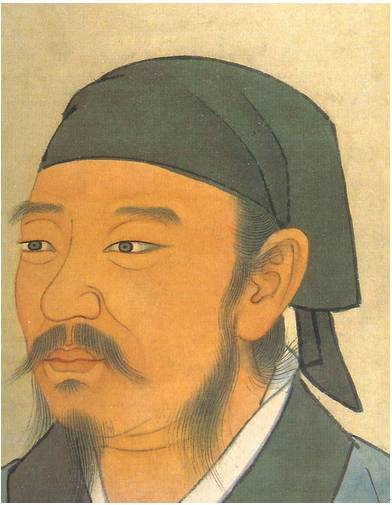
Xunzi
Confucian who held that human nature is bad and must be reformed by ritual and learning.
Read the full pageXunzi (荀子, Xúnzǐ, lit. 'Master Xun'; c. 310 – c. after 238 BCE), born Xun Kuang, was a late Warring States period Confucian Chinese philosopher, often ranked as the third great Confucian philosopher of antiquity after his predecessors Confucius and Mencius. By his time, Confucianism had suffered considerable criticism from Taoist and Mohist thinkers, and Xunzi is traditionally regarded as a synthesizer of these traditions with earlier Confucian thought. The result was a thorough and cohesive revision of Confucianism, which was crucial to the philosophy's ability to flourish in the Han dynasty and throughout the later history of East Asia. His works were compiled in the eponymous Xunzi, and survive in excellent condition. Unlike other ancient compilations, his authorship of these texts is generally secure, though it is likely that Western Han dynasty historian Liu Xiang organized them into their present form centuries after Xunzi's death.
Born in the state of Zhao, Xunzi studied at the prestigious Jixia Academy in Qi, where he learned about every major philosophical tradition of his time. After graduating, Xunzi traveled to Chu where he mastered poetry, returning to the academy as a highly regarded teacher. His students Han Fei and Li Si each had important political and academic careers, though some of their Legalist sentiments were at odds with his philosophy. Other students such as Fuqiu Bo, Zhang Cang and Mao Heng authored important editions and commentaries on the Confucian classics. Later in his life, Xunzi served in the court of Lord Chunshen and died sometime after Lord Chunshen's death. The constant warfare of his time informed his work profoundly, as did his interactions with leaders and witnessing the downfall of various states.
Xunzi's writings respond to dozens of thinkers, often naming and criticizing them directly. His well-known notion that "Human nature is evil" has led many commentators to place him opposite to Mencius, who believed human nature was intrinsically good. Both saw education and ritual as key to self-cultivation, which for Xunzi could circumvent one's naturally foul nature. Xunzi's definition of both concepts was loose, encouraging lifelong education and applied ritual to every aspect of life. Though he still cited the ancient sages, he differed from other Confucian philosophers by his insistence on emulating recent rulers rather than those of long ago. Other important topics include the promotion of music and the careful application of names.
- 10
 PhilosopherChinesec. 470 – 391 BCE
Mozi
Craftsman-philosopher who taught impartial care for all and judged doctrines by their benefits.
Read the full pageMozi, personal name Mo Di,
was a Chinese philosopher, logician, and the founder of the Mohist school of thought, making him one of the most important figures of the Warring States period (c. 475 – 221 BCE). Alongside Confucianism, Mohism became the most prominent organized school of the Hundred Schools of Thought throughout the period. The Mozi is an anthology of writings traditionally attributed to Mozi and to his followers. Mohism is considered to be the oldest form of Monotheistic thought developed indigenously in Historical China.
Born in what is now Tengzhou, Shandong, Mozi and his followers argued strongly against both Confucianism and Taoism, with a philosophy emphasizing universal love, social order, the will of Heaven, sharing, and honoring the worthy. Mohism was actively developed and practiced across the Warring States–era in China. Mohism fell out of favor following the establishment of the Qin dynasty in 221 BCE.
- 11
 Read the full page
Mohism or Moism (, Chinese: 墨家; pinyin: Mòjiā; lit. 'School of Mo') was an ancient Chinese philosophy of ethics and logic, rational thought, and scientific technology developed by the scholars who studied under the ancient Chinese philosopher Mozi (c. 470 BC – c. 391 BC), embodied in an eponymous book: the Mozi. Among its major ethical tenets were altruism and a universal, unbiased respect and concern for all people, emanating from the supreme deity Tian, stressing the virtues of austerity and utilitarianism. Illuminating its original doctrine, later Mohist logicians were pivotal in the development of Chinese philosophy.
Mohism developed at about the same time as Confucianism, Taoism and Legalism, and was one of the four main philosophic schools from around 770–221 BC, during the Spring and Autumn and Warring States period. During that time, Mohism was seen as a major rival to Confucianism. While its influence endured, Mohism almost disappeared as an independent school of thought as it transformed and integrated into sects of Taoism in the wake of the cultural transformations of the Qin dynasty, after 221 BC.
The Mohists formed a highly structured political organization that tried to realize the ideas they preached, the writings of Mozi. This political structure consisted of a network of local units in all the major kingdoms of China at the time, made up of elements from both the scholarly and working classes. Each unit was led by a juzi (literally, "chisel"—an image from craft making). Within the unit, a frugal and ascetic lifestyle was enforced. Each juzi would appoint his own successor. Like Confucians, they hired out their services not only for gain, but also in order to realize their own ethical ideals. They were often hired by the many warring kingdoms as advisors to the state. In this way, they were similar to the other wandering philosophers and knights-errant of the period.
- 12
 PhilosopherChinese280 – 233 BCE
Han Feizi
Synthesiser of Legalism: rule by law, techniques of control and positional power.
Read the full pageHan Fei (c. 280 – 233 BC), also known as Han Feizi or Han Fei Tzu, was a Chinese Legalist philosopher and statesman during the Warring States period. He was an imperial clansman of the state of Han.
Han Fei is often considered the greatest representative of Legalism for the Han Feizi, a later anthology of writings traditionally attributed to him, which synthesized the methods of his predecessors. Han Fei's ideas are sometimes compared with those of Niccolò Machiavelli, author of The Prince. Zhuge Liang is said to have attached great importance to the Han Feizi.
After the early demise of the Qin dynasty, the Legalist school was officially vilified by the Han dynasty that succeeded it. Despite its outcast status throughout the history of imperial China, Han Fei's political theory and Legalist ideas continued to heavily influence every dynasty thereafter, and the Confucian ideal of rule without laws was never to be realized.
- 13
 SchoolChinese400 – 200 BCE
Legalism
Strong state power through clear laws, rewards and punishments; it unified China under the Qin.
Read the full pageLegalism (Chinese: 法家; pinyin: fǎjiā) refers to an intellectual, political, and philosophical orientation beginning in the Warring States period of China. While heterogeneous, the Legalists generally shared a view of most people—or at least the elite—as fundamentally self-interested, emphasizing equality under the law, administrative methods, and regulations. In addition, the Legalists tended to view the strengthening of agriculture and the military as the primary concern of the state, and they advocated for reducing the power of the aristocracy in favor of meritocracy and limiting the direct interference in the affairs of state by the sovereign.
The Legalist emphasis on pragmatic, results-driven governance put them at odds with the Confucians, who advocated for cultivated virtue as a primary method of building a well-governed state, as well as the Mohists, who supported an egalitarian society driven by universal love.
While the core Legalist thinkers heavily criticised Confucianism and Mohism, their relationship with Daoism was much more complex. Some legalist thinkers, such as Han Fei (considered by many to be the greatest Legalist thinker), were greatly influenced by Daoism, and drew inspiration from the Daoist concept of Wu wei (non-action) to describe their ideal of a ruler who retreated from active management of the state in favor of setting universal rules and standards. The confluence of Legalist and Daoist ideas is referred to as Huang-Lao, which was the dominant ideology of the early Han dynasty.
- 14
 PhilosopherChinesec. 325 – 250 BCE
Gongsun Long
Logician of the School of Names, author of "a white horse is not a horse".
Read the full pageGongsun Long (c. 320 – 250 BC), courtesy name Zibing, was a Chinese philosopher, writer, and member of the School of Names, also known as the Logicians, of ancient Chinese philosophy. Gongsun ran a school and received patronage from rulers, advocating peaceful means of resolving disputes amid the martial culture of the Warring States period. His collected works comprise the Gongsun Longzi (公孫龍子) anthology. Comparatively few details are known about his life, and much of his work has been lost—only six of the fourteen essays he originally authored are still extant.
In book 17 of the Zhuangzi, Gongsun speaks of himself:
When young, I studied the way of the former kings. When I grew up, I understood the practice of kindness and duty. I united the same and different, separated hard from white, made so the not-so and admissible the inadmissible. I confounded the wits of the hundred schools and exhausted the eloquence of countless speakers. I took myself to have reached the ultimate.
- 15ArgumentChinese
A white horse is not a horse
Gongsun Long's paradox on the relation between categories and their members.
Read the full pageThe White Horse Dialogue (Chinese: 白馬論) is a chapter of the Gongsun Longzi, a Warring States period text attributed to Gongsun Long (fl. 284–259 BCE). In the dialogue, two unnamed speakers debate the proposition "a white horse is not a horse" (白馬非馬, bái mǎ fēi mǎ). The text has been the subject of scholarly criticism and commentary for over two thousand years and is considered one of the best-known arguments from the School of Names.
A central interpretive question is the meaning of 非 (fēi, "is not"), which can express either non-identity ("is not the same as") or exclusion from a category ("is not a member of"). The two speakers appear to be operating under different readings of this word, one treating the proposition as a claim about concepts and the other treating it as a claim about animals. Whether the dialogue was intended as serious philosophy, sophistry, or some combination of the two is disputed. In Western philosophy, propositions such as this have been intensely studied in depth since the linguistic turn in Analytic philosophy.
Most of Gongsun's writings have been lost; the received Gongsun Longzi text contains only six of the recorded fourteen original chapters. Parts of the dialogue are dislocated and a small number of words are theorized to have been lost early in the text's transmission history. Thus, some commentators and translators rearrange some sentences for clarity. Classical Chinese does not mark grammatical number. Where 'a horse' or 'a white horse' appears in this translation, the original is equally consistent with a plural or generic reading. The dialogue is between two unnamed speakers:


