Jewish thinkers, early 20th century
- 1
 PhilosopherJewish1881 – 1983
Mordecai Kaplan
Mordecai Menahem Kaplan was an American Conservative rabbi, writer, Jewish educator, professor, theologian-philosopher, activist, and religious leader who founded the Reconstructionist movement of Judaism with his son-in-law, Rabbi Ira Eisenstein. He has been described as a "towering figure" in the recent history of Ju
Read the full pageMordecai Menahem Kaplan (Hebrew: מֹרְדֳּכַי מְנַחֵם קַפְלַן; June 11, 1881 – November 8, 1983) was an American Conservative rabbi, writer, Jewish educator, professor, theologian-philosopher, activist, and religious leader who founded the Reconstructionist movement of Judaism with his son-in-law, Rabbi Ira Eisenstein. He has been described as a "towering figure" in the recent history of Judaism for his influential work in adapting it to modern society, contending that Judaism should be a unifying and creative force by stressing the cultural and historical character of the religion as well as theological doctrine.
Mordecai Menahem Kaplan was born Mottel Kaplan in Sventiany in the Russian Empire (present-day Švenčionys in Lithuania) on June 11, 1881, the son of Haya (née Anna) and Rabbi Israel Kaplan. His father, who received semikhah (סְמִיכָה) by leading Lithuanian Jewish scholars, went to serve as a dayan (דַּיָּן, 'judge') in the court of Chief Rabbi Jacob Joseph in New York City in 1888. Mordecai was brought over to New York in 1889, at the age of nine.
- 2
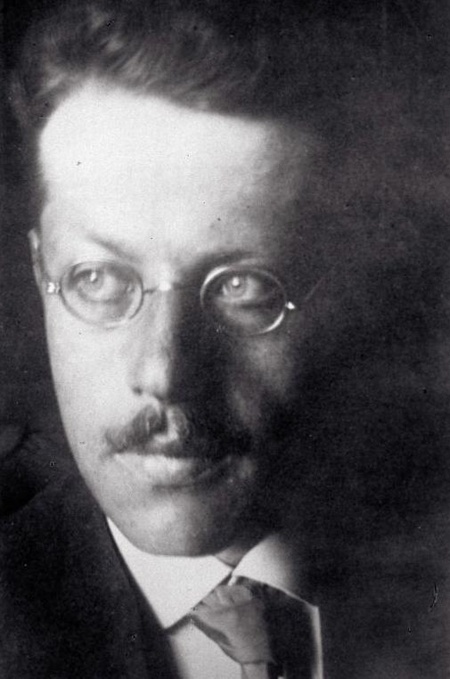 PhilosopherJewish1886 – 1929
Franz Rosenzweig
Franz Rosenzweig was a German theologian, philosopher, and translator.
- ◆[[#The Star of Redemption
- ◆Star of redemption]]
Read the full pageFranz Rosenzweig (; German: [ˈfʁant͡s ˈʁoːzn̩ˌt͡svaɪk] ; 25 December 1886 – 10 December 1929) was a German theologian, philosopher, and translator.
Franz Rosenzweig was born in Kassel, Germany, to an affluent, minimally observant Jewish family. His father owned a factory for dyestuff and was a city council member. Through his granduncle, Adam Rosenzweig, he came in contact with traditional Judaism and was inspired to request Hebrew lessons when he was around 11 years old. After graduating from High School, he served as a voluntary teacher at the Samsonschule in Wolfenbuettel. He started to study medicine for five semesters in Göttingen, Munich, and Freiburg. In 1907 he changed subjects and studied history and philosophy at the University of Freiburg and the University of Berlin.
- 3
 PhilosopherJewish1891 – 1942
Edith Stein
Edith Stein, Saint Teresa Benedicta of the Cross, was a German philosopher and Discalced Carmelite nun. Known for her phenomenological research on empathy under Edmund Husserl, she later integrated scholasticism and mysticism in her writings and lectured extensively on women's vocation and education.
Read the full pageEdith Stein (12 October 1891 – c. 9 August 1942), Saint Teresa Benedicta of the Cross, was a German philosopher and Discalced Carmelite nun. Known for her phenomenological research on empathy under Edmund Husserl, she later integrated scholasticism and mysticism in her writings and lectured extensively on women's vocation and education. Raised in a Jewish family, she converted to Catholicism in 1922 and entered Carmel in 1933. During the Holocaust, she was deported to Auschwitz-Birkenau and murdered in 1942; she was canonized as a martyr and is one of the patron saints of Europe.
Stein was born into an observant German Jewish family, but gave up prayer in her teenage years. After beginning university studies in psychology before moving to Göttingen to study philosophy under Husserl, her education was interrupted by World War I, during which she volunteered at an Austro-Hungarian military hospital in 1915. Returning to earn her doctorate at the University of Freiburg in 1916 with a dissertation published as On the Problem of Empathy, she served as Husserl's assistant before pursuing a habilitation, which was repeatedly blocked by gender and anti-Jewish prejudice. After reading the autobiography of the Carmelite reformer Teresa of Ávila, Stein converted to Catholicism in 1922 and taught at a Catholic school in Speyer while translating Thomas Aquinas and lecturing widely on women's roles in society and education.
- 4
 PhilosopherJewish1897 – 1982
Gershom Scholem
Gershom Scholem was a German philosopher and historian. Widely regarded as the founder of modern academic study of the Kabbalah, Scholem was appointed the first professor of Jewish mysticism at Hebrew University of Jerusalem.
Read the full pageGershom Scholem (Hebrew: גֵרְשׁׂם שָׁלוֹם; 5 December 1897 – 21 February 1982) was a German philosopher and historian. Widely regarded as the founder of modern academic study of the Kabbalah, Scholem was appointed the first professor of Jewish mysticism at Hebrew University of Jerusalem.
Gerhard (Gershom) Scholem was born in Berlin to Arthur Scholem and Betty Hirsch Scholem. His father was a printer. His older brother was the German Communist leader Werner Scholem. He studied Hebrew and Talmud with an Orthodox rabbi.
- 5
 PhilosopherJewish1903 – 1994
Yeshayahu Leibowitz
Yeshayahu Leibowitz was an Israeli Orthodox Jewish public intellectual and polymath. He was a professor of biochemistry, organic chemistry, and neurophysiology at the Hebrew University of Jerusalem, and an editor of the Encyclopaedia Hebraica, a comprehensive encyclopedia in the Hebrew language.
- ◆Jewish philosophy
- ◆Morality
- ◆Chemistry
- ◆History of science
- ◆Politics
- ◆Ethics
Read the full pageYeshayahu Leibowitz (Hebrew: ישעיהו ליבוביץ; 29 January 1903 – 18 August 1994) was an Israeli Orthodox Jewish public intellectual and polymath. He was a professor of biochemistry, organic chemistry, and neurophysiology at the Hebrew University of Jerusalem, and an editor of the Encyclopaedia Hebraica, a comprehensive encyclopedia in the Hebrew language. He was known for his outspoken views on politics, religion and Jewish philosophy.
Leibowitz argued that the State of Israel and Zionism had become more sacred to Israeli Jews than Jewish humanist values, and described Israeli conduct in the occupied Palestinian territories as "Judeo-Nazi" in nature, while warning of the dehumanizing effect of the occupation on both the victims and the oppressors. He was a staunch believer in the separation of religion and state, and argued that the blend of politics and religion in Israel corrupted the Jewish faith. He was referred to as the "prophet of wrath" due to his frequent criticism of Zionism.
- 6
 PhilosopherJewish1906 – 1995
Emmanuel Levinas
Ethics is first philosophy: the face of the Other commands responsibility.
- ◆"The Other"
- ◆"The Face"
Read the full pageEmmanuel Levinas (born Emanuelis Levinas ; French: [ɛmanɥɛl levinas]; 12 January 1906 – 25 December 1995) was a French philosopher of Lithuanian Jewish ancestry who is known for his work within Jewish philosophy, existentialism, and phenomenology, focusing on the relationship of ethics to metaphysics and ontology.
Levinas was born on 12 January 1906, into a middle-class Litvak family in Kaunas, in present-day Lithuania, then Kovno district, at the Western edge of the Russian Empire. Because of the disruptions of World War I, the family moved to Kharkiv in Ukraine in 1916, where they stayed during the Russian revolutions of February and October 1917. In 1920, his family returned to the Republic of Lithuania. Levinas's early education was in secular, Russian-language schools in Kaunas and Kharkiv. Upon his family's return to the Republic of Lithuania, Levinas spent two years at a Jewish gymnasium before departing for France, where he commenced his university education.
- 7
 PhilosopherJewish1907 – 1972
Abraham Joshua Heschel
Abraham Joshua Heschel was a Polish-born American rabbi and one of the leading Jewish theologians and philosophers of the 20th century. Heschel, a professor of Jewish mysticism at the Jewish Theological Seminary of America, authored a number of widely read books on Jewish philosophy and was a leader in the U.S. civil r
Read the full pageAbraham Joshua Heschel (January 11, 1907 – December 23, 1972) was a Polish-born American rabbi and one of the leading Jewish theologians and philosophers of the 20th century. Heschel, a professor of Jewish mysticism at the Jewish Theological Seminary of America, authored a number of widely read books on Jewish philosophy and was a leader in the U.S. civil rights movement.
Abraham Joshua Heschel was born in Warsaw in 1907, the youngest of six children of Moshe Mordechai Heschel and Rifka Reizel Heschel née Perlow. His father was originally from Medzhybizh and his mother was from Mińsk Mazowiecki. He was descended from preeminent European rabbis on both sides of his family. His paternal great-great-grandfather and namesake was Rebbe Avraham Yehoshua Heshel of Apt in present-day Poland. His mother was also a descendant of Avraham Yehoshua Heshel and other Hasidic dynasties. His siblings were Sarah, Dvora Miriam, Esther Sima, Gittel, and Jacob. Their father Moshe died of influenza in 1916 when Abraham was nine. He was tutored by a Gerrer Hasid who introduced him to the thought of Rabbi Menachem Mendel of Kotzk.
- 8
 PhilosopherJewish1909 – 1997
Isaiah Berlin
Sir Isaiah Berlin was a British social and political theorist, philosopher, and historian of ideas. Born into a Russian-Jewish family in Riga, he moved to Petrograd at the age of six, where he witnessed the Russian Revolution.
- ◆negative
- ◆positive liberty
- ◆Counter-Enlightenment
- ◆value pluralism
Read the full pageSir Isaiah Berlin (6 June 1909 – 5 November 1997) was a British social and political theorist, philosopher, and historian of ideas.
Born into a Russian-Jewish family in Riga, he moved to Petrograd at the age of six, where he witnessed the Russian Revolution. In 1921, his family moved to England, and he was educated at St Paul's School, London and Corpus Christi College, Oxford. In 1932, at the age of 23, he was elected to a prize fellowship at All Souls College, Oxford. In addition to his own output, he translated works by Ivan Turgenev from Russian into English. During the Second World War, he worked for the British Diplomatic Service.