Japanese & Korean thinkers, renaissance & early modern
- 1PhilosopherJapanese & Korean1506 – 1544
Hwang Jini
Hwang Jini, also spelled Hwang Chini, was one of the most famous kisaeng of the Joseon period. She was also known by her kisaeng name Myŏngwŏl (명월; 明月).
- ◆Korean dance
Read the full pageHwang Jini (Korean: 황진이; Hanja: 黃眞伊; 1506–1567), also spelled Hwang Chini, was one of the most famous kisaeng of the Joseon period. She was also known by her kisaeng name Myŏngwŏl (명월; 明月). She lived during the reign of King Jungjong. She was noted for her exceptional beauty, charming quick wit, extraordinary intellect, and her assertive and independent nature. She has become an almost-mythic figure in modern Korea, inspiring novels, operas, films, and television series.
A crater on Venus, Hwangcini, is named after her.
- 2
 PhilosopherJapanese & Korean1608 – 1648
Nakae Tōju
Nakae Tōju was a writer and Confucian scholar of early Edo period Japan popularly known as "the Sage of Ōmi".
Read the full pageNakae Tōju (中江 藤樹; Japanese pronunciation: [toꜜː.dʑɯ], 21 April 1608 – 11 October 1648) was a writer and Confucian scholar of early Edo period Japan popularly known as "the Sage of Ōmi".
Nakae was the eldest son of a farmer in Ōmi Province. When he was nine years old, he was adopted by his grandfather, Yoshinaga Tokuzaemon, who was a samurai with a stipend of 150 koku serving Yonago Domain in Hoki Province. In 1617, the daimyō of Yonago, Kato Sadayasu was transferred to Ōzu Domain in Iyo Province and Nakae relocated to Shikoku with his grandparents. In 1622, his grandfather died and Nakae inherited a position with a stipend of 100 koku. However, in 1634, at the age of 27, he left his position without officially resigning due to filial piety for his mother and health reasons. After hiding for a time in Kyoto, he returned to his home village of Ogawa in Ōmi (currently part of Takashima, Shiga, where he opened a private academy for Confucian studies. This was the Tōju Shoin (藤樹書院). The Tōju Shoin takes its name from a giant wisteria which grew behind Nakae's house. His students nicknamed him Mr Wisteria Tree, or "Tōju" in the kanbun pronunciation of its kanji.
- 3
 PhilosopherJapanese & Korean1622 – 1685
Yamaga Sokō
Yamaga Sokō was a Japanese military writer and philosopher under the Tokugawa shogunate of Edo period in Japan. As a scholar he applied the Confucian idea of the "superior man" to the samurai class of Japan.
Read the full pageYamaga Sokō (山鹿 素行; 21 September 1622 – 23 October 1685) was a Japanese military writer and philosopher under the Tokugawa shogunate of Edo period in Japan. As a scholar he applied the Confucian idea of the "superior man" to the samurai class of Japan. This became an important part of the samurai way of life and code of conduct.
Yamaga was born in Aizuwakamatsu the son of a rōnin formerly of Aizu Domain and moved to Edo at the age of six in 1628. He had been studying the Chinese classics from that time, and at the age of nine became a student of Hayashi Razan, a follower of Neo-Confucianism who had developed a practical blending of Shinto and Confucian beliefs and practices which became the foundation for the dominant ideology of the Tokugawa shogunate. At the age of 15, he travelled to Kai Province to study military strategy under Obata Kagenori.
- 4
 PhilosopherJapanese & Korean1627 – 1705
Itō Jinsai
Itō Jinsai, who also went by the pen name Keisai, was a Japanese Confucian philosopher. He is considered to be one of the most influential Confucian scholars of seventeenth century Japan, and the Tokugawa period generally, his teachings flourishing especially in Kyoto and the Kansai area through the final years of the
Read the full pageItō Jinsai (伊藤 仁斎; Japanese pronunciation: [i.toː (|) (d)ʑiꜜɰ̃.sai], August 30, 1627, Kyoto, Japan – April 5, 1705, Kyoto), who also went by the pen name Keisai, was a Japanese Confucian philosopher. He is considered to be one of the most influential Confucian scholars of seventeenth century Japan, and the Tokugawa period (1600–1868) generally, his teachings flourishing especially in Kyoto and the Kansai area through the final years of the Tokugawa shogunate.
Jinsai's school, known as the Kogigaku, criticized the teachings of Song dynasty Chinese philosopher Zhu Xi 朱熹 (1130–1200) and instead advocated a philosophical vision based on an understanding of the meanings of key terms in the Analects and the Mencius. His school has been considered part of a larger movement, Kogaku ("ancient learning'), including earlier scholars such as Yamaga Sokō 山鹿素行 (1622–1685), and later thinkers such as Ogyū Sorai 荻生徂徠 (1666–1728). However, Jinsai never mentions Sokō or his ideas, and Jinsai's own statements of philosophical meaning were strongly and systematically criticized by Sorai. Rather than as a thinker aligned with the so-called Kogaku movement, Jinsai's ideas are best understood on their own terms. Jinsai is widely known for his outspoken affirmation of the validity of human emotions, and his articulation of a metaphysics highlighting the pervasiveness and infinite creative potential of a "unitary generative force" (Jpn: ichigenki). Indicative of his renown in the larger world of East Asian philosophy, Jinsai's writings have frequently been compared to those of the Qing dynasty scholar Dai Zhen 戴震 (1724–1777), whose key work, Mengzi ziyi shuzheng (The Meanings of Philosophical Terms in the Mencius) is very similar in theme and method to Jinsai's opus, the Gomō jigi (The Meanings of Philosophical Terms in the Analects and Mencius).
- 5
 PhilosopherJapanese & Korean1686 – 1769
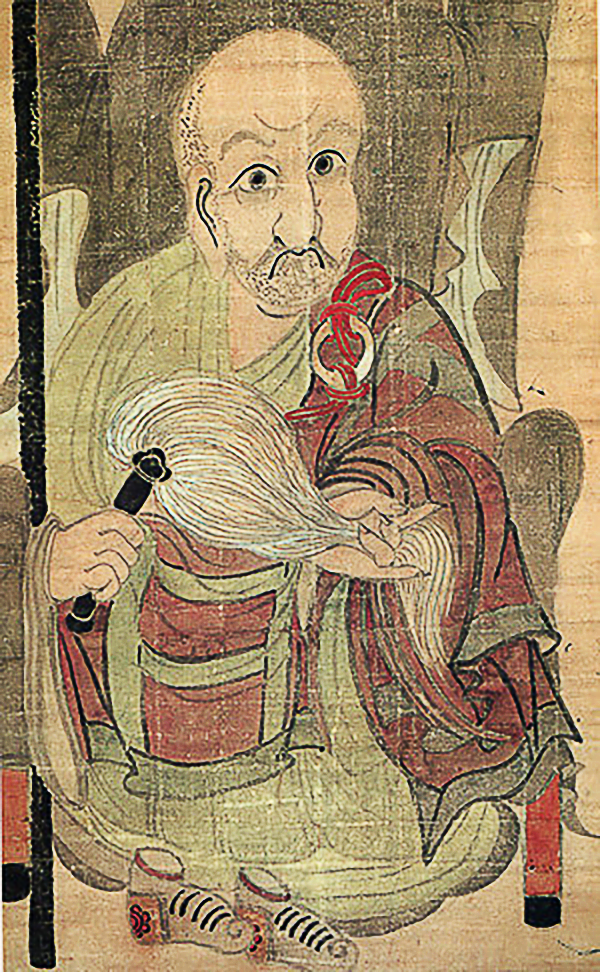
Hakuin Ekaku
Hakuin Ekaku, also known as Kokurin, was one of the most influential figures in Japanese Zen Buddhism, who regarded bodhicitta, working for the benefit of others, as the ultimate concern of Zen-training. While never having received formal dharma transmission, he is regarded as the reviver of the Japanese Rinzai school
Read the full pageHakuin Ekaku (白隠 慧鶴; January 19, 1686 – January 18, 1769), also known as Kokurin, was one of the most influential figures in Japanese Zen Buddhism, who regarded bodhicitta, working for the benefit of others, as the ultimate concern of Zen-training. While never having received formal dharma transmission, he is regarded as the reviver of the Japanese Rinzai school from a period of stagnation, focusing on rigorous training methods integrating meditation and koan practice.
Hakuin was born in 1686 in the small village of Hara, at the foot of Mount Fuji. His mother was a devout Nichiren Buddhist, and it is likely that her piety was a major influence on his decision to become a Buddhist monk. As a child, Hakuin attended a lecture by a Nichiren monk on the topic of the Eight Hot Hells. This deeply impressed the young Hakuin, and he developed a pressing fear of hell, seeking a way to escape it. He eventually came to the conclusion that it would be necessary to become a monk.
- 6
 PhilosopherJapanese & Korean1730 – 1801
Motoori Norinaga
Motoori Norinaga was a Japanese scholar of Kokugaku active during the Edo period. He is conventionally ranked as one of the Four Great Men of Kokugaku (nativist) studies.
- ◆Lyman's Law
Read the full pageMotoori Norinaga (本居 宣長; 21 June 1730 – 5 November 1801) was a Japanese scholar of Kokugaku active during the Edo period. He is conventionally ranked as one of the Four Great Men of Kokugaku (nativist) studies.
Norinaga was born in what is now Matsusaka in Ise Province (now part of Mie Prefecture). His ancestors were vassals of the Kitabatake clan in Ise Province for many generations. However, in the early Edo period they abandoned their samurai status, changing their surname to Ozu, and relocated to Matsusaka, where they became cotton wholesalers. The family initially prospered and had a store in Edo as well. (The film director Yasujirō Ozu was a descendant of the same line). After his elder brother's death, Norinaga succeeded to the Ozu line. At one stage he was adopted out to a paper-making family but the bookish boy was not suited to business.