Japanese & Korean thinkers, early 20th century
- 1
 PhilosopherJapanese & Korean1894 – 1972
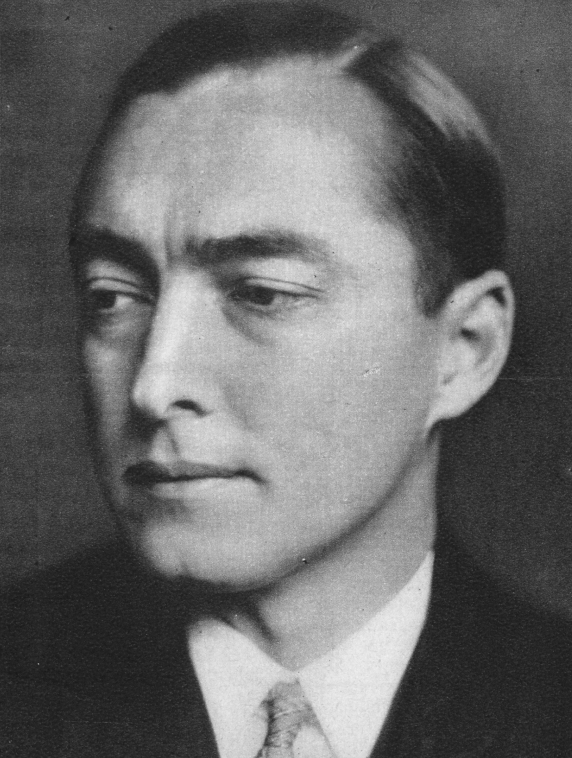
Richard Nikolaus von Coudenhove-Kalergi
Richard Nikolaus Eijiro, Count of Coudenhove-Kalergi, was a politician, philosopher, and count of Coudenhove-Kalergi. A pioneer of European integration, he served as the founding president of the Paneuropean Union for 49 years.
Read the full pageRichard Nikolaus Eijiro, Count of Coudenhove-Kalergi (German: Richard Nikolaus Eijiro Graf von Coudenhove-Kalergi; Japanese: リヒャルト・ニコラウス・栄次郎・クーデンホーフ=カレルギー伯爵, romanized: Richyaruto Nikorausu Eijirō Kūdenhōfu-Karerugī Hakushaku; 16 November 1894 – 27 July 1972), was a politician, philosopher, and count of Coudenhove-Kalergi. A pioneer of European integration, he served as the founding president of the Paneuropean Union for 49 years. His parents were Heinrich von Coudenhove-Kalergi, an Austro-Hungarian diplomat, and Mitsuko Aoyama, the daughter of an oil merchant, antiques-dealer and major landowner in Tokyo. His childhood name in Japan was Eijiro Aoyama (青山 栄次郎). Being a native Austrian-Hungarian citizen, he became a Czechoslovak citizen in 1919 and then took French citizenship from 1939 until his death.
His first book, Pan-Europa, was published in 1923 and contained a membership form for the Pan-Europa movement, which held its first Congress in 1926 in Vienna. In 1927, Aristide Briand was elected honorary president of the Pan-Europa movement. Public figures who attended Pan-Europa congresses included Albert Einstein, Thomas Mann and Sigmund Freud.
- 2
 PhilosopherJapanese & Korean1913 – 2008
Masanobu Fukuoka
Masanobu Fukuoka was a Japanese farmer and philosopher celebrated for his natural farming and re-vegetation of desertified lands. He was a proponent of no-till, herbicide and pesticide-free cultivation methods from which he created a particular method of agriculture, commonly referred to as "natural farming" or "do-not
- ◆natural farming
Read the full pageMasanobu Fukuoka (Japanese: 福岡 正信, Hepburn: Fukuoka Masanobu; 2 February 1913 – 16 August 2008) was a Japanese farmer and philosopher celebrated for his natural farming and re-vegetation of desertified lands. He was a proponent of no-till, herbicide and pesticide-free cultivation methods from which he created a particular method of agriculture, commonly referred to as "natural farming" or "do-nothing farming".
Fukuoka was the author of several books, scientific papers and other publications, and was featured in television documentaries and interviews from the 1970s onwards. His influences went beyond farming to inspire individuals within the natural food and lifestyle movements. He was an outspoken advocate of the value of observing nature's principles.
- 3
 PhilosopherJapanese & Korean1928 – 2023
Daisaku Ikeda
Daisaku Ikeda was a Japanese Buddhist leader, author, educator and nuclear disarmament advocate. He served as the third president and then honorary president of the Soka Gakkai, which is considered among the largest of Japan's new religious movements, but has also been described as a cult by medias ("Soka Gakkai has ma
Read the full pageDaisaku Ikeda (池田 大作, Ikeda Daisaku; 2 January 1928 – 15 November 2023) was a Japanese Buddhist leader, author, educator and nuclear disarmament advocate. He served as the third president and then honorary president of the Soka Gakkai, which is considered among the largest of Japan's new religious movements, but has also been described as a cult by medias ("Soka Gakkai has many of the markings of a cult") and politicians (the French parliamentary commission in 1995).
Ikeda was the founding president of the Soka Gakkai International. Although a claimed Japanese membership of 8.27 million households, recent research and surveys suggest that between 2.5 million and 4 million people - approximately two to three percent of the Japanese population - are active members of Soka Gakkai, and the organization claims to have approximately 11 million practitioners in 192 countries and territories, more than 1.5 million of whom reside outside of Japan as of 2012.