Greek & Roman thinkers, ancient: Apamea to Eunapius
- 1PhilosopherGreek & Roman200 – 200
Numenius of Apamea
Numenius of Apamea (Ancient Greek: Νουμήνιος ὁ ἐξ Ἀπαμείας, Noumēnios ho ex Apameias; Latin: Numenius Apamensis) was a Greek philosopher, who lived in Rome, and flourished during the latter half of the 2nd century AD. He was a Neopythagorean and forerunner of the Neoplatonists.
Read the full pageNumenius of Apamea (Ancient Greek: Νουμήνιος ὁ ἐξ Ἀπαμείας, Noumēnios ho ex Apameias; Latin: Numenius Apamensis) was a Greek philosopher, who lived in Rome, and flourished during the latter half of the 2nd century AD. He was a Neopythagorean and forerunner of the Neoplatonists.
Statements and fragments of his apparently very numerous works were preserved by Origen, Theodoret, and especially by Eusebius, and from them we may learn the nature of his Platonist-Pythagorean philosophy, and its approximation to the doctrines of Plato.
- 2
 PhilosopherGreek & Roman200 – 200
Maximus of Tyre
Maximus of Tyre, also known as Cassius Maximus Tyrius, was a Greek rhetorician and philosopher who lived in the time of the Antonines and Commodus, and who belongs to the trend of the Second Sophistic. His writings contain many allusions to the history of Greece, while there is little reference to Rome; hence it is inf
Read the full pageMaximus of Tyre (Greek: Μάξιμος Τύριος; fl. late 2nd century AD), also known as Cassius Maximus Tyrius, was a Greek rhetorician and philosopher who lived in the time of the Antonines and Commodus, and who belongs to the trend of the Second Sophistic. His writings contain many allusions to the history of Greece, while there is little reference to Rome; hence it is inferred that he lived longer in Greece, perhaps as a professor at Athens. Although nominally a Platonist, he is really a sophist rather than a philosopher, although he is still considered one of the precursors of Neoplatonism.
There exist 41 essays or discourses on theological, ethical, and other philosophical subjects, collected into a work called The Dissertations. The central theme is God as the supreme being, one and indivisible though called by many names, accessible to reason alone:
- 3PhilosopherGreek & Roman213 – 273
Cassius Longinus
Cassius Longinus was a Greek rhetorician and philosophical critic. Born in either Emesa or Athens, he studied at Alexandria under Ammonius Saccas and Origen the Pagan, and taught for thirty years in Athens, one of his pupils being Porphyry.
Read the full pageCassius Longinus (; Greek: Κάσσιος Λογγῖνος; c. 213 – 273 AD) was a Greek rhetorician and philosophical critic. Born in either Emesa or Athens, he studied at Alexandria under Ammonius Saccas and Origen the Pagan, and taught for thirty years in Athens, one of his pupils being Porphyry. Longinus did not embrace the Neoplatonism then being developed by Plotinus, but continued as a Platonist of the old type and his reputation as a literary critic was immense. During a visit to the east, he became a teacher, and subsequently chief counsellor to Zenobia, queen of Palmyra. It was by his advice that she endeavoured to regain her independence from Rome. Emperor Aurelian, however, crushed the revolt, and Longinus was executed.
The origin of his gentile name Cassius is unknown; it can only be conjectured that he was the client to some Cassius Longinus, or that his ancestors had received the Roman franchise through the influence of some Cassius Longinus. He was born about 213, and was killed in 273, at the age of sixty. The suggestion that his original name was Dionysius arose only because the 1st century rhetorical treatise On the Sublime was ascribed to a "Dionysius or Longinus" in the medieval period.
- 4
 PhilosopherGreek & Roman265 – 339
Eusebius of Caesarea
Eusebius of Caesarea, also known as Eusebius Pamphilius, was a historian of Christianity, exegete, and Christian polemicist from the Roman province of Syria Palaestina. In about AD 314 he became the bishop of Caesarea Palaestina.
Read the full pageEusebius of Caesarea (c. AD 260/265 – 30 May AD 339), also known as Eusebius Pamphilius, was a historian of Christianity, exegete, and Christian polemicist from the Roman province of Syria Palaestina. In about AD 314 he became the bishop of Caesarea Palaestina.
Together with Pamphilus, Eusebius was a scholar of the biblical canon and is regarded as one of the most learned Christians during late antiquity. He wrote the Demonstrations of the Gospel, Preparations for the Gospel and On Discrepancies between the Gospels, studies of the biblical text. His work Onomasticon is an early geographical lexicon of places in the Holy Land mentioned in the Bible. As "Father of Church history" (not to be confused with the title of Church Father), he produced the Ecclesiastical History, On the Life of Pamphilus, the Chronicle and On the Martyrs. He also produced a biographical work on Constantine the Great, the first Christian Roman emperor, who was Augustus between AD 306 and AD 337.
- 5
 PhilosopherGreek & Roman296 – 373
Athanasius of Alexandria
Athanasius I of Alexandria, also called Athanasius the Great, Athanasius the Confessor, or, among Coptic Christians, Athanasius the Apostolic, was an Egyptian Christian theologian and the 20th Patriarch of Alexandria. His intermittent episcopacy spanned 45 years.
Read the full pageAthanasius I of Alexandria (c. 296–298 – 2 May 373), also called Athanasius the Great, Athanasius the Confessor, or, among Coptic Christians, Athanasius the Apostolic, was an Egyptian Christian theologian and the 20th Patriarch of Alexandria. His intermittent episcopacy spanned 45 years (328 – 373).
Conflict with Arius and Arianism, as well as with successive Roman emperors, shaped Athanasius' career. In 325, at age 27, Athanasius began his leading role against the Arians as a deacon and assistant to Bishop Alexander of Alexandria during the First Council of Nicaea. Three years after that council, Athanasius succeeded his mentor as Patriarch of Alexandria.
- 6PhilosopherGreek & Roman317 – 388
Themistius
Themistius, nicknamed Euphrades (Εὐφραδής, "eloquent"), was a statesman, rhetorician and philosopher. He flourished in the reigns of Constantius II, Julian, Jovian, Valens, Gratian and Theodosius I, and he enjoyed the favour of all those emperors, notwithstanding their many differences and the fact that he himself was
Read the full pageThemistius (Ancient Greek: Θεμίστιος Themistios; 317 – c. 388 AD), nicknamed Euphrades (Εὐφραδής, "eloquent"), was a statesman, rhetorician and philosopher. He flourished in the reigns of Constantius II, Julian, Jovian, Valens, Gratian and Theodosius I, and he enjoyed the favour of all those emperors, notwithstanding their many differences and the fact that he himself was not a Christian. He was admitted to the senate by Constantius in 355, and he was prefect of Constantinople in 384 on the nomination of Theodosius. Of his many works, thirty-three orations of his have come down to us, as well as various commentaries and epitomes of the works of Aristotle.
Themistius was born in Paphlagonia and taught at the Colchian Academy in Phasis. Several of his orations mention his father Eugenius, a distinguished philosopher from whom he received supplemental training. Themistius devoted himself chiefly to Aristotle, though he also studied Pythagoreanism and Platonism. His early commentaries on Aristotle were published without his consent and won him a high reputation. After passing his youth in Asia Minor and Syria, Themistius met Constantius II during the emperor's visit to Ancyra in Galatia in 347. On this occasion Themistius delivered his first extant oration, Peri Philanthropias.
- 7
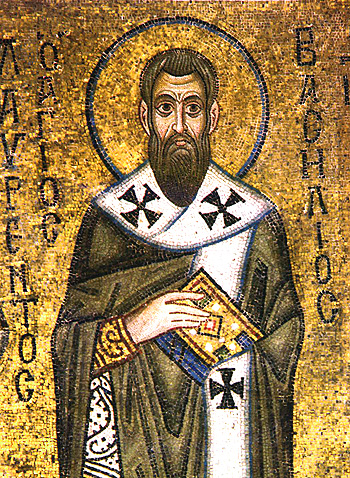 PhilosopherGreek & Roman329 – 379
Basil of Caesarea
Basil of Caesarea, also called Saint Basil the Great, was an early Christian prelate. He served as Bishop of Caesarea Mazaca in Cappadocia from 370 until his death in 379.
Read the full pageBasil of Caesarea, also called Saint Basil the Great (330 – 1 or 2 January 379), was an early Christian prelate. He served as Bishop of Caesarea Mazaca in Cappadocia from 370 until his death in 379. He was an influential theologian who supported the Nicene Creed and opposed heresies within the early Christian church such as Arianism and Apollinarianism.
In addition to his work as a theologian, Basil's most enduring legacy was the creation of the Basileias, which has been believed to be one of the earliest forms of a Christian hospital for the poor. Basil established guidelines for monastic life which focus on community life, liturgical prayer, and manual labor. Together with Pachomius, he is remembered as a father of communal monasticism in Eastern Christianity. He is considered a saint by the traditions of both Eastern and Western Christianity.
- 8
 PhilosopherGreek & Roman329 – 389
Gregory of Nazianzus
Gregory of Nazianzus, also known as Saint Gregory the Theologian or Gregory Nazianzen, was an early Roman Christian theologian and prelate who served as Archbishop of Constantinople from 380 to 381. He is widely considered the most accomplished rhetorical stylist of the patristic age.
Read the full pageGregory of Nazianzus, also known as Saint Gregory the Theologian or Gregory Nazianzen, was an early Roman Christian theologian and prelate who served as Archbishop of Constantinople from 380 to 381. He is widely considered the most accomplished rhetorical stylist of the patristic age. As a classically trained orator and philosopher, he infused Hellenism into the early Church, establishing the paradigm of Byzantine theologians and church officials.
Gregory made a significant impact on the shape of Trinitarian theology among both Greek and Latin-speaking theologians, and he is remembered as the "Trinitarian Theologian". Much of his theological work continues to influence modern theologians, especially in regard to the relationship among the three Persons of the Trinity. Along with the brothers Basil of Caesarea and Gregory of Nyssa, he is known as one of the Cappadocian Fathers.
- 9
 PhilosopherGreek & Roman339 – 397
Ambrose
Ambrose of Milan, canonized as Saint Ambrose, was a Roman theologian, statesman, preacher, and Bishop of Milan from 374 until his death. Trained in rhetoric and law, he served as Roman civil governor of Aemilia-Liguria at Milan before being unexpectedly chosen as bishop by popular acclamation in 374.
Read the full pageAmbrose of Milan (Latin: Aurelius Ambrosius; c. 339 – 4 April 397), canonized as Saint Ambrose, was a Roman theologian, statesman, preacher, and Bishop of Milan from 374 until his death. Trained in rhetoric and law, he served as Roman civil governor of Aemilia-Liguria at Milan before being unexpectedly chosen as bishop by popular acclamation in 374. His preaching, ecclesiastical activity, and writings made him one of the most influential Christian figures of the 4th century.
As bishop, Ambrose became a prominent defender of Christian orthodoxy, particularly against Arianism, while also attempting to mediate the conflict between the emperors Theodosius I and Magnus Maximus. He opposed the execution of Priscillianist heretics and later excommunicated Theodosius following a massacre, maintaining that "an emperor is within the church, not over it." He was also a strong advocate of monasticism and asceticism, and his theological activity helped interpret and transmit Eastern Christian theology to the Latin West.
- 10
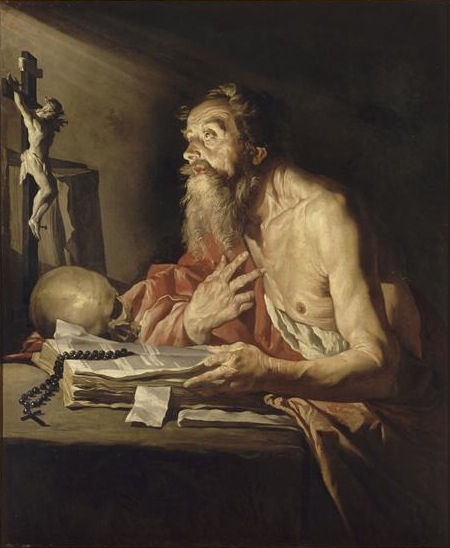 PhilosopherGreek & Roman345 – 420
Jerome
Jerome of Stridon, also known as Hieronymus, was an early Christian priest, confessor, theologian, translator, and historian; he is commonly known as Saint Jerome. He is best known for his translation of the Bible into Latin (the translation that became known as the Vulgate), which was commissioned by Pope Damasus I, a
Read the full pageJerome of Stridon (; Latin: Eusebius Sophronius Hieronymus; Ancient Greek: Εὐσέβιος Σωφρόνιος Ἱερώνυμος; c. 342–347 – 30 September 420), also known as Hieronymus, was an early Christian priest, confessor, theologian, translator, and historian; he is commonly known as Saint Jerome.
He is best known for his translation of the Bible into Latin (the translation that became known as the Vulgate), which was commissioned by Pope Damasus I, and his commentaries on the whole Bible. Jerome attempted to create a translation of the Old Testament based on a Hebrew version, rather than the Septuagint, as prior Latin Bible translations had done. His list of writings is extensive. In addition to his biblical works, he wrote polemical and historical essays, always from a theologian's perspective.
- 11
 PhilosopherGreek & Roman349 – 407
John Chrysostom
John Chrysostom was a Church Father who served as Archbishop of Constantinople. He is known for his preaching and public speaking, particularly on the poor, his Divine Liturgy of Saint John Chrysostom, and his ascetic sensibilities.
Read the full pageJohn Chrysostom (English: John the Golden-mouthed; born c. 347, died 14 September 407) was a Church Father who served as Archbishop of Constantinople. He is known for his preaching and public speaking, particularly on the poor, his Divine Liturgy of Saint John Chrysostom, and his ascetic sensibilities.
He is honored as a saint in the Catholic and Eastern churches, as well as in some others. The Eastern Orthodox, together with the Byzantine Catholics, hold him in special regard as one of the Three Holy Hierarchs (alongside Basil of Caesarea and Gregory of Nazianzus). Along with them and Athanasius of Alexandria he is also regarded by the Catholic Church as one of the four Great Greek Church Fathers.
- 12
 PhilosopherGreek & Roman349 – 420
Eunapius
Eunapius was a Greek sophist, rhetorician, and historian from Sardis in the region of Lydia in Asia Minor. His principal surviving work is the Lives of Philosophers and Sophists (Ancient Greek: Βίοι Φιλοσόφων καὶ Σοφιστῶν; Latin: Vitae sophistarum), a collection of the biographies of 24 philosophers and sophists.
Read the full pageEunapius (Greek: Εὐνάπιος; c. 347 – c. 420) was a Greek sophist, rhetorician, and historian from Sardis in the region of Lydia in Asia Minor. His principal surviving work is the Lives of Philosophers and Sophists (Ancient Greek: Βίοι Φιλοσόφων καὶ Σοφιστῶν; Latin: Vitae sophistarum), a collection of the biographies of 24 philosophers and sophists.
He was born at Sardis, around the year 347 AD. While still a youth, he went to Athens, where he became a pupil of Prohaeresius the rhetorician. Back in his native city, he studied under his relative, the sophist Chrysanthius. Additionally, he possessed considerable knowledge of medicine.