American thinkers, early 20th century: Rogers to Peikoff
- 1
 PhilosopherAmericas1928 – 2003
Fred Rogers
Fred McFeely Rogers, also known professionally as Mister Rogers, was an American television personality, Presbyterian minister, and author. He was the creator, showrunner, and host of the preschool television series Mister Rogers' Neighborhood, which ran from 1968 to 2001.
Read the full pageFred McFeely Rogers (March 20, 1928 – February 27, 2003), also known professionally as Mister Rogers, was an American television personality, Presbyterian minister, and author. He was the creator, showrunner, and host of the preschool television series Mister Rogers' Neighborhood, which ran from 1968 to 2001.
Born in Latrobe, Pennsylvania, Rogers earned a bachelor's degree in music from Rollins College in 1951. He began his television career at NBC in New York City, returning to Pittsburgh in 1953 to work for children's programming at NET (later PBS) television station WQED. He graduated from Pittsburgh Theological Seminary with a bachelor's degree in divinity in 1962 and became a Presbyterian minister in 1963. He attended the University of Pittsburgh's Graduate School of Child Development, where he began his thirty-year collaboration with child psychologist Margaret McFarland. He also helped develop the children's shows The Children's Corner (1955) for WQED in Pittsburgh and Misterogers (1963) in Canada for the Canadian Broadcasting Corporation. In 1968, he returned to Pittsburgh and adapted the format of his Canadian series to create Mister Rogers' Neighborhood. It ran for 33 years and was critically acclaimed for focusing on children's emotional and physical concerns, such as death, sibling rivalry, school enrollment, and divorce.
- 2
 PhilosopherAmericas1928 – 2024
Gustavo Gutiérrez
Gustavo Gutiérrez-Merino Díaz was a Peruvian Catholic philosopher, theologian, and Dominican priest who was one of the founders of Latin American liberation theology. His 1971 book A Theology of Liberation is considered pivotal to the formation of liberation theology at large.
- ◆Latin American liberation theology
- ◆preferential option for the poor
Read the full pageGustavo Gutiérrez-Merino Díaz (8 June 1928 – 22 October 2024) was a Peruvian Catholic philosopher, theologian, and Dominican priest who was one of the founders of Latin American liberation theology. His 1971 book A Theology of Liberation is considered pivotal to the formation of liberation theology at large. He held the John Cardinal O'Hara Professorship of Theology at the University of Notre Dame and was a visiting professor at universities in North America and Europe.
Born in Lima, Gutiérrez studied medicine and literature at the National University of San Marcos before deciding to become a priest. He began studying theology at the Theology Faculty of Leuven in Belgium and in Lyon, France.
- 3
 PhilosopherAmericas1928 – 2010
Mary Daly
Mary Daly was an American radical feminist philosopher and theologian. Daly, who described herself as a "radical lesbian feminist", taught at the Jesuit-run Boston College for 33 years.
Read the full pageMary Daly (October 16, 1928 – January 3, 2010) was an American radical feminist philosopher and theologian. Daly, who described herself as a "radical lesbian feminist", taught at the Jesuit-run Boston College for 33 years. Once a practicing Catholic, she disavowed Christianity by the early 1970s. Daly was fired from Boston College in 1999, after violating university policy by refusing to allow male students in her advanced women's studies classes.
Mary Daly was born in Schenectady, New York, on October 16, 1928. She was an only child. Her mother was a homemaker and her father, a traveling salesman. Daly was raised in a Catholic environment; both her parents were Irish Catholics and Daly attended Catholic schools as a girl. Early in her childhood, Daly had mystical experiences which she later described as her feeling the presence of divinity in nature.
- 4
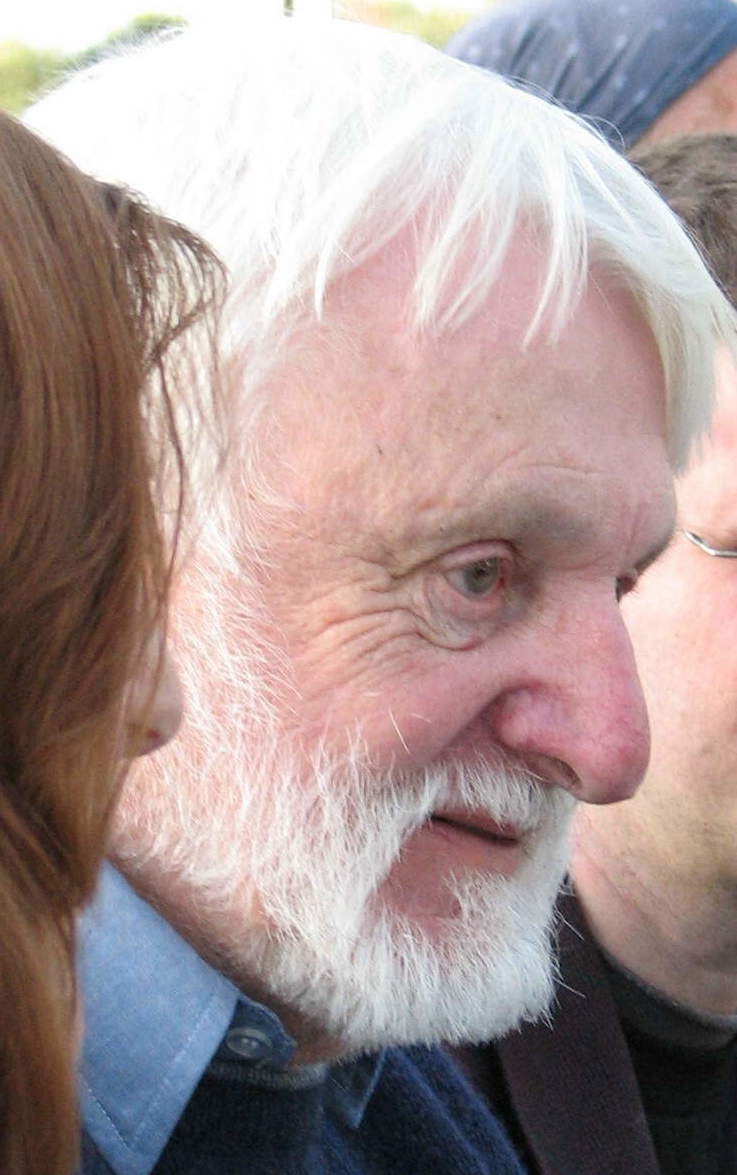 PhilosopherAmericas1928 – 2017
Robert M. Pirsig
Robert Maynard Pirsig was an American writer and philosopher. He is the author of the philosophical books Zen and the Art of Motorcycle Maintenance: An Inquiry into Values and Lila: An Inquiry into Morals, and he co-authored On Quality: An Inquiry Into Excellence: Selected and Unpublished Writings along with his wife a
Read the full pageRobert Maynard Pirsig (; September 6, 1928 – April 24, 2017) was an American writer and philosopher. He is the author of the philosophical books Zen and the Art of Motorcycle Maintenance: An Inquiry into Values (1974) and Lila: An Inquiry into Morals (1991), and he co-authored On Quality: An Inquiry Into Excellence: Selected and Unpublished Writings (2022) along with his wife and editor, Wendy Pirsig.
Pirsig was born on September 6, 1928, in Minneapolis, Minnesota, the son of Harriet Marie Sjobeck and Maynard Pirsig. He was of German and Swedish descent. His father was a graduate of the University of Minnesota Law School, taught in that school from 1934, served as its dean from 1948 to 1955, and retired from teaching there in 1970. Pirsig senior subsequently taught at the William Mitchell College of Law until his retirement in 1993.
- 5
 PhilosopherAmericas1928 – 2019
Jean Vanier
Jean Vanier was a Canadian Catholic philosopher and theologian. In 1964, he founded L'Arche, an international federation of communities spread over 37 countries for people with developmental disabilities and those who assist them.
- ◆L'Arche
Read the full pageJean Vanier (French pronunciation: [ʒɑ̃ vanje], September 10, 1928 – May 7, 2019) was a Canadian Catholic philosopher and theologian. In 1964, he founded L'Arche, an international federation of communities spread over 37 countries for people with developmental disabilities and those who assist them. In 1971, he co-founded Faith and Light with Marie-Hélène Mathieu, which also works for people with developmental disabilities, their families, and friends in over 80 countries. He continued to live as a member of the original L'Arche community in Trosly-Breuil, France, until his death.
Over the years he wrote 30 books on religion, disability, normality, success, and tolerance. Among the honours he received were the Companion of the Order of Canada (1986), Grand Officer of the National Order of Quebec (1992), French Legion of Honour (2003), Community of Christ International Peace Award (2003, later revoked), the Pacem in Terris Peace and Freedom Award (2013), and the Templeton Prize (2015).
- 6
 PhilosopherAmericas1928 – 2021
Humberto Maturana
Humberto Maturana Romesín was a Chilean biologist and philosopher. Some name him a second-order cybernetics theoretician alongside the likes of Heinz von Foerster, Gordon Pask, Herbert Brün and Ernst von Glasersfeld.
Read the full pageHumberto Maturana Romesín (September 14, 1928 – May 6, 2021) was a Chilean biologist and philosopher. Some name him a second-order cybernetics theoretician alongside the likes of Heinz von Foerster, Gordon Pask, Herbert Brün and Ernst von Glasersfeld.
Maturana, along with Francisco Varela and Ricardo B. Uribe, was known for creating the term "autopoiesis" about the self-generating, self-maintaining structure in living systems, and concepts such as structural determinism and structural coupling. His work was influential in many fields, mainly the field of systems thinking and cybernetics. Overall, his work is concerned with the biology of cognition. Maturana (2002) insisted that autopoiesis exists only in the molecular domain, and he did not agree with the extension into sociology and other fields:
- 7
 PhilosopherAmericas1929 – 1968
Martin Luther King Jr.
Minister and civil-rights leader whose philosophy of non-violent resistance drew on Gandhi and Christian ethics.
Read the full pageMartin Luther King Jr. (born Michael King Jr.; January 15, 1929 – April 4, 1968) was an American civil rights activist and Baptist minister who was a prominent leader of the civil rights movement from 1955 until his assassination in 1968. He advanced civil rights in the United States through the use of nonviolence and sometimes civil disobedience against Jim Crow laws and other forms of legalized discrimination, which most commonly affected African Americans.
A Black church leader, King participated in and led marches for the right to vote, desegregation, labor rights, and other civil rights. He oversaw the 1955 Montgomery bus boycott and was the first president of the Southern Christian Leadership Conference (SCLC), leading the unsuccessful Albany Movement in Albany, Georgia, and helping organize nonviolent 1963 protests in Birmingham, Alabama. King was one of the leaders of the 1963 March on Washington, where he delivered his "I Have a Dream" speech, and helped organize two of the three Selma to Montgomery marches during the 1965 Selma voting rights movement. There were dramatic standoffs with segregationist authorities, who often responded violently. The civil rights movement achieved pivotal legislative gains in the Civil Rights Act of 1964, the Voting Rights Act of 1965, and the Fair Housing Act of 1968.
- 8
 PhilosopherAmericas1931 – 2019
Ram Dass
Ram Dass, also known as Baba Ram Dass, was an American spiritual teacher, guru of modern yoga, psychologist, and writer. His best-selling 1971 book Be Here Now, which has been described by multiple reviewers as "seminal", helped popularize Eastern spirituality and yoga in the West.
Read the full pageRam Dass (born Richard Alpert; April 6, 1931 – December 22, 2019), also known as Baba Ram Dass, was an American spiritual teacher, guru of modern yoga, psychologist, and writer. His best-selling 1971 book Be Here Now, which has been described by multiple reviewers as "seminal", helped popularize Eastern spirituality and yoga in the West. He authored or co-authored twelve more books on spirituality over the next four decades, including Grist for the Mill (1977), How Can I Help? (1985), and Polishing the Mirror (2013).
Ram Dass was personally and professionally associated with Timothy Leary at Harvard University in the early 1960s. Then known as Richard Alpert, he conducted research with Leary on the therapeutic effects of psychedelic drugs. In addition, Alpert assisted Harvard Divinity School graduate student Walter Pahnke in his 1962 "Good Friday Experiment" with theology students, the first controlled, double-blind study of drugs and the mystical experience. While not illegal at the time, their research was controversial and led to Alpert's dismissal from Harvard in 1963 (it is commonly thought Leary was dismissed too but in fact his contract had expired).
- 9
 PhilosopherAmericas1932 – 2007
Robert Anton Wilson
Robert Anton Wilson was an American writer, futurist, psychologist, and self-described agnostic mystic. Recognized within Discordianism as an Episkopos, pope and saint, Wilson helped publicize Discordianism through his writings and interviews.
- ◆23 enigma
- ◆Celine's laws
- ◆Eight-circuit model of consciousness
- ◆Guerilla ontology
- ◆Reality tunnel
Read the full pageRobert Anton Wilson (born Robert Edward Wilson; January 18, 1932 – January 11, 2007) was an American writer, futurist, psychologist, and self-described agnostic mystic. Recognized within Discordianism as an Episkopos, pope and saint, Wilson helped publicize Discordianism through his writings and interviews. In 1999 he described his work as an "attempt to break down conditioned associations, to look at the world in a new way, with many models recognized as models or maps, and no one model elevated to the truth". Wilson's goal was "to try to get people into a state of generalized agnosticism, not agnosticism about God alone but agnosticism about everything."
In addition to writing several science-fiction novels, Wilson also wrote non-fiction books on extrasensory perception, mental telepathy, metaphysics, paranormal experiences, conspiracy theory, sex, drugs, and what Wilson called "quantum psychology".
- 10
 PhilosopherAmericasborn 1933
Leonard Peikoff
Leonard Sylvan Peikoff is a Canadian American philosopher. He is an Objectivist and was a close associate of Ayn Rand, who designated him heir to her estate.
Read the full pageLeonard Sylvan Peikoff ( PEE-kof; born October 15, 1933) is a Canadian American philosopher. He is an Objectivist and was a close associate of Ayn Rand, who designated him heir to her estate. Peikoff is a former professor of philosophy and host of a nationally syndicated radio talk show. He co-founded the Ayn Rand Institute (ARI) in 1985 and is the author of several books on philosophy.
Leonard Peikoff was born on October 15, 1933, in Winnipeg, Manitoba, Canada, to Samuel Peikoff, MD, a surgeon, and his wife Bessie, a band leader. He is of Russian-Jewish descent. He attended the University of Manitoba from 1950 to 1953 as a pre-med student. However, following his early discussions with Rand, he transferred to New York University to study philosophy, where he received his BA, MA, and PhD degrees in philosophy in 1954, 1957, and 1964, respectively. His doctoral dissertation adviser was the noted American pragmatist philosopher Sidney Hook, and his dissertation dealt with the metaphysical status of the law of noncontradiction. He taught philosophy for many years at various colleges.