Sufism
Islamic mysticism: love, annihilation of the ego (fanāʾ) and union with the divine.
- 1SchoolIslamic800 – present
Sufism
Islamic mysticism: love, annihilation of the ego (fanāʾ) and union with the divine.
Read the full pageSufism (Arabic: التصوف, romanised: al-tasawwuf) is a diverse Islamic spiritual and ethical discipline concerned with spiritual excellence (ihsan), purification of the self and heart (tazkiya), sainthood and closeness to God (wilaya), and remembrance of God (dhikr).
While commonly described as "Islamic mysticism", this designation captures only one dimension of the broader discipline. Nile Green notes the "narrowing and prescriptive tendencies" of the model of "mysticism", arguing that it can "castigate or exclude much of what it was meant to explain." He therefore proposes understanding Sufism as "primarily a tradition of powerful knowledge, practices and persons," rather than reducing it to the "mysticism of a marginal party of God-seekers."
- 2
 PhilosopherIslamicc. 1145 – 1221
ʿAṭṭār of Nishapur
Sufi poet of The Conference of the Birds, an allegory of the soul's journey to God.
Read the full pageFaridoddin Abu Hamed Mohammad Attar Nishapuri (Persian: فریدالدین ابوحامد محمد عطار نیشابوری; c. 1145 – c. 1221), better known by his pen-names Faridoddin (فریدالدین) and Attar of Nishapur (عطار نیشاپوری), or simply Attar (meaning apothecary), was a Persian poet, theoretician of Sufism, and hagiographer from Nishapur who had an immense and lasting influence on Persian poetry, on poet Rumi, and on Sufism. He wrote a collection of lyrical poems and number of long poems in the philosophical tradition of Islamic mysticism, as well as a prose work with biographies and sayings of famous Muslim mystics. The Conference of the Birds, Book of the Divine, and Memorial of the Saints are among his best known works.
Information about Attar's life is scarce and has been mythologised over the centuries. However, Attar was born to an Iranian family and he practised the profession of apothecary, and personally attended to a very large number of customers. He is mentioned by only two of his contemporaries, Aufi and Tusi. However, all sources confirm that he was from Nishapur, a major city of medieval Khorasan (located in northeastern Iran), and according to Aufi, he was a poet of the Seljuk era.
- Read the full page
Ibn al-ʿArabī (August 1165 – November 1240) was a Muslim Arab scholar, mystic, poet, and philosopher from al-Andalus, who exercised notable influence within Sufi metaphysics and Islamic thought in general. There are 850 works attributed to Ibn al-ʿArabī, though only 700 of these are considered authentic, and only 400 are extant. His cosmological teachings became a dominant intellectual framework in many regions of the Muslim world.
His traditional title was Muḥyiddīn (Arabic: محيي الدين, lit. 'The Reviver of Religion'). After his death, practitioners of Sufism began referring to him by the honorific title Shaykh al-Akbar (Arabic: الشيخ الأكبر, lit. 'The Greatest Shaykh'), from which the term Akbarism is derived.
- 4
 PhilosopherIslamic1207 – 1273
Rūmī
Sufi poet-mystic whose Masnavi explores love as the path to the divine.
- ◆Sufi whirling
- ◆Muraqaba
Read the full pageJalāl al-Dīn Muḥammad Balkhī (30 September 1207 – 17 December 1273), commonly known as Rumi, was a Sufi mystic, poet, and founder of the Islamic brotherhood known as the Mevlevi Order. His family hailed from Balkh. Rumi is an influential figure in Sufism, and his thought and works loom large both in Persian literature and mystic poetry in general. Today, his translated works are enjoyed all over the world.
The rapidly advancing Mongol hordes forced his family to flee west early on in his life. After spending time in various cities across Iran, Baghdad, and Damascus, he settled in Konya with his family at age 19. Until recently, Konya had been a province of the Eastern Roman Empire, hence his name, Rumi, i.e. "the Roman". Although he was exposed to Sufi thought from his early childhood, he was expected to follow his fathers footsteps as an Islamic scholar.
- 5
 PhilosopherIslamic1325 – 1390
Ḥāfeẓ
Poet of Shiraz whose ghazals unite love, wine and the divine; a household presence in Iran.
Read the full pageKhajeh Shams-od-Din Mohammad Hafez Shirazi (1325–1390), also known by his pen name Hafez, was a Persian lyric poet whose collected works are regarded by many Iranians as one of the highest pinnacles of Persian literature. His works are often found in the homes of Persian speakers, who learn his poems by heart and use them as everyday proverbs and sayings. His life and poems have become the subjects of much analysis, commentary, and interpretation, influencing post-14th century Persian writing more than any other Persian author. He is also known by his sobriquet Lisan al-Ghayb (Tongue of the Unseen).
Hafez is best known for his Divân, a collection of his surviving poems probably compiled after his death. His works can be described as "antinomian" and with the medieval use of the term "theosophical"; the term "theosophy" in the 13th and 14th centuries was used to indicate mystical work by "authors only inspired by the Islamic holy books" (as distinguished from theology). Hafez primarily wrote in the literary genre of lyric poetry or ghazals, which is the ideal style for expressing the ecstasy of divine inspiration in the mystical form of love poems. He was a Sufi.
- 6
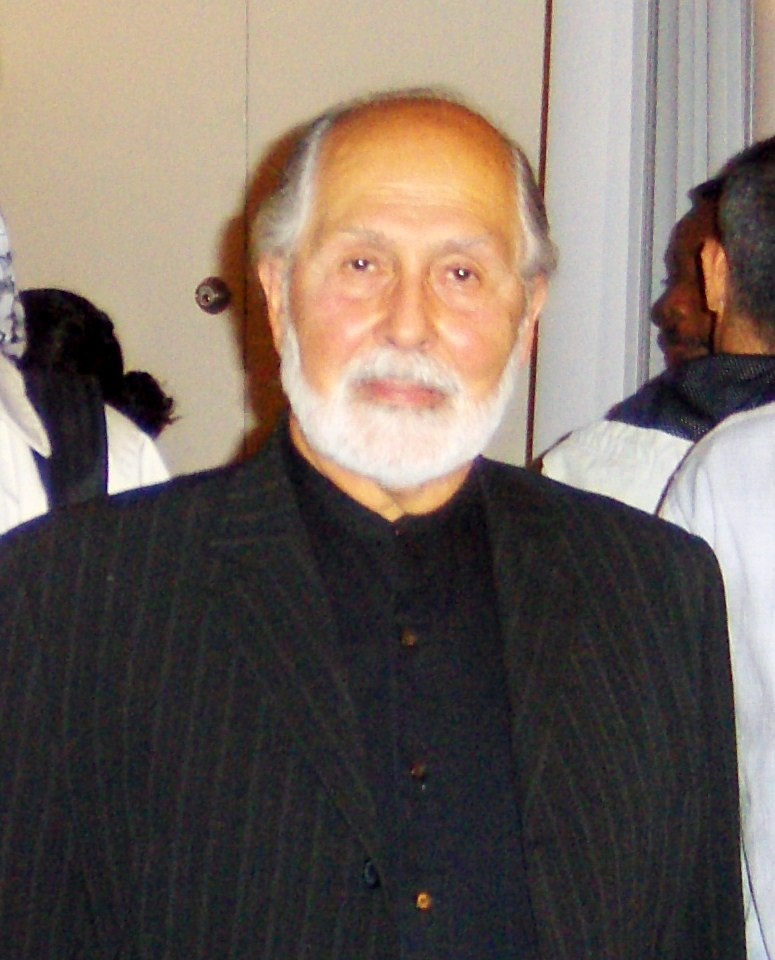 PhilosopherIslamicborn 1933
Hossein Nasr
Seyyed Hossein Nasr is an Iranian-American philosopher, theologian, and Islamic scholar. He is a University Professor of Islamic studies at George Washington University.
- ◆Scientia sacra
- ◆Ecotheology
- ◆Islamic environmentalism
- ◆Tradition
- ◆Pontifical and Promethean man
- ◆Resacralization of nature
Read the full pageSeyyed Hossein Nasr (Persian pronunciation: [sejjed̪̥ hoséjn næsɹ]; born April 7, 1933) is an Iranian-American philosopher, theologian, and Islamic scholar. He is a University Professor of Islamic studies at George Washington University.
Born in Tehran, Nasr completed his education in the Imperial State of Iran and the United States, earning a B.A. in physics from Massachusetts Institute of Technology, a M.A. in geology and geophysics, and a doctorate in the history of science from Harvard University. He returned to his homeland in 1958, turning down teaching positions at MIT and Harvard, and was appointed a professor of philosophy and Islamic sciences at Tehran University. He held various academic positions in Iran, including vice-chancellor at Tehran University and president of Aryamehr University, and established the Imperial Iranian Academy of Philosophy at the request of Empress Farah Pahlavi, which soon became one of the most prominent centers of philosophical activity in the Islamic world. During his time in Iran, he studied with several traditional masters of Islamic philosophy and sciences.
