Aristotelianism: Pomponazzi to Nussbaum
- 1
 PhilosopherModern European1462 – 1525
Pietro Pomponazzi
Pietro Pomponazzi was an Italian philosopher. He is sometimes known by his Latin name, Petrus Pomponatius.
- ◆Mortalist interpretation of the soul
- ◆naturalism
- ◆philosophy
- ◆theology
Read the full pagePietro Pomponazzi (16 September 1462 – 18 May 1525) was an Italian philosopher. He is sometimes known by his Latin name, Petrus Pomponatius.
Pietro Pomponazzi was born in Mantua on 16 September 1462 into a wealthy family with long-standing links to the House of Gonzaga. In January 1484, he enrolled at the University of Padua, obtained his doctorate in arts in 1487 and the following year began teaching as an extraordinary professor of philosophy. During his time in Padua, he studied metaphysics with Francesco Securo da Nardò and possibly Antonio Trombetta, natural philosophy with Nicoletto Vernia and Pietro Trapolino, and medicine with Pietro Roccabonella, who emphasised the interconnectedness of body and soul in the healing process.
- 2
 PhilosopherModern European1533 – 1589
Jacopo Zabarella
Giacomo (or Jacopo) Zabarella was an Italian Aristotelian philosopher and logician.
Read the full pageGiacomo (or Jacopo) Zabarella (5 September 1533 – 15 October 1589) was an Italian Aristotelian philosopher and logician.
Zabarella was born into a noble Paduan family. He received a humanist education and entered the University of Padua, where he received a doctorate in 1553. His teachers included Francesco Robortello in humanities, Bernardino Tomitano in logic, Marcantonio Genua in physics and metaphysics, and Pietro Catena in mathematics. In 1564 he succeeded Tomitano in the chair of logic. In 1577 he was promoted to the first extraordinary chair of natural philosophy. He died in Padua at the age of 56 in 1589. His entire teaching career was spent at his native university. His successor was Cesare Cremonini.
- 3
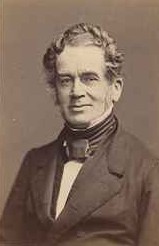 PhilosopherModern European1802 – 1872
Friedrich Adolf Trendelenburg
Friedrich Adolf Trendelenburg was a German philosopher and philologist.
- ◆Trendelenburg's gap
- ◆teleological
Read the full pageFriedrich Adolf Trendelenburg (; German: [ˈtʁɛndələnbʊʁk]; 30 November 1802 – 24 January 1872) was a German philosopher and philologist.
He was born at Eutin, near Lübeck. He was placed in a gymnasium in Eutin, which was under the direction of Georg Ludwig König, a philologist influenced by Immanuel Kant.
- 4
 PhilosopherModern European1838 – 1917
Franz Brentano
Franz Clemens Honoratus Hermann Josef Brentano was a German philosopher and psychologist. His 1874 Psychology from an Empirical Standpoint, considered his magnum opus, is credited with having reintroduced the medieval scholastic concept of intentionality into contemporary philosophy.
- ◆Intentionality
- ◆Intentional object
- ◆genetic
- ◆empirical/descriptive psychology
- ◆sensory
- ◆noetic consciousness
Read the full pageFranz Clemens Honoratus Hermann Josef Brentano (; German: [bʁɛnˈtaːno]; 16 January 1838 – 17 March 1917) was a German philosopher and psychologist. His 1874 Psychology from an Empirical Standpoint, considered his magnum opus, is credited with having reintroduced the medieval scholastic concept of intentionality into contemporary philosophy.
Originally a Catholic priest, Brentano withdrew from the priesthood in 1873 due to the dogmatic definition of papal infallibility in Pastor aeternus. Working subsequently as a non-denominational professor, his teaching triggered research in a wide array of fields such as linguistics, logic, mathematics and experimental psychology through the young generation of philosophers who were gathered as the School of Brentano.
- 5
 PhilosopherAmericas1902 – 2001
Mortimer J. Adler
Mortimer Jerome Adler was an American philosopher, educator, encyclopedist, author, and lay theologian. His philosophical work was situated within the Aristotelian and Thomistic traditions.
Read the full pageMortimer Jerome Adler (; December 28, 1902 – June 28, 2001) was an American philosopher, educator, encyclopedist, author, and lay theologian. His philosophical work was situated within the Aristotelian and Thomistic traditions. Adler taught at Columbia University and the University of Chicago, served as chairman of the board of editors of Encyclopædia Britannica, and founded the Institute for Philosophical Research.
He resided for extended periods in New York City, Chicago, San Francisco, and San Mateo, California.
- 6
- ◆Trolley problem
- ◆virtue ethics
- ◆non-cognitivism
Read the full pagePhilippa Ruth Foot (née Bosanquet; 3 October 1920 – 3 October 2010) was an English philosopher and one of the founders of contemporary virtue ethics. Her work was inspired by Aristotelian ethics. Along with Judith Jarvis Thomson, she is credited with inventing the trolley problem.
Born Philippa Ruth Bosanquet in Owston Ferry, North Lincolnshire, she was the daughter of Esther Cleveland (1893–1980) and Captain William Sidney Bence Bosanquet (1893–1966) of the Coldstream Guards of the British Army. Her paternal grandfather was barrister and judge Sir Frederick Albert Bosanquet, Common Serjeant of London from 1900 to 1917. Her maternal grandfather was the 22nd and 24th President of the United States, Grover Cleveland.
- 7
 PhilosopherAmericas1929 – 2025
Alasdair MacIntyre
Alasdair Chalmers MacIntyre was a Scottish-American philosopher who contributed to moral and political philosophy as well as history of philosophy and theology. MacIntyre's After Virtue is one of the most important works of Anglophone moral and political philosophy in the 20th century.
- ◆Aretaic turn
- ◆reason
- ◆Predecessor culture
Read the full pageAlasdair Chalmers MacIntyre (12 January 1929 – 21 May 2025) was a Scottish-American philosopher who contributed to moral and political philosophy as well as history of philosophy and theology. MacIntyre's After Virtue (1981) is one of the most important works of Anglophone moral and political philosophy in the 20th century. He was a senior research fellow at the Centre for Contemporary Aristotelian Studies in Ethics and Politics (CASEP) at London Metropolitan University, emeritus Professor of Philosophy at the University of Notre Dame, and permanent senior distinguished research fellow at the Notre Dame de Nicola Center for Ethics and Culture. During his lengthy academic career, he also taught at Brandeis University, Duke University, Vanderbilt University, and Boston University.
Alasdair Chalmers MacIntyre was born on 12 January 1929 in Glasgow, to Eneas and Greta (Chalmers) MacIntyre. He was educated at Queen Mary College, London, and had a Master of Arts degree from the University of Manchester, where his philosophy teacher was Dorothy Emmet and his fellow student was Herbert McCabe and from the University of Oxford.
- 8
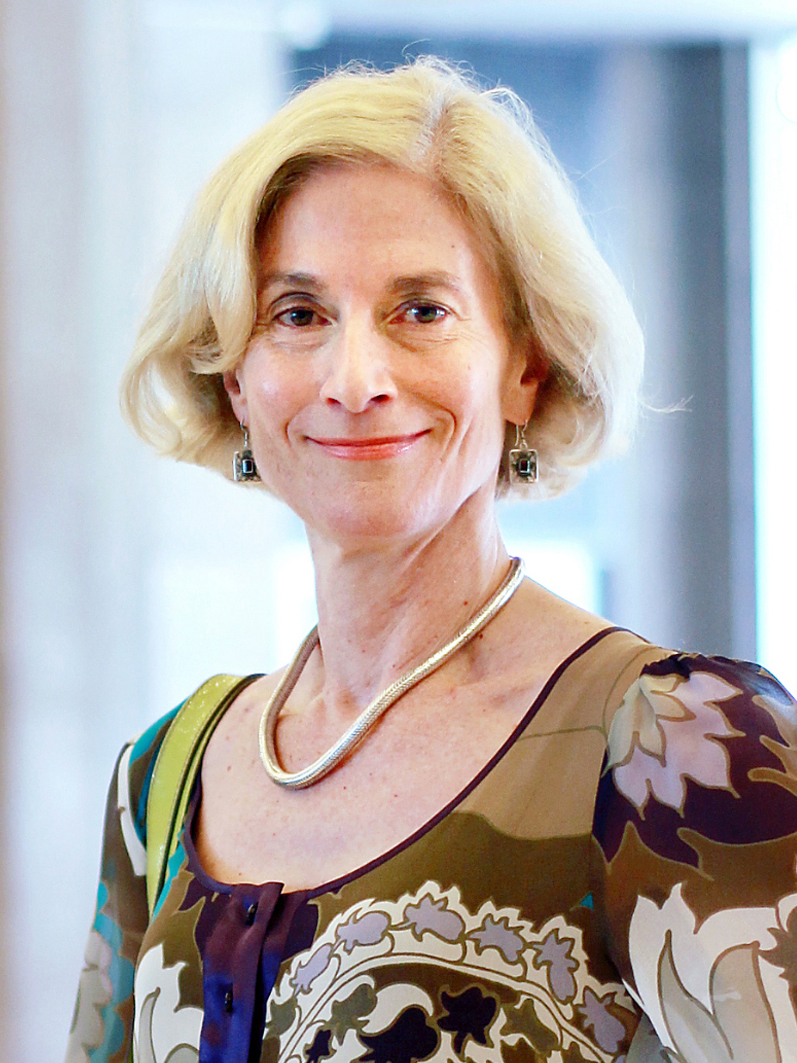 PhilosopherAmericasborn 1947
Martha Nussbaum
Martha C. Nussbaum is an American philosopher and the Ernst Freund Distinguished Service Professor of Law and Ethics at the University of Chicago, where she is jointly appointed in the law school and the philosophy department.
- ◆Capability approach
Read the full pageMartha C. Nussbaum (; née Craven; born May 6, 1947) is an American philosopher and the Ernst Freund Distinguished Service Professor of Law and Ethics at the University of Chicago, where she is jointly appointed in the law school and the philosophy department.
Nussbaum's work has concerned ancient Greek and Roman philosophy, political philosophy, existentialism, feminism, and ethics, such as animal rights. She holds associate appointments in classics, divinity, and political science, and is a member of the Committee on Southern Asian Studies and a board member of the Human Rights Program. She previously taught at Harvard and Brown.
- 9PhilosopherAmericasborn 1947
Martha Nussbaum
Philosopher of the capabilities approach, emotions and Greek ethics.
- ◆Capabilities approach
- ◆Emotions as judgements of value
Read the full pageMartha C. Nussbaum (; née Craven; born May 6, 1947) is an American philosopher and the Ernst Freund Distinguished Service Professor of Law and Ethics at the University of Chicago, where she is jointly appointed in the law school and the philosophy department.
Nussbaum's work has concerned ancient Greek and Roman philosophy, political philosophy, existentialism, feminism, and ethics, such as animal rights. She holds associate appointments in classics, divinity, and political science, and is a member of the Committee on Southern Asian Studies and a board member of the Human Rights Program. She previously taught at Harvard and Brown.