Analytic philosophy: Sylvan to Churchland
- 1PhilosopherModern European1935 – 1996
Richard Sylvan
Richard Sylvan was a New Zealand–born philosopher, logician, and environmentalist.
- ◆Noneism
- ◆items
- ◆dual property strategy
- ◆relevance logic
- ◆deep ecology
Read the full pageRichard Sylvan (13 December 1935 – 16 June 1996) was a New Zealand–born philosopher, logician, and environmentalist.
Sylvan was born Francis Richard Routley in Levin, New Zealand, and his early work is cited with this surname. He studied at Victoria University College of the University of New Zealand (now Victoria University of Wellington), and then Princeton University, before taking positions successively at several Australian institutions, including the University of Sydney. From 1971 until his death in Bali, Indonesia, he was a fellow at the Research School of Social Sciences (RSSS) at the Australian National University (ANU) in Canberra.
- 2
 PhilosopherAmericas1936 – 2023
Ian Hacking
Ian MacDougall Hacking was a Canadian philosopher specializing in the philosophy of science. Throughout his career, he won numerous awards, such as the Killam Prize for the Humanities and the Balzan Prize, and was a member of many prestigious groups, including the Order of Canada, the Royal Society of Canada and the Br
- ◆Entity realism
- ◆ontology
- ◆transcendental nominalism
Read the full pageIan MacDougall Hacking (February 18, 1936 – May 10, 2023) was a Canadian philosopher specializing in the philosophy of science. Throughout his career, he won numerous awards, such as the Killam Prize for the Humanities and the Balzan Prize, and was a member of many prestigious groups, including the Order of Canada, the Royal Society of Canada and the British Academy.
Born in Vancouver, British Columbia, he earned undergraduate degrees from the University of British Columbia (1956) and the University of Cambridge (1958), where he was a student at Trinity College. Hacking also earned his PhD at Cambridge (1962) under the direction of Casimir Lewy, a former student of G. E. Moore.
- 3
 PhilosopherAmericasborn 1937
Thomas Nagel
Asked "What is it like to be a bat?" — the subjective character of consciousness.
- ◆Panpsychism
- ◆subjective character of experience
Read the full pageThomas Nagel (; born July 4, 1937) is an American philosopher. He is a professor of philosophy, a professor of law, and University Professor of Philosophy and Law Emeritus at New York University. From 2001 to 2003, he was the Fiorello LaGuardia Professor of Law at the New York University School of Law. His main areas of philosophical interest are political philosophy, ethics, and philosophy of mind.
After earning his doctorate from Harvard University under John Rawls, Nagel was a professor of philosophy at the University of California, Berkeley, from 1963 to 1966 and a professor at Princeton University from 1966 to 1980. In 1967, he and Robert Nozick co-founded an influential group of philosophers known as the Society for Ethical and Legal Philosophy. In the 1970s, Nagel also co-founded the philosophy journal Philosophy & Public Affairs.
- 4
 PhilosopherAmericas1938 – 2002
Robert Nozick
Libertarian critic of Rawls and inventor of the experience machine.
- ◆Utility monster
- ◆experience machine
- ◆entitlement theory
- ◆justice
- ◆night-watchman state
- ◆Lockean proviso
Read the full pageRobert Nozick (; November 16, 1938 – January 23, 2002) was an American philosopher. He held the Joseph Pellegrino University Professorship at Harvard University, and was president of the American Philosophical Association. He is best known for his book Anarchy, State, and Utopia (1974), a libertarian answer to John Rawls' A Theory of Justice (1971), in which Nozick proposes his minimal state as the only justifiable form of government. His later work Philosophical Explanations (1981) advanced notable epistemological claims, namely his counterfactual theory of knowledge. It won Phi Beta Kappa society's Ralph Waldo Emerson Award the following year.
Nozick's other work involved ethics, decision theory, philosophy of mind, metaphysics and epistemology. His final work before his death, Invariances (2001), introduced his theory of evolutionary cosmology, by which he argues invariances, and hence objectivity itself, emerged through evolution across possible worlds.
- 5
 PhilosopherAmericas1938 – 2017
Tom Regan
Tom Regan was an American philosopher who specialized in animal rights theory. He was professor emeritus of philosophy at North Carolina State University, where he had taught from 1967 until his retirement in 2001.
- ◆Concept of "subject-of-a-life"
Read the full pageTom Regan (; November 28, 1938 – February 17, 2017) was an American philosopher who specialized in animal rights theory. He was professor emeritus of philosophy at North Carolina State University, where he had taught from 1967 until his retirement in 2001.
Regan was the author of numerous books on the philosophy of animal rights, including The Case for Animal Rights (1983), one of a handful of studies that have significantly influenced the modern animal rights movement. In these, he argued that non-human animals are what he called the "subjects-of-a-life", just as humans are, and that, if we want to ascribe value to all human beings regardless of their ability to be rational agents, then to be consistent, we must similarly ascribe it to non-humans.
- 6
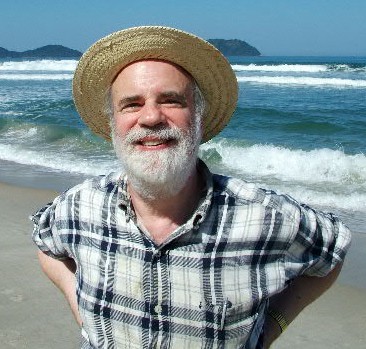 PhilosopherAmericas1940 – 2022
Saul Kripke
Saul Aaron Kripke was an American philosopher and logician. He was a distinguished professor of philosophy at the Graduate Center of the City University of New York and a professor emeritus at Princeton University.
- ◆Kripke–Platek set theory
- ◆theory of reference
- ◆causal theory of reference
- ◆causal-historical theory of reference
- ◆direct reference theory
- ◆Frege–Russell view
Read the full pageSaul Aaron Kripke (; November 13, 1940 – September 15, 2022) was an American philosopher and logician. He was a distinguished professor of philosophy at the Graduate Center of the City University of New York and a professor emeritus at Princeton University. From the 1960s until his death, he was a central figure in a number of fields related to mathematical and modal logic, philosophy of language and mathematics, metaphysics, epistemology, and recursion theory.
Kripke made influential and original contributions to logic, especially modal logic. His principal contribution is a semantics for modal logic involving possible worlds, now called Kripke semantics. He received the 2001 Schock Prize in Logic and Philosophy.
- 7
 PhilosopherModern Europeanborn 1940
Jon Elster
Jon Elster is a Norwegian philosopher and political theorist who holds the Robert K. Merton professorship of Social Science at Columbia University and since 2005 professor of social science at the Collège de France.
Read the full pageJon Elster (; born 22 February 1940) is a Norwegian philosopher and political theorist who holds the Robert K. Merton professorship of Social Science at Columbia University and since 2005 professor of social science at the Collège de France.
He received his PhD in social science from the École Normale Superieure in 1972. He has previously taught at the University of Paris, the University of Oslo, and the University of Chicago, where he became professor of political science in 1984. Since 1995, he has held the Robert K. Merton professorship of Social Science at Columbia University, as well as being professor of social science at the Collège de France since 2005.
- 8
 PhilosopherAmericas1940 – 2024
Michael Ruse
Michael Escott Ruse was a British-born Canadian philosopher of science who specialised in the philosophy of biology and worked on the relationship between science and religion, the creation–evolution controversy, and the demarcation problem within science. Ruse began his career teaching at the University of Guelph and
- ◆Orthogenesis
- ◆evolution
Read the full pageMichael Escott Ruse (21 June 1940 – 1 November 2024) was a British-born Canadian philosopher of science who specialised in the philosophy of biology and worked on the relationship between science and religion, the creation–evolution controversy, and the demarcation problem within science. Ruse began his career teaching at the University of Guelph and spent many years at Florida State University.
Ruse was born in Birmingham, England, attending Bootham School, York. He received an undergraduate degree from the University of Bristol (1962), his master's degree at McMaster University, Hamilton, Ontario (1964), and a Ph.D. from the University of Bristol (1970).
- 9
 PhilosopherAmericas1941 – 2001
David Lewis
David Kellogg Lewis was an American philosopher. Lewis taught briefly at UCLA and then at Princeton University from 1970 until his death.
- ◆Possible world
- ◆Modal realism
- ◆Counterfactuals
- ◆Counterpart theory
- ◆Principal principle
- ◆Humean supervenience
Read the full pageDavid Kellogg Lewis (September 28, 1941 – October 14, 2001) was an American philosopher. Lewis taught briefly at UCLA and then at Princeton University from 1970 until his death. He is closely associated with Australia, whose philosophical community he visited almost annually for more than 30 years.
Lewis made significant contributions in the philosophy of mind, philosophy of probability, epistemology, philosophical logic, aesthetics, philosophy of mathematics, philosophy of time, and philosophy of science. In most of these fields he is considered among the most important figures of recent decades. Lewis is most famous for his work in metaphysics, philosophy of language and semantics, in which his books On the Plurality of Worlds (1986) and Counterfactuals (1973) are considered classics.
- 10
 PhilosopherAmericas1942 – 2024
Daniel Dennett
Daniel Clement Dennett III was an American philosopher and cognitive scientist. His research centered on philosophy of mind, philosophy of science, and philosophy of biology, particularly as those fields relate to evolutionary biology and cognitive science.
- ◆Heterophenomenology
- ◆Intentional stance
- ◆Intuition pump
- ◆Multiple drafts model
- ◆Greedy reductionism
- ◆Cartesian theater
Read the full pageDaniel Clement Dennett III (March 28, 1942 – April 19, 2024) was an American philosopher and cognitive scientist. His research centered on philosophy of mind, philosophy of science, and philosophy of biology, particularly as those fields relate to evolutionary biology and cognitive science.
Dennett was the co-director of the Center for Cognitive Studies and the Austin B. Fletcher Professor of Philosophy at Tufts University in Massachusetts. Dennett was a member of the editorial board for The Rutherford Journal and a co-founder of The Clergy Project.
- 11
 PhilosopherModern European1942 – 2017
Derek Parfit
Derek Antony Parfit was a British philosopher who specialised in personal identity, rationality, and ethics. He is widely considered one of the most important and influential moral philosophers of the late 20th and early 21st centuries.
- ◆further facts
- ◆repugnant conclusion
- ◆nonidentity problem
- ◆Triple Theory
- ◆teletransportation paradox
Read the full pageDerek Antony Parfit (; 11 December 1942 – 2 January 2017) was a British philosopher who specialised in personal identity, rationality, and ethics. He is widely considered one of the most important and influential moral philosophers of the late 20th and early 21st centuries.
Parfit rose to prominence in 1971 with the publication of his first paper, "Personal Identity". His first book, Reasons and Persons (1984), has been described as the most significant work of moral philosophy since the 1800s. His second book, On What Matters (2011), was widely circulated and discussed for many years before its publication.
- 12
 PhilosopherAmericasborn 1943
Patricia Churchland
Patricia Smith Churchland is a Canadian-American analytic philosopher noted for her contributions to neurophilosophy and the philosophy of mind. She is UC President's Professor of Philosophy Emerita at the University of California, San Diego (UCSD), where she has taught since 1984.
- ◆Neurophilosophy
- ◆Eliminative materialism
Read the full pagePatricia Smith Churchland (born 16 July 1943) is a Canadian-American analytic philosopher noted for her contributions to neurophilosophy and the philosophy of mind. She is UC President's Professor of Philosophy Emerita at the University of California, San Diego (UCSD), where she has taught since 1984. She has also held an adjunct professorship at the Salk Institute for Biological Studies since 1989. She is a member of the Board of Trustees of the Moscow Center for Consciousness Studies of the Philosophy Department, Moscow State University. In 2015, she was elected a Fellow of the American Academy of Arts & Sciences. Educated at the University of British Columbia, the University of Pittsburgh, and Somerville College, Oxford, she taught philosophy at the University of Manitoba from 1969 to 1984 and is married to the philosopher Paul Churchland. Larissa MacFarquhar, writing for The New Yorker, observed of the philosophical couple that: "Their work is so similar that they are sometimes discussed, in journals and books, as one person."
Churchland was born Patricia Smith in Oliver, British Columbia, and raised on a farm in the South Okanagan valley. Both of her parents lacked a high-school education; her father and mother left school after grades 6 and 8, respectively. Her mother was a nurse and her father worked in newspaper publishing in addition to running the family farm. In spite of their limited education, Churchland has described her parents as interested in the sciences, and the worldview they instilled in her as a secular one. She has also described her parents as eager for her to attend college, and though many farmers in their community thought this "hilarious and a grotesque waste of money", they saw to it that she did so. She took her undergraduate degree at the University of British Columbia, graduating with honors in 1965. She received a Woodrow Wilson Fellowship to study at the University of Pittsburgh, where she took an M.A. in 1966. Thereafter she studied at Somerville College, Oxford as a British Council and Canada Council Fellow, obtaining a B. Phil in 1969.