Indian ideas, P–S
- 1ConceptIndian
Peter Hallward
Peter Marsham Hallward is a Canadian political philosopher, best known for his work on Alain Badiou and Gilles Deleuze. He has also published works on post-colonialism and contemporary Haiti.
Read the full pagePeter Marsham Hallward (born 29 April 1968) is a Canadian political philosopher, best known for his work on Alain Badiou and Gilles Deleuze. He has also published works on post-colonialism and contemporary Haiti. Hallward is a member of the editorial collective of the journal Radical Philosophy and a contributing editor to Angelaki: Journal of the Theoretical Humanities.
After completing his PhD at Yale University in French and African-American studies under the supervision of Christopher L. Miller and Vera Kutzinski in 1997, Hallward became a lecturer, and then reader, of French philosophy and literature at King's College London from 1999 to 2004. In 2005, he joined the Centre for Research in Modern European Philosophy, which relocated from Middlesex University to Kingston University in 2010. He is now a professor of Modern European Philosophy at Kingston University.
- 2
 ConceptIndian
Purdah
Pardah or purdah (from Hindi-Urdu پردہ, पर्दा, meaning "curtain") is a religious and social practice of sex segregation prevalent among some Muslim, Zoroastrian, and Hindu communities in South Asia. The purdah garment is the same as a burqa, or yashmak, i.e. a veil to conceal the face.
Read the full pagePardah or purdah (from Hindi-Urdu پردہ, पर्दा, meaning "curtain") is a religious and social practice of sex segregation prevalent among some Muslim, Zoroastrian, and Hindu communities in South Asia. The purdah garment is the same as a burqa, or yashmak, i.e. a veil to conceal the face.
The practice generally takes two forms: social segregation of the sexes and the requirement that women cover their bodies, as well as traditionally the faces. A woman who practices purdah can be referred to as pardanashin or purdahnishan.
- 3
 ConceptIndian
Ramlila
Ramlila or Ramleela (Sanskrit: रामलीला, romanized: Rāmalīlā; literally 'Rama's lila or play') is any dramatic folk re-enactment of the life of Rama according to the ancient Hindu epic Ramayana or secondary literature based on it such as the Ramcharitmanas. It particularly refers to the thousands of the Hindu god Rama-r
Read the full pageRamlila or Ramleela (Sanskrit: रामलीला, romanized: Rāmalīlā; literally 'Rama's lila or play') is any dramatic folk re-enactment of the life of Rama according to the ancient Hindu epic Ramayana or secondary literature based on it such as the Ramcharitmanas. It particularly refers to the thousands of the Hindu god Rama-related dramatic plays and dance events, that are staged during the annual autumn festival of Navaratri in India. After the enactment of the legendary war between good and evil, the Ramlila celebrations climax in the Vijayadashami (Dussehra) night festivities where the giant grotesque effigies of evil such as of the rakshasa (demon) Ravana are burnt, typically with fireworks.
Rama is the seventh avatar of the Hindu deity Vishnu and the central figure of the Ramayana, a Sanskrit epic that integrates performance arts with stories driven by ethical values. The epic text is dated to the 1st millennium BCE and Ramlila is an adaptation of those stories. Most Ramlilas in North India are based on the 16th-century secondary work on Ramayana, Ramcharitmanas a verse form composition in the Awadhi language of Uttar Pradesh by Tulsidas. These verses are used as dialogues in traditional adaptations. Open-air productions are staged by local Ramlila committees (Samitis), and funded entirely by the villagers or local neighbourhoods in urban areas. The core team of performance artists train for the dance-drama, but the actual performance attracts impromptu participants from the audience and villagers. This art form is a part of the Hindu culture, found for many gods and goddesses, but those of Rama, Durga (as Durga Puja) and Krishna (as Rasalila) are the most popular and annual events in the Indian subcontinent.
- 4ConceptIndian
Sahaja Yoga
Sahaja Yoga (सहज योग) is a new religious movement founded in 1970 by Nirmala Srivastava. She is known as Shri Mataji Nirmala Devi (Revered Immaculate Mother) or simply as "Mother" by her followers, who are called Sahaja yogis.
Read the full pageSahaja Yoga (सहज योग) is a new religious movement founded in 1970 by Nirmala Srivastava (1923–2011). She is known as Shri Mataji Nirmala Devi (Revered Immaculate Mother) or simply as "Mother" by her followers, who are called Sahaja yogis.
Practitioners believe that during meditation they experience a state of self-realization produced by kundalini awakening. Shri Mataji described Sahaja Yoga as the pure, universal religion integrating all other religions. She claimed that she was a divine incarnation, more precisely an incarnation of the Holy Spirit, or the Adi Shakti of the Hindu tradition, the great mother goddess who had come to save humanity. This is also how she is regarded by most of her devotees. Sahaja Yoga has sometimes been characterized as a cult.
- 5
 ConceptIndian
Sati (practice)
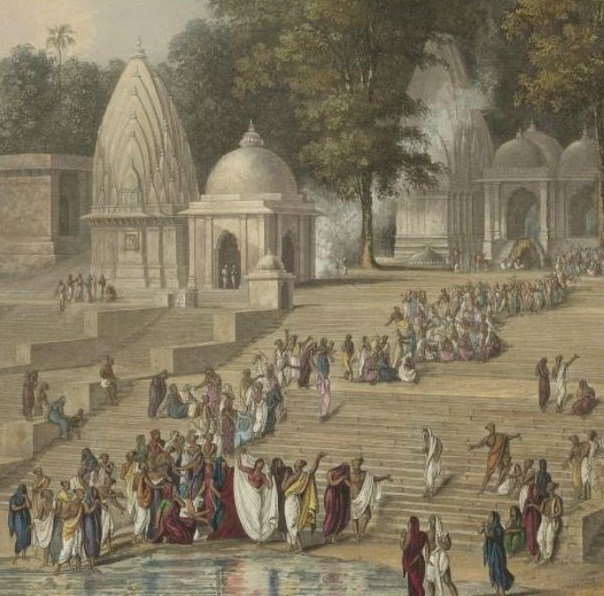
Sati or suttee is a chiefly historical Hindu practice in which a widow burns alive on her deceased husband's funeral pyre, either voluntarily, by coercion, or by a perception of the lack of satisfactory options for continuing to live. Although it is debated whether it received scriptural mention in early Hinduism, it h
Read the full pageSati or suttee is a chiefly historical Hindu practice in which a widow burns alive on her deceased husband's funeral pyre, either voluntarily, by coercion, or by a perception of the lack of satisfactory options for continuing to live. Although it is debated whether it received scriptural mention in early Hinduism, it has been linked to related Hindu practices in the Indo-Aryan-speaking regions of India, which have diminished the rights of women, especially those to the inheritance of property. A cold form of sati, or the neglect and casting out of Hindu widows, has been prevalent from ancient times.
Greek sources from around c. 300 BCE make isolated mention of sati, and Hindu inscriptions from 464 CE onward, common by the 11th century, record the practice of a real fire sacrifice. The first references to sati in Brahmin law-books appeared in the 7th century. It was widely recognised, but not universally accepted, by the 12th century. Records of sati exist throughout many time periods and regions. There were significant differences in different regions and among communities; however, figures are scarce and incomplete for the number of widows who died by sati before the advent of the British period.
- 6ConceptIndian
Secular ethics
Secular ethics is a branch of moral philosophy in which ethics is based solely on human faculties such as logic, empathy, reason or moral intuition, and not derived from belief in supernatural revelation or guidance—a source of ethics in many religions. Secular ethics refers to any ethical system that does not draw on
Read the full pageSecular ethics is a branch of moral philosophy in which ethics is based solely on human faculties such as logic, empathy, reason or moral intuition, and not derived from belief in supernatural revelation or guidance—a source of ethics in many religions. Secular ethics refers to any ethical system that does not draw on the supernatural, and includes humanism, secularism and freethinking. A classical example of literature on secular ethics is the Kural text, authored by the ancient Indian philosopher Valluvar.
Secular ethical systems comprise a wide variety of ideas to include the normativity of social contracts, some form of attribution of intrinsic moral value, intuition-based deontology, cultural moral relativism, and the idea that scientific reasoning can reveal objective moral truth (known as science of morality).
- 7ConceptIndian
Secular morality
Secular morality is the aspect of philosophy that deals with morality outside of religious traditions. Modern examples include humanism, freethinking, and most versions of consequentialism.
Read the full pageSecular morality is the aspect of philosophy that deals with morality outside of religious traditions. Modern examples include humanism, freethinking, and most versions of consequentialism. Additional philosophies with ancient roots include those such as skepticism and virtue ethics. Greg M. Epstein also states that, "much of ancient Far Eastern thought is deeply concerned with human goodness without placing much if any stock in the importance of gods or spirits." An example is the Kural text of Valluvar, an ancient Indian theistic poet-philosopher whose work remains secular and non-denominational. Other philosophers have proposed various ideas about how to determine right and wrong actions. An example is Immanuel Kant's categorical imperative.
A variety of positions are apparent regarding the relationship between religion and morality. Some believe that religion is necessary as a guide to a moral life. According to some, this idea has been with us for nearly 2,000 years. Others suggest this idea goes back at least 2,600 years as exemplified in Psalm 14 of the Hebrew Bible. According to others, the idea goes back as far as 4,000 years, with the ancient Egyptians' 42 Principles of Ma'at.
- 8
 ConceptIndian
Shingon Buddhism
Shingon (真言宗, Shingon-shū; "True Word/Mantra School") is one of the major schools of Buddhism in Japan and one of the few surviving Vajrayana lineages in East Asian Buddhism. It is a form of Japanese Esoteric Buddhism and is sometimes called "Tōmitsu" (東密 lit. "Esoteric [Buddhism] of Tō-ji").
Read the full pageShingon (真言宗, Shingon-shū; "True Word/Mantra School") is one of the major schools of Buddhism in Japan and one of the few surviving Vajrayana lineages in East Asian Buddhism. It is a form of Japanese Esoteric Buddhism and is sometimes called "Tōmitsu" (東密 lit. "Esoteric [Buddhism] of Tō-ji"). The word shingon is the Japanese reading of the Chinese word 真言 (zhēnyán), which is the translation of the Sanskrit word mantra.
The Zhenyan lineage was founded in China (c. 7th–8th centuries) by Indian vajrācāryas (esoteric masters) like Śubhakarasiṃha, Vajrabodhi and Amoghavajra. These esoteric teachings would later flourish in Japan under the auspices of a Buddhist monk named Kūkai (空海, 774–835), who traveled to Tang China and received these esoteric transmissions from a Chinese master named Huiguo (746–805). Kūkai established his tradition at Mount Kōya (in Wakayama Prefecture), which remains the central pilgrimage center of Shingon Buddhism.
- 9
 ConceptIndian
Sri Aurobindo Ashram
The Sri Aurobindo Ashram is a spiritual community and ashram in Pondicherry (Puducherry), India. It was founded in 1926 by the Indian philosopher Sri Aurobindo and his spiritual collaborator Mirra Alfassa, known as "The Mother".
Read the full pageThe Sri Aurobindo Ashram is a spiritual community and ashram in Pondicherry (Puducherry), India. It was founded in 1926 by the Indian philosopher Sri Aurobindo and his spiritual collaborator Mirra Alfassa, known as "The Mother". Over the years, the Ashram which also houses the samadhi of Sri Aurobindo and the Mother, became the institutional centre of a modern spiritual movement based on Sri Aurobindo’s Integral Yoga. It became one of India’s best-known spiritual communities, attracting devotees and visitors from around the world.
There are about 1,200 people who are part of the Ashram, and their school, called the Sri Aurobindo International Centre of Education, has over 400 students. The Ashram is situated in an urban environment, where Integral Yoga taught by Sri Aurobindo is a major focus of the community.


