Modern European ideas, F–G
- 1
 ConceptModern European
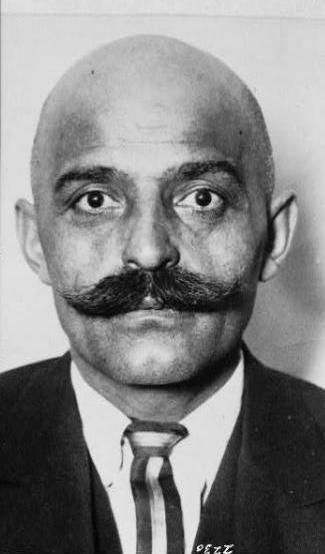
Fourth Way
The Fourth Way is spiritual teacher George Gurdjieff's approach to human spiritual growth, developed by him over years of travel in the East, and taught to followers in subsequent years. Gurdjieff's students often refer to the Fourth Way as "The Work" or "Work on oneself".
Read the full pageThe Fourth Way is spiritual teacher George Gurdjieff's approach to human spiritual growth, developed by him over years of travel in the East (c. 1890 – 1912), and taught to followers in subsequent years. Gurdjieff's students often refer to the Fourth Way as "The Work" or "Work on oneself". The exact source of his teaching is unknown, but Gurdjieff indicated that the knowledge was known to man in the past and he had gathered it from attending various monasteries and from meetings with remarkable men.
The term "Fourth Way" was used by his pupil P. D. Ouspensky in his book In Search of the Miraculous, which provides a detailed account of Gurdjieff's teaching as it was conveyed directly to him; and also in his own lectures and writings. After Ouspensky's death, his students published a book entitled The Fourth Way based on his lectures. According to Ouspensky, the three traditional schools, or ways, "are permanent forms which have survived throughout history mostly unchanged. Where schools of Fakirs, Monks and Yogis exist, they are barely distinguishable from religious schools. The fourth way differs in that "it is not a permanent way. It has no specific forms or institutions and comes and goes controlled by some particular laws of its own."
- 2
 ConceptModern European
François Dosse
François Dosse is a French historian and philosopher who specializes in intellectual history.
Read the full pageFrançois Dosse (French: [dos]; born 22 September 1950) is a French historian and philosopher who specializes in intellectual history.
After devoting his doctoral thesis (1983) to the Annales School, Dosse turned his research interests to structuralism, the philosopher Paul Ricœur (his biography, Paul Ricœur. Les sens d'une vie (published in 1997), has become the standard authority) and the historian Michel de Certeau. François Dosse is one of the founders of the journal EspacesTemps. In 2007, he published Gilles Deleuze et Félix Guattari, biographie croisée (English trans. Gilles Deleuze and Félix Guattari: Intersecting Lives [2010]), where he advocated the rehabilitation of Guattari in an intellectual history that had made place only for Deleuze. In 2011 he published a biography on the French historian Pierre Nora and in 2014 on the Greek-French philosopher Cornelius Castoriadis.
- 3ConceptModern European
Frederick C. Beiser
Frederick Charles Beiser is an American philosopher who is professor emeritus of philosophy at Syracuse University. He is best known for his work on German idealism and has also written on the German Romantics and 19th-century British philosophy.
Read the full pageFrederick Charles Beiser (; born November 27, 1949) is an American philosopher who is professor emeritus of philosophy at Syracuse University. He is best known for his work on German idealism and has also written on the German Romantics and 19th-century British philosophy.
Beiser was born on November 27, 1949, in Albert Lea, Minnesota. In 1971, Beiser received a bachelor's degree from Shimer College, a Great Books college then located in Mount Carroll, Illinois. He then studied at the Oriel College of the University of Oxford, where he received a Bachelor of Arts degree in philosophy, politics and economics in 1974. He subsequently studied at the London School of Economics and Political Science from 1974 to 1975. Beiser earned his Doctor of Philosophy (DPhil) degree in philosophy at Wolfson College, Oxford, in 1980, under the direction of Charles Taylor and Isaiah Berlin. His doctoral thesis was titled The Spirit of the Phenomenology: Hegel's Resurrection of Metaphysics in the Phänomenologie des Geistes.
- 4
 ConceptModern European
Free-floating intellectuals
Free-floating intellectuals or free-floating intelligentsia (German: Freischwebende Intelligenz) is a term from the sociology of knowledge that was used by the sociologist and philosopher Karl Mannheim in 1929, but was originally coined by the sociologist Alfred Weber. It includes the members of the intelligentsia, who
Read the full pageFree-floating intellectuals or free-floating intelligentsia (German: Freischwebende Intelligenz) is a term from the sociology of knowledge that was used by the sociologist and philosopher Karl Mannheim in 1929, but was originally coined by the sociologist Alfred Weber. It includes the members of the intelligentsia, whose relative independence as a socially undefined class allows them to break away from the normative thinking of their environment and to act independently of social class conditions. The intellectual floats (relatively) freely above things and tasks and is therefore less tied to ideology than other people. Karl Mannheim applied this to the political as well as the economic and cultural areas. According to Mannheim, the socially free-floating intellectuals is unbound, critical and sensitive. It is able to represent pluralistic views and have a positive impact on social conditions.
Mannheim sought a way out of the dilemma that the human mind moves within social bonds and biases in contemplation, reasoning and knowledge, but on the other hand wants to and, in his opinion, can find unadulterated truths.
- 5
 ConceptModern European
Freedom
Freedom is the power or right to speak, act, and change as one wants without hindrance or restraint. Freedom is often associated with liberty and autonomy in the sense of "giving oneself one's own laws".
Read the full pageFreedom is the power or right to speak, act, and change as one wants without hindrance or restraint. Freedom is often associated with liberty and autonomy in the sense of "giving oneself one's own laws".
In one definition, something is "free" if it can change and is not constrained in its present state. Physicists and chemists use the word in this sense. In its origin, the English word "freedom" relates etymologically to the word "friend". Philosophy and religion sometimes associate it with free will, as an alternative to determinism or predestination.
- 6
 ConceptModern European
Freedom of the seas
Freedom of the seas is a principle in the law of the sea. It stresses freedom to navigate the oceans.
Read the full pageFreedom of the seas is a principle in the law of the sea. It stresses freedom to navigate the oceans. It also disapproves of war fought in water. The freedom is to be breached only in a necessary international agreement.
This principle was one of U.S. President Woodrow Wilson's Fourteen Points proposed during the First World War. In his speech to the Congress, the president said:
- 7ConceptModern European
Frege's puzzles
Frege's puzzles are puzzles about the semantics of proper names, although related puzzles also arise in the case of indexicals. Gottlob Frege introduced the puzzle at the beginning of his article "Über Sinn und Bedeutung" ("On Sense and Reference") in 1892 in one of the most influential articles in analytic philosophy
Read the full pageFrege's puzzles are puzzles about the semantics of proper names, although related puzzles also arise in the case of indexicals. Gottlob Frege (1848–1925) introduced the puzzle at the beginning of his article "Über Sinn und Bedeutung" ("On Sense and Reference") in 1892 in one of the most influential articles in analytic philosophy and philosophy of language.
The term "Frege's puzzle" is commonly applied to two related problems. One is a problem about identity statements that Frege raised at the beginning of "On Sense and Reference", and another concerns propositional attitude reports.
- 8
 ConceptModern European
Friedrich Schlegel
Karl Wilhelm Friedrich von Schlegel was a German literary critic, philosopher, and Indologist. With his older brother, August Wilhelm Schlegel, he was one of the main figures of Jena Romanticism.
Read the full pageKarl Wilhelm Friedrich von Schlegel ( SHLAY-gəl; German: [ˈfʁiːdʁɪç ˈʃleːɡl̩]; 10 March 1772 – 12 January 1829) was a German literary critic, philosopher, and Indologist. With his older brother, August Wilhelm Schlegel, he was one of the main figures of Jena Romanticism.
Born into a fervently Protestant family, Schlegel rejected religion as a young man in favor of atheism and individualism. He entered university to study law but instead focused on classical literature. He began a career as a writer and lecturer, and founded journals such as Athenaeum. In 1808, Schlegel returned to Christianity as a married man, with both him and his wife being baptized into the Catholic Church. This conversion ultimately led to his estrangement from family and old friends. He moved to the Austrian Empire in 1809, where he became a diplomat and journalist in service of Klemens von Metternich, the Foreign Minister of the Austrian Empire. Schlegel died in 1829, at the age of 56.
- 9ConceptModern European
Fundamental ontology
In Being and Time, the philosopher Martin Heidegger makes the distinction between ontical and ontological, or between beings and being as such. He labeled this the "ontological difference." It is from this distinction that he develops the concept of fundamental ontology (German: Fundamentalontologie).
Read the full pageIn Being and Time, the philosopher Martin Heidegger makes the distinction between ontical and ontological, or between beings and being as such. He labeled this the "ontological difference." It is from this distinction that he develops the concept of fundamental ontology (German: Fundamentalontologie).
The history of ontology in Western philosophy is, in Heidegger's terms, ontical, whereas ontology ought to designate fundamental ontology. He says this "ontological inquiry" is required to understand the basis of the sciences.
- 10ConceptModern European
Fusion of horizons
In the philosophy of Hans-Georg Gadamer, a fusion of horizons (German: Horizontverschmelzung) is the process through which the members of a hermeneutical dialogue establish the broader context within which they come to a shared understanding. In phenomenology, a horizon refers to the context within which any meaningful
Read the full pageIn the philosophy of Hans-Georg Gadamer, a fusion of horizons (German: Horizontverschmelzung) is the process through which the members of a hermeneutical dialogue establish the broader context within which they come to a shared understanding.
In phenomenology, a horizon refers to the context within which any meaningful presentation is contained. For Gadamer, we exist neither in closed horizons, nor within a horizon that is unique; we must reject both the assumption of absolute knowledge, that universal history can be articulated within a single horizon, and the assumption of objectivity, that we can "forget ourselves" in order to achieve an objective perspective of the other participant.
- 11ConceptModern European
Game semantics
Game semantics is an approach to formal semantics that grounds the concepts of truth or validity on game-theoretic concepts, such as the existence of a winning strategy for a player. In this framework, logical formulas are interpreted as defining games between two players.
Read the full pageGame semantics is an approach to formal semantics that grounds the concepts of truth or validity on game-theoretic concepts, such as the existence of a winning strategy for a player. In this framework, logical formulas are interpreted as defining games between two players. The term encompasses several related but distinct traditions, including dialogical logic (developed by Paul Lorenzen and Kuno Lorenz in Germany starting in the 1950s) and game-theoretical semantics (developed by Jaakko Hintikka in Finland).
Game semantics represents a significant departure from traditional model-theoretic approaches by emphasizing the dynamic, interactive nature of logical reasoning rather than static truth assignments. It provides intuitive interpretations for various logical systems, including classical logic, intuitionistic logic, linear logic, and modal logic. The approach bears conceptual resemblances to ancient Socratic dialogues, medieval theory of Obligationes, and constructive mathematics. Since the 1990s, game semantics has found important applications in theoretical computer science, particularly in the semantics of programming languages, concurrency theory, and the study of computational complexity.
- 12
 ConceptModern European
Gauge theory
In physics, a gauge theory is a type of field theory in which the Lagrangian, and hence the dynamics of the system itself, does not change under local transformations according to certain smooth families of operations (Lie groups). Formally, the Lagrangian is invariant under these transformations.
Read the full pageIn physics, a gauge theory is a type of field theory in which the Lagrangian, and hence the dynamics of the system itself, does not change under local transformations according to certain smooth families of operations (Lie groups). Formally, the Lagrangian is invariant under these transformations.
The term "gauge" refers to any specific mathematical formalism to regulate redundant degrees of freedom in the Lagrangian of a physical system. The transformations between possible gauges, called gauge transformations, form a Lie group—referred to as the symmetry group or the gauge group of the theory. Associated with any Lie group is the Lie algebra of group generators. For each group generator there necessarily arises a corresponding field (usually a vector field) called the gauge field. Gauge fields are included in the Lagrangian to ensure its invariance under the local group transformations (called gauge invariance). When such a theory is quantized, the quanta of the gauge fields are called gauge bosons. If the symmetry group is non-commutative, then the gauge theory is referred to as non-abelian gauge theory, the usual example being the Yang–Mills theory.
- 13
 ConceptModern European
Gaze
The gaze (French: le regard), in the figurative sense, is an individual's (or a group's) awareness and perception of other individuals, other groups, or oneself. Since the 20th century, the concept and the social applications of the gaze have been expanded by phenomenologist, existentialist, and post-structuralist phil
Read the full pageThe gaze (French: le regard), in the figurative sense, is an individual's (or a group's) awareness and perception of other individuals, other groups, or oneself. Since the 20th century, the concept and the social applications of the gaze have been expanded by phenomenologist, existentialist, and post-structuralist philosophers. Jean-Paul Sartre described the gaze (or the look) in Being and Nothingness (1943). Michel Foucault, in Discipline and Punish: The Birth of the Prison (1975), developed the concept of the gaze to illustrate the dynamics of socio-political power relations and the social dynamics of society's mechanisms of discipline. Jacques Derrida, in The Animal That Therefore I Am (More to Come) (1997), elaborated upon the inter-species relations that exist among human beings and other animals, which are established by way of the gaze.
In Lacanian psychoanalytic theory, Lacan's view on the gaze changes throughout the course of his work. Initially, the concept of the gaze was used by Lacan through his psychoanalytic work on the mirror stage. The mirror stage occurs when a child encountering a mirror learns that they have an external appearance. Theoretically, this is where the child begins their entrance into culture and the world. The child enters language and culture through establishing an ideal image of themself in the mirror. This image is someone the child can aspire to be like and work towards. The role of the ideal ego or self can also be filled by other people in their lives such as parents, siblings, teachers etc.
- 14ConceptModern European
Geist
Geist (German: [ˈɡaɪst] ) is a German noun with a significant degree of importance in German philosophy. Geist can be roughly translated into three English meanings: ghost (as in the supernatural entity), spirit (as in the Holy Spirit), and mind or intellect.
Read the full pageGeist (German: [ˈɡaɪst] ) is a German noun with a significant degree of importance in German philosophy. Geist can be roughly translated into three English meanings: ghost (as in the supernatural entity), spirit (as in the Holy Spirit), and mind or intellect. Some English translators resort to using "spirit/mind" or "spirit (mind)" to help convey the meaning of the term.
Geist is also a central concept in Georg Wilhelm Friedrich Hegel's 1807 The Phenomenology of Spirit (Phänomenologie des Geistes). Notable compounds, all associated with Hegel's view of world history of the late 18th century, include Weltgeist (German: [ˈvɛltˌɡaɪ̯st] , "world-spirit"), Volksgeist ("national spirit") and Zeitgeist ("spirit of the age").


