American ideas, M–N
- 1ConceptAmericas
Metaxy
Metaxy (Greek: μεταξύ, also used as metaxú, 'between') is a concept originating in Platonic philosophy, developed by Neoplatonic philosophers such as Plotinus. Several philosophers in the twentieth-century repurposed the concept, such as Eric Voegelin, Simone Weil, and William Desmond.
Read the full pageMetaxy (Greek: μεταξύ, also used as metaxú, 'between') is a concept originating in Platonic philosophy, developed by Neoplatonic philosophers such as Plotinus. Several philosophers in the twentieth-century repurposed the concept, such as Eric Voegelin, Simone Weil, and William Desmond.
Neoplatonists like Plotinus used the concept to express an ontological placement of Man between the Gods and animals.
- 2ConceptAmericas
Modal companion
In logic, a modal companion of a superintuitionistic (intermediate) logic L is a normal modal logic that interprets L by a certain canonical translation, described below. Modal companions share various properties of the original intermediate logic, which enables the study of intermediate logics using tools developed fo
Read the full pageIn logic, a modal companion of a superintuitionistic (intermediate) logic L is a normal modal logic that interprets L by a certain canonical translation, described below. Modal companions share various properties of the original intermediate logic, which enables the study of intermediate logics using tools developed for modal logic.
Let A be a propositional intuitionistic formula. A modal formula T(A) is defined by induction on the complexity of A:
- 3ConceptAmericas
Modal logic
Modal logic is a kind of logic used to represent statements about necessity and possibility. In philosophy and related fields it is used as a tool for understanding concepts such as knowledge, obligation, and causation.
Read the full pageModal logic is a kind of logic used to represent statements about necessity and possibility. In philosophy and related fields
it is used as a tool for understanding concepts such as knowledge, obligation, and causation. For instance, in epistemic modal logic, the formula ◻P can be used to represent the statement that P is known. In deontic modal logic, that same formula can represent that P is a moral obligation. Modal logic considers the inferences that modal statements give rise to. For instance, most epistemic modal logics treat the formula ◻P→P as a tautology, representing the principle that only true statements can count as knowledge. However, this formula is not a tautology in deontic modal logic, since what ought to be true can be false.
- 4ConceptAmericas
Modal realism
Modal realism is the view propounded by the philosopher David Lewis that all possible worlds are real in the same way as is the actual world: they are "of a kind with this world of ours". It states that possible worlds exist, possible worlds are not different in kind from the actual world, possible worlds are irreducib
Read the full pageModal realism is the view propounded by the philosopher David Lewis that all possible worlds are real in the same way as is the actual world: they are "of a kind with this world of ours". It states that possible worlds exist, possible worlds are not different in kind from the actual world, possible worlds are irreducible entities, and the term actual in actual world is indexical, i.e. any subject can declare their world to be the actual one, much as they label the place they are "here" and the time they are "now".
Extended modal realism is a form of modal realism that involves ontological commitments not just to possible worlds but also to impossible worlds. Objects are conceived as being spread out in the modal dimension, i.e., as having not just spatial and temporal parts but also modal parts. This contrasts with Lewis' modal realism, according to which each object only inhabits one possible world.
- 5ConceptAmericas
Model theory
In mathematical logic, model theory is the study of the relationship between formal theories (a collection of sentences in a formal language expressing statements about a mathematical structure) and their models (those structures in which the statements of the theory hold). The aspects investigated include the number a
Read the full pageIn mathematical logic, model theory is the study of the relationship between formal theories (a collection of sentences in a formal language expressing statements about a mathematical structure) and their models (those structures in which the statements of the theory hold). The aspects investigated include the number and size of models of a theory, the relationship of different models to each other, and their interaction with the formal language itself. In particular, model theorists also investigate the sets that can be defined in a model of a theory, and the relationship of such definable sets to each other.
As a separate discipline, model theory goes back to Alfred Tarski, who first used the term "Theory of Models" in publication in 1954.
- 6ConceptAmericas
Modularity of mind
Modularity of mind is the notion that a mind may, at least in part, be composed of innate neural structures or mental modules which have distinct, established, and evolutionarily developed functions. However, different definitions of "module" have been proposed by different authors.
Read the full pageModularity of mind is the notion that a mind may, at least in part, be composed of innate neural structures or mental modules which have distinct, established, and evolutionarily developed functions. However, different definitions of "module" have been proposed by different authors. According to Jerry Fodor, the author of Modularity of Mind, a system can be considered 'modular' if its functions are made of multiple dimensions or units to some degree.
One example of modularity in the mind is binding. When one perceives an object, one takes in not only the features of an object, but the integrated features that can operate in sync or independently that create a whole. Instead of just seeing red, round, plastic, and moving, the subject may experience a rolling red ball. Binding may suggest that the mind is modular because it takes multiple cognitive processes to perceive one thing.
- 7
 ConceptAmericas
Mormonism
Mormonism is the theology and religious tradition of the Latter Day Saint movement of Restorationist Christianity started by Joseph Smith in Western New York in the 1820s and 1830s. As a label, Mormonism has been applied to various aspects of the Latter Day Saint movement, although since 2018 there has been a push from
Read the full pageMormonism is the theology and religious tradition of the Latter Day Saint movement of Restorationist Christianity started by Joseph Smith in Western New York in the 1820s and 1830s. As a label, Mormonism has been applied to various aspects of the Latter Day Saint movement, although since 2018 there has been a push from the Church of Jesus Christ of Latter-day Saints (LDS Church) to distance itself from this label.
A prominent feature of Mormon theology is the Book of Mormon, a 19th-century text which describes itself as a chronicle of early Indigenous peoples of the Americas and their dealings with God. Mormon theology combines mainstream Christian beliefs with modifications stemming from belief in revelations to Smith and other religious leaders. This includes the use of and belief in the Bible and other religious texts, including the Doctrine and Covenants and the Pearl of Great Price. Mormonism includes significant doctrines of eternal marriage, eternal progression, baptism for the dead, sexual purity, health, fasting, Sabbath observance, and formerly, plural marriage.
- 8ConceptAmericas
Multiple drafts model
Daniel Dennett's multiple drafts model (MDM) of consciousness is a physicalist theory of consciousness based upon cognitivism, which views the mind in terms of information processing. The theory is described in depth in his 1991 book Consciousness Explained.
Read the full pageDaniel Dennett's multiple drafts model (MDM) of consciousness is a physicalist theory of consciousness based upon cognitivism, which views the mind in terms of information processing. The theory is described in depth in his 1991 book Consciousness Explained. As the title suggests, the book proposes a high-level explanation of consciousness which is consistent with support for the possibility of strong AI.
Dennett describes the theory as first-person operationalism. As he states it:
- 9ConceptAmericas
Multiple realizability
In the philosophy of mind, multiple realizability is the thesis that the same mental property, state, or event can be implemented by different physical properties, states, or events. Philosophers of mind have used multiple realizability to argue that mental states are not the same as—and cannot be reduced to—physical s
Read the full pageIn the philosophy of mind, multiple realizability is the thesis that the same mental property, state, or event can be implemented by different physical properties, states, or events.
Philosophers of mind have used multiple realizability to argue that mental states are not the same as—and cannot be reduced to—physical states. They have also used it to defend or criticize many versions of functionalism, especially machine-state functionalism.
- 10ConceptAmericas
Municipalism
Libertarian municipalism is a political theory that developed out of the writings of American social theorist and philosopher Murray Bookchin. It advocates for establishing direct democratic systems within municipalities, such as towns and cities.
Read the full pageLibertarian municipalism is a political theory that developed out of the writings of American social theorist and philosopher Murray Bookchin. It advocates for establishing direct democratic systems within municipalities, such as towns and cities. It envisions these local communities as the foundation for an ecological society, where citizens actively manage social and economic affairs directly rather than relying on representatives. This approach encourages municipalities to join in confederations to collectively address larger regional issues, creating a network of interconnected communities focused on cooperation and mutual aid. Rooted in principles of direct democracy, decentralization, and libertarian communalism, this system is intended to serve as an alternative to centralized nation-states and corporate capitalism.
Bookchin argues that libertarian municipalism offers a pathway to address the ecological crisis by confronting the systems of domination embedded within current governance and resource distribution models. He contrasts this approach with past attempts to create a stateless society, critiquing traditional anarchism for its focus on non-political arenas like factories or cooperatives. In Bookchin's view, the municipality represents the ideal setting for building a true public sphere, revitalizing active citizenship, and strengthening community bonds. Ultimately, his concept of social ecology evolves into a coherent political theory emphasizing direct democracy, municipal organization, and a networked confederal system.
- 11
 ConceptAmericas
Mysticism
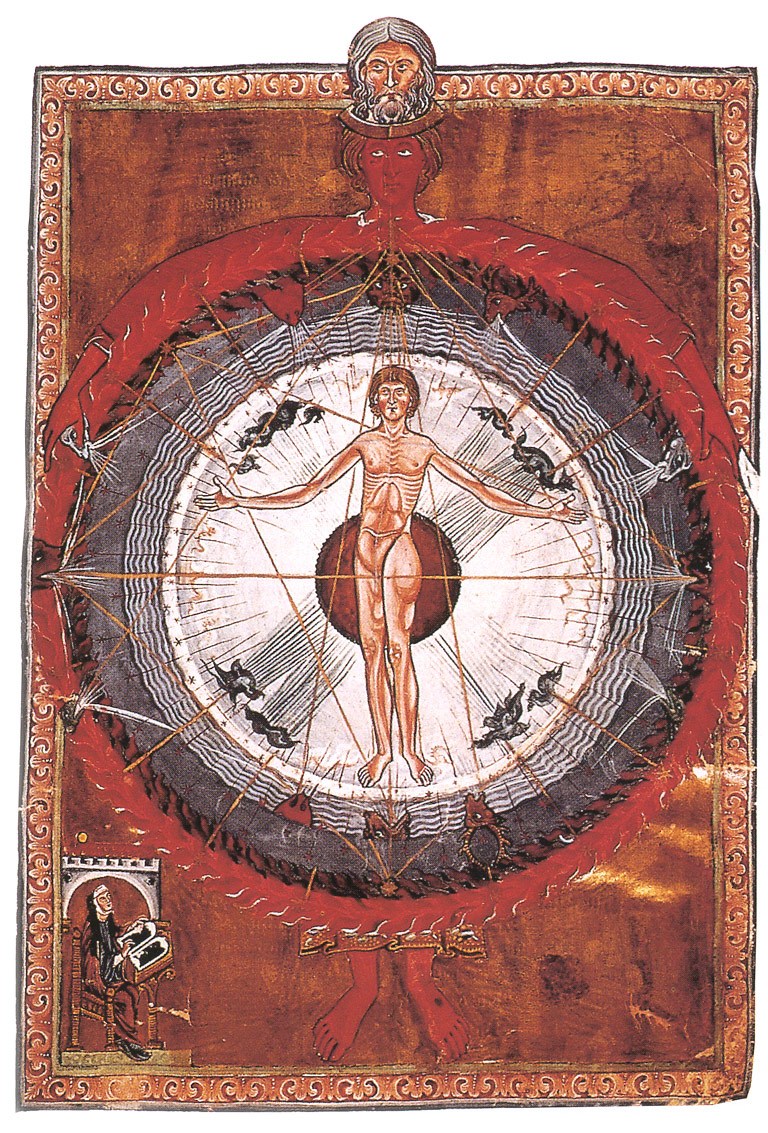
Mysticism encompasses religious traditions of human transformation aided by various practices and religious experiences. Popularly, mysticism is used synonymously with mystical experience, a neologism which refers to an ecstatic unitive experience of becoming one with God, the Absolute, or all that exists.
Read the full pageMysticism encompasses religious traditions of human transformation aided by various practices and religious experiences. Popularly, mysticism is used synonymously with mystical experience, a neologism which refers to an ecstatic unitive experience of becoming one with God, the Absolute, or all that exists.
Scholarly research since the 1970s had questioned this understanding, noting that what appears to be mysticism may also refer to the attainment of insight into ultimate or hidden truths, as in Buddhist awakening and Hindu prajna, in nondualism, and in the realisation of emptiness and ego-lessness, and also to altered states of consciousness such as samadhi.
- 12
 ConceptAmericas
Naturalism (philosophy)
In philosophy, naturalism is the position that only natural laws and forces (as opposed to supernatural ones) operate in the universe. According to naturalism, the causes of all phenomena are to be found within the universe and not transcendental factors beyond it.
Read the full pageIn philosophy, naturalism is the position that only natural laws and forces (as opposed to supernatural ones) operate in the universe. According to naturalism, the causes of all phenomena are to be found within the universe and not transcendental factors beyond it. In its primary sense, it is also known as ontological naturalism, metaphysical naturalism, pure naturalism, philosophical naturalism and antisupernaturalism. "Ontological" refers to ontology, the philosophical study of what exists. Philosophers often treat naturalism as equivalent to physicalism or materialism, but there are important distinctions between the philosophies.
For example, philosopher Paul Kurtz argued that nature is best accounted for by reference to material principles. These principles include mass, energy, and other physical and chemical properties accepted by the scientific community. Further, in this primary sense, naturalism holds that spirits, deities, and ghosts are not real and that there is no "purpose" in nature – the view held in Dysteleology. This stronger formulation of naturalism is commonly referred to as metaphysical naturalism. On the other hand, the more moderate view that naturalism should be assumed in one's working methods as the current paradigm, without any further consideration of whether naturalism is true in the robust metaphysical sense, is called methodological naturalism.
- 13ConceptAmericas
Naturalized epistemology
Naturalized epistemology is a collection of philosophic views about the theory of knowledge that emphasize the role of natural scientific methods. This shared emphasis on scientific methods of studying knowledge shifts the focus of epistemology away from many traditional philosophical questions, and towards the empiric
Read the full pageNaturalized epistemology is a collection of philosophic views about the theory of knowledge that emphasize the role of natural scientific methods. This shared emphasis on scientific methods of studying knowledge shifts the focus of epistemology away from many traditional philosophical questions, and towards the empirical processes of knowledge acquisition. There are noteworthy distinctions within naturalized epistemology. Replacement naturalism maintains that we should abandon traditional epistemology and replace it with the methodologies of the natural sciences. The general thesis of cooperative naturalism is that traditional epistemology can benefit in its inquiry by using the knowledge we have gained from cognitive sciences. Substantive naturalism focuses on an asserted equality of facts of knowledge and natural facts.
The name for such epistemology was coined in the 20th century by W. V. O. Quine. Objections to naturalized epistemology have targeted features of the general project as well as characteristics of specific versions. Some objectors argue that natural scientific knowledge cannot be circularly grounded by the knowledge obtained through cognitive science, which is itself a natural science. This objection from circularity has been aimed specifically at strict replacement naturalism. There are similar challenges to substance naturalism that maintain that the substance naturalists' thesis that all facts of knowledge are natural facts is not only circular but fails to accommodate certain facts. Several other objectors have found fault in the inability of naturalized methods to adequately address questions about what value forms of potential knowledge have or lack.
- 14ConceptAmericas
Necessity of identity
In modal logic, the necessity of identity is the thesis that for every object x and object y, if x and y are the same object, it is necessary that x and y are the same object. The thesis is best known for its association with Saul Kripke, who published it in 1971, although it was first derived by the logician Ruth Barc
Read the full pageIn modal logic, the necessity of identity is the thesis that for every object x and object y, if x and y are the same object, it is necessary that x and y are the same object. The thesis is best known for its association with Saul Kripke, who published it in 1971, although it was first derived by the logician Ruth Barcan Marcus in 1947, and later, in simplified form, by W. V. O. Quine in 1953.
The derivation in Kripke's 'Identity and Necessity' is in three steps:

