American ideas, P–R
- 1ConceptAmericas
Problem of dirty hands
The problem of dirty hands concerns whether political leaders are justified in committing immoral actions when "dirtying their hands", in realizing an important moral end, such as the preservation of a community's continued existence or the prevention of imminent societal catastrophe.
Read the full pageThe problem of dirty hands concerns whether political leaders are justified in committing immoral actions when "dirtying their hands", in realizing an important moral end, such as the preservation of a community's continued existence or the prevention of imminent societal catastrophe.
Contemporary philosophical interest in the problem of dirty hands had been popularized by the works of American political theorist Michael Walzer and other thinkers. The term itself comes from Jean-Paul Sartre's 1948 play Dirty Hands, in which Hoederer speaks of having dirty hands up to his elbows, then asks, "But what do you hope? Do you think you can govern innocently?"
- 2ConceptAmericas
Process philosophy
Process philosophy (also ontology of becoming or processism) is an approach in philosophy that identifies processes, changes, or shifting relationships as the only real experience of everyday living. In opposition to the classical view of change as illusory (as argued by Parmenides) or accidental (as argued by Aristotl
Read the full pageProcess philosophy (also ontology of becoming or processism) is an approach in philosophy that identifies processes, changes, or shifting relationships as the only real experience of everyday living. In opposition to the classical view of change as illusory (as argued by Parmenides) or accidental (as argued by Aristotle), process philosophy posits transient occasions of change or becoming as the most fundamental things of the ordinary everyday real world.
Since the time of Plato and Aristotle, classical ontology has posited ordinary world reality as constituted of enduring substances, to which transient processes are ontologically subordinate, if they are not denied. If Socrates changes, becomes sick, Socrates is still the same (the substance of Socrates being the same), and change (his sickness) only glides over his substance: change is accidental, and devoid of primary reality, whereas the substance is essential.
- 3ConceptAmericas
Progressivism
Progressivism is a political philosophy that seeks to make progress in the human condition through reforms aimed at increasing positive liberty. Progressivism arose during the Age of Enlightenment out of the belief that civility in Europe was improving due to the application of new empirical knowledge.
Read the full pageProgressivism is a political philosophy that seeks to make progress in the human condition through reforms aimed at increasing positive liberty. Progressivism arose during the Age of Enlightenment out of the belief that civility in Europe was improving due to the application of new empirical knowledge.
Progressivism as an umbrella term is associated with social democracy as well as reformist variants of conservatism, liberalism, socialism, and communism.
- 4
 ConceptAmericas
Property dualism
Property dualism describes a category of positions in the philosophy of mind which hold that, although the world is composed of just one kind of substance—the physical kind—there exist two distinct kinds of properties: physical properties and mental properties. In other words, it is the view that at least some non-phys
Read the full pageProperty dualism describes a category of positions in the philosophy of mind which hold that, although the world is composed of just one kind of substance—the physical kind—there exist two distinct kinds of properties: physical properties and mental properties. In other words, it is the view that at least some non-physical, mental properties (such as thoughts, imagination and memories) exist in, or naturally supervene upon, certain physical substances (namely brains).
Substance dualism, on the other hand, is the view that there exist in the universe two fundamentally different kinds of substance: physical (matter) and non-physical (mind or consciousness), and subsequently also two kinds of properties which inhere in those respective substances. Both substance and property dualism are opposed to reductive physicalism. Notable proponents of property dualism include David Chalmers, Christof Koch, and Richard Fumerton. It became prominent in the final decades of the twentieth century and is now the leading alternative to physicalism.
- 5ConceptAmericas
Propositional attitude
A propositional attitude is a mental state held by an agent or organism toward a proposition. In philosophy, propositional attitudes can be considered to be neurally realized, causally efficacious, content-bearing internal states (personal principles/values).
Read the full pageA propositional attitude is a mental state held by an agent or organism toward a proposition. In philosophy, propositional attitudes can be considered to be neurally realized, causally efficacious, content-bearing internal states (personal principles/values). Linguistically, propositional attitudes are denoted by a verb (e.g. believed) governing an embedded "that" clause, for example, 'Sally believed that she had won'.
Propositional attitudes are often assumed to be the fundamental units of thought and their contents, being propositions, are true or false from the perspective of the person. An agent can have different propositional attitudes toward the same proposition (e.g., "S believes that her ice-cream is cold," and "S fears that her ice-cream is cold"). Propositional attitudes have directions of fit: some are meant to reflect the world, others to influence it.
- 6ConceptAmericas
Propositional logic
Propositional logic is a branch of logic. It is also called statement logic, sentential calculus, propositional calculus, sentential logic, or sometimes zeroth-order logic.
Read the full pagePropositional logic is a branch of logic. It is also called statement logic, sentential calculus, propositional calculus, sentential logic, or sometimes zeroth-order logic. Sometimes, it is called first-order propositional logic to contrast it with System F, but it is distinct from first-order logic. It deals with propositions (which can be true or false) and relations between propositions, including the construction of arguments based on them. Compound propositions are formed by connecting propositions by logical connectives representing the truth functions of conjunction, disjunction, implication, biconditional, and negation. Some sources include other connectives, as in the table below.
Unlike first-order logic, propositional logic does not deal with non-logical objects, predicates about them, or quantifiers. However, all the machinery of propositional logic is included in first-order logic and higher-order logics. In this sense, propositional logic is the foundation of first-order logic and higher-order logic.
- 7ConceptAmericas
Psychological nominalism
Psychological nominalism is the view advanced in Wilfrid Sellars' 1956 paper "Empiricism and Philosophy of Mind" (EPM) that explains psychological concepts in terms of public language use. Sellars describes psychological nominalism as the view that “all awareness of sorts, resemblances, facts, etc., in short, all aware
Read the full pagePsychological nominalism is the view advanced in Wilfrid Sellars' 1956 paper "Empiricism and Philosophy of Mind" (EPM) that explains psychological concepts in terms of public language use. Sellars describes psychological nominalism as the view that “all awareness of sorts, resemblances, facts, etc., in short, all awareness…is a linguistic affair.”
Judging solely from the mention in EPM, psychological nominalism would seem to be a form of verbal behaviorism, which holds that ascriptions of psychological states are definitionally equivalent to predictions about behavior. For example, the verbal behaviorist holds that a statement like "John is scared of thunderstorms" is meaningful only insofar as it can be parsed into predictions concerning the sorts of things John is likely to say and/or do in the event of a thunderstorm (i.e. "John will say, or have a propensity to say, "I am scared" when he hears thunder" or "John will hide, or have a propensity to hide, his face when he sees lightning").
- 8ConceptAmericas
Public reason
Public reason requires that the moral or political rules that regulate the common life of a community be, in some sense, justifiable or acceptable to all those persons over whom the rules purport to have authority. It is an idea with roots in the work of Thomas Hobbes, Immanuel Kant, and Jean-Jacques Rousseau, and has
Read the full pagePublic reason requires that the moral or political rules that regulate the common life of a community be, in some sense, justifiable or acceptable to all those persons over whom the rules purport to have authority. It is an idea with roots in the work of Thomas Hobbes, Immanuel Kant, and Jean-Jacques Rousseau, and has become increasingly influential in contemporary moral and political philosophy as a result of its development in the work of John Rawls, Jürgen Habermas, and Gerald Gaus, among others.
The phrase "public use of one's reason" (Vernunft in allen Stükken öffentlichen Gebrauch) was used by Immanuel Kant in his 1784 editorial piece responding to the question "What Is Enlightenment?", where he distinguished it from private usage of reason, by which he meant reasoning offered from a specific civic office or post. This Kantian conception was further developed by American philosopher John Rawls to refer to the common reason of all citizens in a pluralist society and identified it as a component of political liberalism. Although Rawls cited the Kantian origin of his concept, his understanding is distinguished by the way he explained how public reason embodies the shared fund of beliefs and reason of those who constitute a democratic polity—those who are concerned with the good of the public and matters of basic justice.
- 9
 ConceptAmericas
Quine–Putnam indispensability argument
The Quine–Putnam indispensability argument is an argument in the philosophy of mathematics for the existence of abstract mathematical objects such as numbers and sets, a position known as mathematical Platonism. It was named after the philosophers Willard Van Orman Quine and Hilary Putnam, and is one of the most import
Read the full pageThe Quine–Putnam indispensability argument is an argument in the philosophy of mathematics for the existence of abstract mathematical objects such as numbers and sets, a position known as mathematical Platonism. It was named after the philosophers Willard Van Orman Quine and Hilary Putnam, and is one of the most important arguments in the philosophy of mathematics.
Although elements of the indispensability argument may have originated with thinkers such as Gottlob Frege and Kurt Gödel, Quine's development of the argument was unique for introducing to it a number of his philosophical positions such as naturalism, confirmational holism, and the criterion of ontological commitment. Putnam gave Quine's argument its first detailed formulation in his 1971 book Philosophy of Logic. He later came to disagree with various aspects of Quine's thinking, however, and formulated his own indispensability argument based on the no miracles argument in the philosophy of science. A standard form of the argument in contemporary philosophy is credited to Mark Colyvan; whilst being influenced by both Quine and Putnam, it differs in important ways from their formulations. It is presented in the Stanford Encyclopedia of Philosophy:
- 10
 ConceptAmericas
Radical empiricism
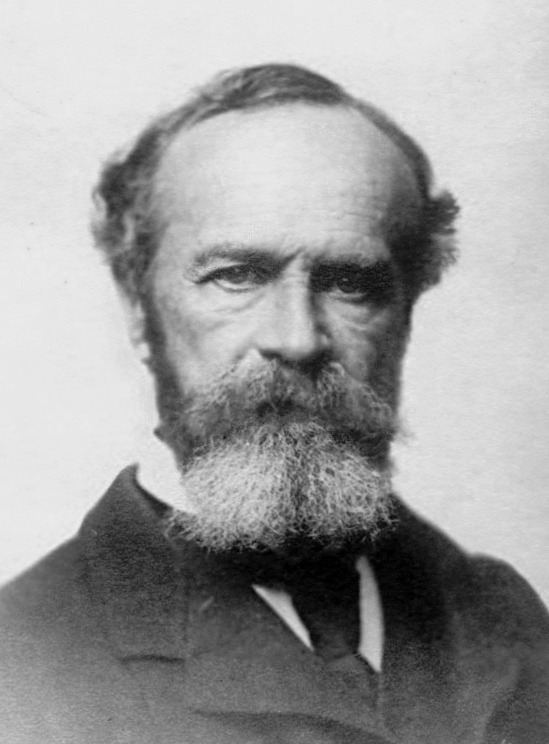
Radical empiricism is a philosophical doctrine put forward by William James. It asserts that experience includes both particulars and relations between those particulars, and that therefore both deserve a place in our explanations.
Read the full pageRadical empiricism is a philosophical doctrine put forward by William James. It asserts that experience includes both particulars and relations between those particulars, and that therefore both deserve a place in our explanations. In concrete terms: Any philosophical worldview is flawed if it stops at the physical level and fails to explain how meaning, values and intentionality can arise from that.
Radical empiricism is a postulate, a statement of fact, and a conclusion, says James in The Meaning of Truth (1909). The postulate is that "the only things that shall be debatable among philosophers shall be things definable in terms drawn from experience." The fact is that our experience contains disconnected entities as well as various types of connections; it is full of meaning and values. The conclusion is that our worldview does not need "extraneous trans-empirical connective support, but possesses in its own right a concatenated or continuous structure."
- 11ConceptAmericas
Radical interpretation
Radical interpretation is interpretation of a speaker, including attributing beliefs and desires to them and meanings to their words, from scratch—that is, without relying on translators, dictionaries, or specific prior knowledge of their mental states. The term was introduced by American philosopher Donald Davidson an
Read the full pageRadical interpretation is interpretation of a speaker, including attributing beliefs and desires to them and meanings to their words, from scratch—that is, without relying on translators, dictionaries, or specific prior knowledge of their mental states. The term was introduced by American philosopher Donald Davidson (1973) and is meant to suggest important similarity to W. V. O. Quine's term radical translation, which occurs in his work on the indeterminacy of translation. Radical translation
is translation of a speaker's language, without prior knowledge, by observing the speaker's use of the language in context.
- 12ConceptAmericas
Reality tunnel
Reality tunnel is a theory that, with a subconscious set of mental filters formed from beliefs and experiences, every individual interprets the same world differently, hence "Truth is in the eye of the beholder". It is similar to the idea of representative realism, and was coined by Timothy Leary.
Read the full pageReality tunnel is a theory that, with a subconscious set of mental filters formed from beliefs and experiences, every individual interprets the same world differently, hence "Truth is in the eye of the beholder". It is similar to the idea of representative realism, and was coined by Timothy Leary. It was further expanded on by Robert Anton Wilson, who wrote about the idea extensively in his 1983 book Prometheus Rising.
Wilson and Leary co-wrote a chapter in Leary's 1988 book Neuropolitique (a revised edition of the 1977 book Neuropolitics), in which they explained further:
- 13
 ConceptAmericas
Recognition justice
Recognition justice is a theory of social justice that emphasizes the recognition of human dignity and of difference between subaltern groups and the dominant society. Social philosophers Axel Honneth and Nancy Fraser point to a 21st-century shift in theories of justice away from distributive justice (which emphasises
Read the full pageRecognition justice is a theory of social justice that emphasizes the recognition of human dignity and of difference between subaltern groups and the dominant society. Social philosophers Axel Honneth and Nancy Fraser point to a 21st-century shift in theories of justice away from distributive justice (which emphasises the elimination of economic inequalities) toward recognition justice and the eliminating of humiliation and disrespect. The shift is associated with the rise of identity politics.
The political implications of recognition justice are more ambiguous than distributive justice, because recognition is not a resource then can be redistributed, but is rather a phenomenological experience of people and groups. Honneth takes up the Hegelian idea that subjectivity is only fully constituted through intersubjective relationships, structured in different spheres of recognition—love, rights, and solidarity.
- 14
 ConceptAmericas
Reductionism
Reductionism is any of several related philosophical ideas regarding the associations between phenomena which can be described in terms of simpler or more fundamental phenomena. It is also described as an intellectual and philosophical position that interprets a complex system as the sum of its parts, contrary to holis
Read the full pageReductionism is any of several related philosophical ideas regarding the associations between phenomena which can be described in terms of simpler or more fundamental phenomena. It is also described as an intellectual and philosophical position that interprets a complex system as the sum of its parts, contrary to holism. Reductionism tends to focus on the small, predictable details of a system and is often associated with various philosophies like emergence, materialism, and determinism.
The Oxford Companion to Philosophy suggests that reductionism is "one of the most used and abused terms in the philosophical lexicon" and suggests a three-part division: