
Veganism
Veganism is the practice of abstaining from the use of animal products and the consumption of animal source foods, and an associated philosophy that rejects the commodity status of animals. A person who practices veganism is known as a vegan; the word is also used to describe foods and materials that are compatible wit
Veganism is the practice of abstaining from the use of animal products and the consumption of animal source foods, and an associated philosophy that rejects the commodity status of animals. A person who practices veganism is known as a vegan; the word is also used to describe foods and materials that are compatible with veganism.
Ethical veganism excludes all forms of animal use, whether in agriculture for labour or food (e.g., meat, fish and other animal seafood, eggs, honey, and dairy products such as milk or cheese), in clothing and fashion (e.g., leather, wool, fur, and some cosmetics), in entertainment (e.g., rodeos, bullfighting, zoos, circuses, dolphinariums and horse racing), in services (e.g., mounted police, working animals, K9s and animal testing), and in medicine (e.g., bile bear farms, wildlife trade). People who follow a vegan diet for the benefits to the environment, their health, or for religion are regularly also described as vegans.
Although individuals have been renouncing the consumption of products of animal origin since ancient times, the term "veganism" itself was coined in 1944 by Donald and Dorothy Watson. The aim was to differentiate it from vegetarianism, which rejects the consumption of meat but accepts the consumption of other products of animal origin, such as milk, honey, dairy products, and eggs.
Interest in veganism increased significantly in the 2010s.
Definition
Distinctions may be made between several categories of veganism. "Ethical veganism" means avoiding using animals, animal products, and animal-tested products for any purpose, when practicable. The motivation behind this is concern about animal welfare. Another term is "environmental veganism", which refers to the avoidance of animal products on the grounds that the industrial farming of animals is environmentally damaging and unsustainable. "Dietary veganism", whose practitioners are also known as "strict vegetarians", refrain from consuming meat, eggs, dairy products, and any other animal-derived substances. This can be for religious reasons too.
Since 1988, The UK's Vegan Society gives this definition of veganism:
Veganism is a philosophy and way of living which seeks to exclude—as far as is possible and practicable—all forms of exploitation of, and cruelty to, animals for food, clothing or any other purpose; and by extension, promotes the development and use of animal-free alternatives for the benefit of animals, humans and the environment. In dietary terms it denotes the practice of dispensing with all products derived wholly or partly from animals.
A 2021 study found this to be the most popular definition amongst vegans from a number of other prominent definitions. It also found that while most vegans ranked diet-only based definitions such as "strict vegetarianism" last, non-vegans picked these far more frequently.
The German Ministry for Consumer Protection approved a definition for food suitable for vegans on 22 April 2016. In 2021, the International Organization for Standardization published standard ISO 23662 on "definitions and technical criteria for foods and food ingredients suitable for vegetarians or vegans and for labelling and claims". However, this was rejected by the Dutch Vegan Association who found the standard inconsistent with their vision.
Early history
Vegetarianism can be traced back to the Indus Valley civilization in 3300–1300 BCE in the Indian subcontinent, particularly in northern and western ancient India. Early vegetarians included Indian philosophers such as Parshavnatha, Mahavira, Acharya Kundakunda, Umaswati, Samantabhadra, and Valluvar, as well as the Indian emperors Chandragupta Maurya and Ashoka.
One of the earliest known vegans was the Arab poet al-Ma'arri, famous for his poem "I No Longer Steal From Nature". (c. 973 – c. 1057). Another vegan who predated the term vegan was English philosopher Lewis Gompertz. The Irish farmer Robert Cook (1646–1726) was a vegan who also predated the term; he did not eat any animal products and did not wear wool or leather, on account of his Protestant interpretation of biblical verses.
Ancient vegan arguments were based on health, the transmigration of souls, animal welfare, and the view — espoused by Porphyry in De Abstinentia ab Esu Animalium ("On Abstinence from Animal Food", c. 268 – c. 270) — that if humans deserve justice, then so do animals.
19th century
Vegetarianism established itself as a significant movement in 19th-century Britain and the United States. A minority of vegetarians avoided animal food entirely. In 1813, the poet Percy Bysshe Shelley published A Vindication of Natural Diet, advocating "abstinence from animal food and spirituous liquors", and in 1815, William Lambe, a London physician, said that his "water and vegetable diet" could cure anything from tuberculosis to acne. Lambe called animal food a "habitual irritation" and argued that "milk eating and flesh-eating are but branches of a common system and they must stand or fall together". Sylvester Graham's meatless Graham diet—mostly fruit, vegetables, water, and bread made at home with stoneground flour—became popular as a health remedy in the 1830s in the United States. The first known vegan cookbook was Asenath Nicholson's Kitchen Philosophy for Vegetarians, published in 1849.
Several vegan communities were established around this time. In Massachusetts, Amos Bronson Alcott, father of the novelist Louisa May Alcott, opened the Temple School in 1834 and Fruitlands in 1844, and in England, James Pierrepont Greaves founded the Concordium, a vegan community at Alcott House on Ham Common, in 1838.
Early 20th century
C. W. Daniel published an early vegan cookbook, Rupert H. Wheldon's No Animal Food: Two Essays and 100 Recipes, in 1910. The consumption of milk and eggs became a battleground over the following decades within the Vegetarian Society. There were regular discussions about it in the Vegetarian Messenger; it appears from the correspondence pages that many opponents of veganism were vegetarians.
During a visit to London in 1931, Mahatma Gandhi—who had joined the Vegetarian Society's executive committee when he lived in London from 1888 to 1891—gave a speech to the Society arguing that it ought to promote a meat-free diet as a matter of morality, not health. Lacto-vegetarians acknowledged the ethical consistency of the vegan position but regarded a vegan diet as impracticable and were concerned that it might be an impediment to spreading vegetarianism if vegans found themselves unable to participate in social circles where no non-animal food was available. This became the predominant view of the Vegetarian Society, which in 1935 stated: "The lacto-vegetarians, on the whole, do not defend the practice of consuming the dairy products except on the ground of expediency."
Etymology
In August 1944, several members of the Vegetarian Society asked that a section of its newsletter be devoted to non-dairy vegetarianism. When the request was denied, Donald Watson, secretary of the Leicester branch, set up a new quarterly newsletter, The Vegan News, in November 1944. The word vegan was invented by Watson and Dorothy Morgan, a schoolteacher he later married. The word is based on "the first three and last two letters of 'vegetarian'" because it marked, in Watson's words, "the beginning and end of vegetarian". The Vegan News asked its readers if they could think of anything better than vegan to stand for "non-dairy vegetarian". They suggested allvega, neo-vegetarian, dairyban, vitan, benevore, sanivores, and beaumangeur.
According to Joanne Stepaniak, the word vegan was first published independently in 1962 by the Oxford Illustrated Dictionary, defined as "a vegetarian who eats no butter, eggs, cheese, or milk".
Founding of The Vegan Society
The first edition of The Vegan News attracted more than 100 letters, including from George Bernard Shaw, who resolved to give up eggs and dairy. The Vegan Society held its first meeting in early November at the Attic Club, 144 High Holborn, London. In attendance were Donald Watson, Elsie B. Shrigley, Fay K. Henderson, Alfred Hy Haffenden, Paul Spencer and Bernard Drake, with Mme Pataleewa (Barbara Moore, a Russian-British engineer) observing. Later that month, the Vegan Society published its manifesto which advocated that diet "should exclude flesh, fish, fowl, eggs, honey, and animal's milk, butter, and cheese" and encouraged "the manufacture and use of alternatives to animal commodities." World Vegan Day is held every 1 November to mark the founding of the Society, and the Society considers November World Vegan Month.
The Vegan News changed its name to The Vegan in November 1945, by which time it had 500 subscribers. It published recipes and a "vegan trade list" of animal-free products, such as toothpastes, shoe polishes, stationery and glue. Vegan books appeared, including Vegan Recipes by Fay K. Henderson (1946) and Aids to a Vegan Diet for Children by Kathleen V. Mayo (1948).
The Vegan Society soon made clear that it rejected the use of animals for any purpose, not only in diet. In 1947, Watson wrote: "The vegan renounces it as superstitious that human life depends upon the exploitation of these creatures whose feelings are much the same as our own". From 1948, The Vegan's front page read: "Advocating living without exploitation", and in 1951, the Society published its definition of veganism as "the doctrine that man should live without exploiting animals". In 1956, its vice-president, Leslie Cross, founded the Plantmilk Society and in 1965, as Plantmilk Ltd and later Plamil Foods, it began production of one of the first widely distributed soy milks in the Western world.
Spread to the United States
The first vegan society in the United States was founded in 1948 by Catherine Nimmo and Rubin Abramowitz in California, who distributed Watson's newsletter. In 1960, H. Jay Dinshah founded the American Vegan Society (AVS), linking veganism to the concept of ahimsa, "non-harming" in Sanskrit.
Late 20th century
In the 1960s and 1970s, a vegetarian food movement emerged as part of the counterculture in the United States that focused on concerns about diet, the environment, and a distrust of food producers, leading to increasing interest in organic gardening. One of the most influential vegetarian books of that time was Frances Moore Lappé's 1971 Diet for a Small Planet. It sold more than three million copies and suggested "getting off the top of the food chain".
The following decades saw research by a group of scientists and doctors in the U.S., including Dean Ornish, Caldwell Esselstyn, Neal D. Barnard, John A. McDougall, Michael Greger, and biochemist T. Colin Campbell, who argued that diets based on animal fat and animal protein, such as the Western pattern diet, were unhealthy. They produced a series of books that recommend vegan or vegetarian diets, including McDougall's The McDougall Plan (1983), John Robbins's Diet for a New America (1987), which associated meat production with environmental damage, and Dr. Dean Ornish's Program for Reversing Heart Disease (1990). In 2003 two major North American dietitians' associations claimed that well-planned vegan diets were suitable for all life stages. This was followed by the film Earthlings (2005), Campbell's The China Study (2005), Rory Freedman and Kim Barnouin's Skinny Bitch (2005), Jonathan Safran Foer's Eating Animals (2009), and the film Forks Over Knives (2011).
In the 1980s, veganism became associated with punk subculture and ideologies, particularly straight edge hardcore punk in the U.S. and anarcho-punk in the United Kingdom. This association continues into the 21st century, as evidenced by the prominence of vegan punk events such as Fluff Fest in Europe.
21st century
The vegan diet became increasingly mainstream in the 2010s, especially in the latter half. The Economist declared 2019 "the year of the vegan". Chain restaurants began marking vegan items on their menus and supermarkets improved their selection of vegan-processed food. Interest in veganism rose significantly in this decade.
The global mock-meat market increased by 18 percent between 2005 and 2010, and in the U.S. by eight percent between 2012 and 2015, to $553 million a year. The Vegetarian Butcher (De Vegetarische Slager), the first known vegetarian butcher shop, selling mock meats, opened in the Netherlands in 2010, while America's first vegan butcher, the Herbivorous Butcher, opened in Minneapolis in 2016. Since 2017, more than 12,500 chain restaurant locations have begun offering Beyond Meat and Impossible Foods products, including Carl's Jr. outlets offering Beyond Burgers and Burger King outlets serving Impossible Whoppers. Plant-derived meat sales in the U.S. grew 37% between 2017 and 2019.
In 2011, Europe's first vegan supermarkets appeared in Germany: Veganz in Berlin and Vegilicious in Dortmund. In 2013, the Oktoberfest in Munich (traditionally a meat-heavy event) offered vegan dishes for the first time in its 200-year history.
By 2016, 49% of Americans were drinking plant milk, and 91% still drank dairy milk. In the U.K., the plant milk market increased by 155 percent in two years, from 36 million litres (63 million imperial pints) in 2011 to 92 million (162 million imperial pints) in 2013. There was a 185% increase in new vegan products between 2012 and 2016 in the U.K. In 2017, the United States School Nutrition Association found 14% of school districts across the country were serving vegan school meals compared to 11.5% of schools offering vegan lunch in 2016.
In total, as of 2016, the largest share of vegan consumers globally currently reside in Asia Pacific with nine percent of people following a vegan diet. In 2017, veganism rose in popularity in Hong Kong and China, particularly among millennials. China's vegan market was estimated to rise by more than 17% between 2015 and 2020, which is expected to be "the fastest growth rate internationally in that period". This exceeds the projected growth in the second and third fastest-growing vegan markets internationally in the same period, the United Arab Emirates (10.6%) and Australia (9.6%), respectively.
In 2018, Jacy Reese Anthis's book The End of Animal Farming argued that veganism will completely replace animal-based food by 2100. The book was featured in The Guardian, The New Republic, and Forbes, among other newspapers and magazines.
The growth of schools serving vegan school meals has increased in recent years with the lunches added by Los Angeles, California in 2018, Portland, Maine in 2019, and New York City in 2022.
In January 2021, 582,538 people from 209 countries and territories signed up for Veganuary, breaking the previous year's record of 400,000. That month, ONA in France became the first vegan restaurant in the country to receive a Michelin star. That year, 79 more vegan restaurants around the world received Michelin stars. At the end of the year, a poll conducted by The Guardian showed that a new high of 36% of the British public were interested in veganism.
Prevalence across the globe
The prevalence of veganism differs wildly per country and region and a minority everywhere. Vegans account for about 9% of the population in both India and Mexico, and about 2% in many developed Western countries.
The city with the most vegan restaurants per resident in 2021 according to data collected from HappyCow was Chiang Mai (Thailand), followed by Ubud (Bali, Indonesia), Phuket (Thailand), Tel Aviv (Israel), and Lisbon (Portugal).
Vegan cuisine and foods
Vegan cuisine is a style of cooking defined by the inclusion of grains, legumes, nuts, vegetables, fruits, meat alternatives (including tofu, tempeh, and seitan), vegan cheese, and plant milks and by the exclusion of animal-based dairy, eggs, animal-based meat and animal tissue products (such as gelatin or animal-derived rennet), and insect-based honey. Vegan cuisine differs from vegetarian cuisine, which often includes honey, dairy, and eggs.
Meat alternatives
Vegan meat alternatives are commonly sold in forms like vegetarian sausage, mince, or veggie burgers. They are often made from soybeans, seitan (wheat gluten), beans, lentils, rice, mushrooms or vegetables. Meat substitutes have been made in China since at least the Tang dynasty (618 to 907 common era), including mock duck made from seitan. They are much newer to Western countries. Some famous Western producers of vegan meat alternatives include Impossible Foods and Beyond Meat. In the late 2010s many meat producers and supermarkets also started making their own brands of vegan meat substitutes as well.
Plant milk and dairy product alternatives
Plant milks—such as soy milk, almond milk, cashew milk, grain milks (oat milk, flax milk and rice milk), hemp milk, and coconut milk—are used in place of cow or goat milk. Soy milk provides around 7 g (1⁄4oz) of protein per cup (240 mL or 8 fl oz), compared with 8 g (2/7oz) of protein per cup of cow's milk. Almond milk is lower in dietary energy, carbohydrates, and protein.
Neither plant milk nor cow milk should be used as a replacement for breast milk for babies. Babies who are not breastfed may be fed commercial infant formula, normally based on cow milk or soy. The latter is known as soy-based infant formula or SBIF.
Butter and margarine can be replaced with alternate vegan products. Vegan cheeses are made from seeds, soybeans, coconut oil, tapioca, and rice, among other ingredients; and can replicate the meltability of dairy cheese. Nutritional yeast is also a common substitute for the taste of cheese in vegan recipes. Dairy yoghurt can be replaced with plant-derived products such as soy yoghurt. Various types of plant cream have been created to replace dairy cream, and some types of imitation whipped cream are non-dairy.
In the 2010s and 2020s, a number of companies have genetically engineered yeast to produce cow milk proteins, whey, or fat, without the use of cows. These include Perfect Day, Novacca, Motif FoodWorks, Remilk, Final Foods, and Circe.
Egg replacements
Baking powder, silken (soft) tofu, mashed potato, bananas, flaxseeds, and aquafaba from chickpeas can also be used as egg substitutes. Which one of these works depends on the egg property the replacement is meant to emulate. Scrambled tofu, for instance, replaces scrambled eggs, but tofu does not act as a binding agent for cakes like raw eggs, flaxseeds or bananas do. As of 2019 in the U.S., many vegan egg substitutes were available, including products used for "scrambled" eggs, cakes, cookies, and doughnuts.
Raw veganism
Raw veganism, combining veganism and raw foodism, excludes all animal products and food cooked above 48 °C (118 °F). A raw vegan diet includes vegetables, fruits, nuts, grain and legume sprouts, seeds, and sea vegetables. There are many variations of the diet, including fruitarianism.
General
While vegans broadly abstain from animal products, there are many ways in which animal products are used, and different individuals and organizations that identify with the practice of veganism may use some limited animal products based on philosophy, means or other concerns. Philosopher Gary Steiner argues that it is not possible to be entirely vegan, because animal use and products are "deeply and imperceptibly woven into the fabric of human society".
Adapted from the Wikipedia article Veganism, available under CC BY-SA 4.0.
Connections
Proposed by
1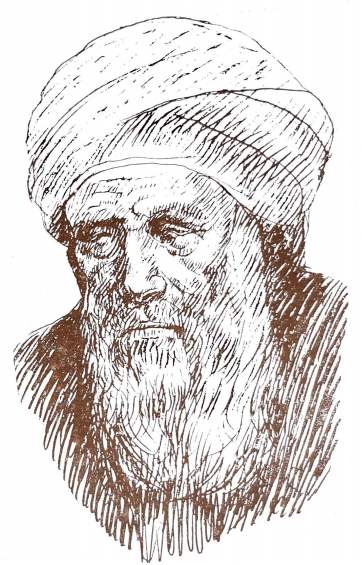
You might also explore
 Philosophical pessimismModern EuropeanPhilosophical pessimism is the view that life or existence has negative value. It is often stated as the claim that…AqidahIslamicAqidah is an Islamic term of Arabic origin that means "creed". It is also called Islamic creed or Islamic theology.
 AsabiyyahIslamicAsabiyyah or asabiyya (Arabic: عصبيّة, romanized: ʿaṣabiyya, lit. 'group cohesiveness') is a concept of social…AutodidacticismIslamicAutodidacticism (also autodidactism) or self-education (also self-learning, self-study, and self-teaching) is the…