Stream of consciousness
In literary criticism, stream of consciousness is a narrative mode or method that attempts "to depict the multitudinous thoughts and feelings which pass through the mind" of a narrator. It is usually in the form of an interior monologue which is disjointed or has irregular punctuation.
In literary criticism, stream of consciousness is a narrative mode or method that attempts "to depict the multitudinous thoughts and feelings which pass through the mind" of a narrator. It is usually in the form of an interior monologue which is disjointed or has irregular punctuation. While critics have pointed to various literary precursors, it was not until the 20th century that this technique was fully developed by modernist writers such as Marcel Proust, James Joyce, Dorothy Richardson and Virginia Woolf.
Stream of consciousness narratives continue to be used in modern prose and the term has been adopted to describe similar techniques in other art forms such as poetry, songwriting and film.
Origin of term
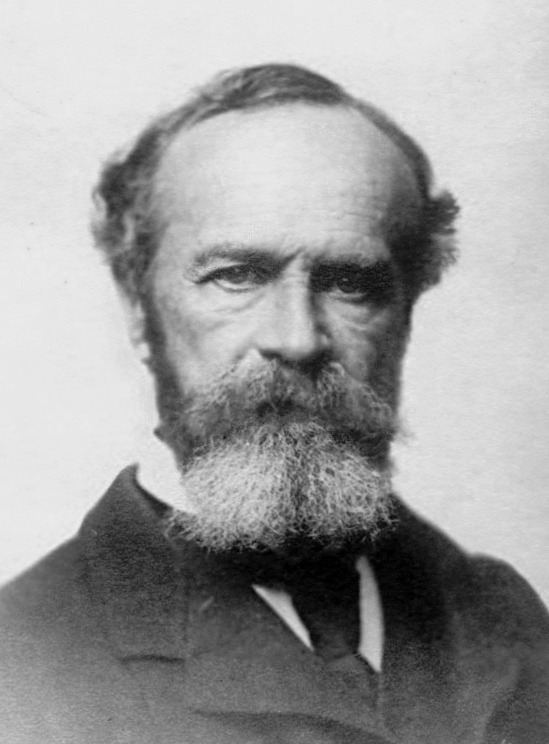
Alexander Bain used the term in 1855 in the first edition of The Senses and the Intellect, when he wrote, "The concurrence of Sensations in one common stream of consciousness–on the same cerebral highway–enables those of different senses to be associated as readily as the sensations of the same sense". But the term is commonly credited to William James who used it in 1890 in his The Principles of Psychology: "consciousness, then, does not appear to itself as chopped up in bits ... it is nothing joined; it flows. A 'river' or a 'stream' are the metaphors by which it is most naturally described. In talking of it hereafter, let's call it the stream of thought, consciousness, or subjective life".
The term was first applied in a literary context in The Egoist, April 1918, by May Sinclair, in relation to the early volumes of Dorothy Richardson's novel sequence Pilgrimage. Richardson, however, described the term as a "lamentably ill-chosen metaphor".
Definition
Stream of consciousness is a literary method of representing the flow of a character's thoughts and sense impressions "usually in an unpunctuated or disjointed form of interior monologue." While many sources use the terms stream of consciousness and interior monologue as synonyms, the Oxford Dictionary of Literary Terms suggests that "they can also be distinguished psychologically and literarily. In a psychological sense, stream of consciousness is the subject matter, while interior monologue is the technique for presenting it". And for literature, "while an interior monologue always presents a character's thoughts 'directly', without the apparent intervention of a summarizing and selecting narrator, it does not necessarily mingle them with impressions and perceptions, nor does it necessarily violate the norms of grammar, or logic – but the stream‐of‐consciousness technique also does one or both of these things."
Similarly, the Encyclopædia Britannica Online, while agreeing that these terms are "often used interchangeably", suggests that, "while an interior monologue may mirror all the half-thoughts, impressions, and associations that impinge upon the character's consciousness, it may also be restricted to an organized presentation of that character's rational thoughts".
In the following example of stream of consciousness from James Joyce's Ulysses, Molly seeks sleep:
a quarter after what an unearthly hour I suppose theyre just getting up in China now combing out their pigtails for the day well soon have the nuns ringing the angelus theyve nobody coming in to spoil their sleep except an odd priest or two for his night office the alarmclock next door at cockshout clattering the brains out of itself let me see if I can doze off 1 2 3 4 5 what kind of flowers are those they invented like the stars the wallpaper in Lombard street was much nicer the apron he gave me was like that something only I only wore it twice better lower this lamp and try again so that I can get up early
Beginnings to 1900
While the use of the narrative technique of stream of consciousness is usually associated with modernist novelists in the first part of the twentieth century, several precursors have been suggested, including Dong Yue's Xiyoubu (1640), Laurence Sterne's psychological novel Tristram Shandy (1757). John Neal in his novel Seventy-Six (1823) also used an early form of this writing style, characterized by long sentences with multiple qualifiers and expressions of anxiety from the narrator. Prior to the 19th century, associationist philosophers, like Thomas Hobbes and Bishop Berkeley, discussed the concept of the "train of thought".
It has also been suggested that Edgar Allan Poe's short story "The Tell-Tale Heart" (1843) foreshadows this literary technique in the nineteenth century. Poe's story is a first person narrative, told by an unnamed narrator who endeavours to convince the reader of his sanity while describing a murder he committed, and it is often read as a dramatic monologue. George R. Clay notes that Leo Tolstoy, "when the occasion requires it ... applies Modernist stream of consciousness technique" in both War and Peace (1869) and Anna Karenina (1878).
The short story, "An Occurrence at Owl Creek Bridge" (1890), by another American author, Ambrose Bierce, also abandons strict linear time to record the internal consciousness of the protagonist. Because of his renunciation of chronology in favor of free association, Édouard Dujardin's Les Lauriers sont coupés (1887) is also an important precursor. Indeed, James Joyce "picked up a copy of Dujardin's novel ... in Paris in 1903" and "acknowledged a certain borrowing from it".
Some point to Anton Chekhov's short stories and plays (1881–1904) and Knut Hamsun's Hunger (1890), and Mysteries (1892) as offering glimpses of the use of stream of consciousness as a narrative technique at the end of the nineteenth century. While Hunger is widely seen as a classic of world literature and a groundbreaking modernist novel, Mysteries is also considered a pioneer work. It has been claimed that Hamsun was way ahead of his time with the use of stream of consciousness in two chapters in particular of this novel. British author Robert Ferguson said: "There's a lot of dreamlike aspects of Mysteries. In that book ... it is ... two chapters, where he invents stream of consciousness writing, in the early 1890s. This was long before Dorothy Richardson, Virginia Woolf and James Joyce". Henry James has also been suggested as a significant precursor, in a work as early as Portrait of a Lady (1881). It has been suggested that he influenced later stream-of-consciousness writers, including Virginia Woolf, who not only read some of his novels but also wrote essays about them.
However, it has also been argued that Arthur Schnitzler (1862–1931), in his short story '"Leutnant Gustl" ("None but the Brave", 1900), was the first to make full use of the stream of consciousness technique.
Early twentieth century
It was not until the twentieth century that this technique was fully developed by modernists. Marcel Proust is often presented as an early example of a writer using the stream of consciousness technique in his novel sequence À la recherche du temps perdu (1913–1927) (In Search of Lost Time), but Robert Humphrey comments that Proust "is concerned only with the reminiscent aspect of consciousness" and that he "was deliberately recapturing the past to communicate; hence he did not write a stream-of-consciousness novel". Novelist John Cowper Powys also argues that Proust did not use stream of consciousness: "while we are told what the hero thinks or what Swann thinks we are told this rather by the author than either by the 'I' of the story or by Charles Swann."
Pointed Roofs (1915), the first work in Richardson's series of 13 semi-autobiographical novels titled Pilgrimage, is the first complete stream-of-consciousness novel published in English. However, in 1934, Richardson commented that "Proust, James Joyce, Virginia Woolf, and D.R. ... were all using 'the new method', though very differently, simultaneously".
Adapted from the Wikipedia article Stream of consciousness, available under CC BY-SA 4.0.
Connections
Proposed by
1
You might also explore
 Radical empiricismAmericasRadical empiricism is a philosophical doctrine put forward by William James. It asserts that experience includes both…DeterminismEvery event is necessitated by prior events and the laws of nature.CompatibilismAmericasCompatibilism is the belief that free will and determinism are mutually compatible and that it is possible to believe…
 James–Lange theoryAmericasThe James–Lange theory is a hypothesis on the origin and nature of emotions and is one of the earliest theories of…Functional psychologyAmericasFunctional psychology or functionalism refers to a psychological school of thought that was a direct outgrowth of…
 Ego deathAmericasEgo death is a "complete loss of subjective self-identity". The term is used in various intertwined contexts, with…