
Justice
Giving each their due: the central virtue of individuals (Plato) and institutions (Rawls).
In its broadest sense, justice is the treatment of individuals fairly. According to the Stanford Encyclopedia of Philosophy, the most plausible candidate for a core definition comes from the Institutes of Justinian, a 6th-century codification of Roman law, where justice is defined as "the constant and perpetual will to render to each his due".
History
Early Western theories of justice were developed in part by Ancient Greek philosophers such as Plato in his work The Republic, and Aristotle, in his Nicomachean Ethics and Politics. Saint Augustine (354-430) emphasized the importance of justice, expressing the opinion that, without justice, "kingdoms are nothing but gangs of criminals on a large scale".
The classical confucian theory of justice developed around the same time, and had little in common with Western theories of justice. Instead, it posited that justice was a personal and public virtue, but did not include freedom or equality, and was not part of the law. The law itself was seen as promoting order rather than justice.
Modern-day Western notions of justice have roots in Christian theology, which largely follows the divine command theory, according to which God dictates morality and determines whether or not an action is seen as morally "good". This, in turn, determines justice.
Western thinkers later advanced different theories about where the foundations of justice lie. In the 17th century, philosophers such as John Locke held that justice derives from natural law. Jean-Jacques Rousseau became a prominent advocate of social contract theory, which holds that justice arises from a mutual agreement among members of society to be governed within a political system.
Modern frameworks include concepts such as distributive justice, utilitarianism, retributive justice and restorative justice.
In broad terms, distributive justice considers what is fair based on what goods are to be distributed, between whom they are to be distributed, and what the proper distribution is; utilitarian theories look forward to the future consequences of punishment; retributive theories look back to particular acts of wrongdoing and attempt to match them with appropriate punishment; and restorative theories look at the needs of victims and society and seek to repair the harms from wrongdoing. Theories of retributive justice say justice is served by punishing wrongdoers, whereas restorative justice (also sometimes called "reparative justice") is an approach to justice that focuses on the needs of victims and offenders.
Platonic justice
Justice, according to Plato, is about balance and harmony. It represents the right relationship between conflicting aspects within an individual or a community. He defines justice as everyone having and doing what they are responsible for or what belongs to them. In other words, a just person is someone who contributes to society according to their unique abilities and receives what is proportionate to their contribution. They are in the right place, always striving to do their best, and reciprocating what they receive fairly and equitably. This applies both at the individual level and at the organizational and societal levels.
To illustrate these ideas, Plato describes a person as having three parts: reason, spirit, and desire. These parallel the three parts of a city in his philosophy, which he describes through the metaphor of a chariot: it functions effectively when the charioteer, representative of reason, successfully controls the two horses, symbolizing spirit and desire. Continuing on these themes, Plato theorizes that those who love wisdom, or philosophers, are the most ideal to govern because only they truly comprehend the nature of the good. Just like one would seek a doctor's expertise in matters of health rather than a farmer's, so should the city entrust its governance to someone knowledgeable about the good, rather than to politicians who might prioritize power over people's genuine needs. Socrates later used the parable of the ship to illustrate this point: the unjust city is like a ship in open ocean, crewed by a powerful but drunken captain (the common people), a group of untrustworthy advisors who try to manipulate the captain into giving them power over the ship's course (the politicians), and a navigator (the philosopher), the latter of whom being the only one who knows how to get the ship to port. Socrates said that a group could not commit justice successfully if members of that group were unjust to each other.
Aristotle saw the word justice as somewhat synonymous to virtue, while at the same time also referring to a particular form of virtue: giving people what they are deserving of.
Divinity and religious conceptions of justice
Advocates of divine command theory say that justice and the whole of morality is the authoritative command of God. Murder is wrong and must be punished, for instance, because God says it so. Some versions of the theory assert that God must be obeyed because of the nature of God's relationship with humanity, others assert that God must be obeyed because God is goodness itself, and thus doing God's command would be best for everyone.
An early meditation on the divine command theory by Plato can be found in his dialogue, Euthyphro. Called the Euthyphro dilemma, it goes as follows: "Is what is morally good commanded by the gods because it is morally good, or is it morally good because it is commanded by the gods?" The implication is that if the latter is true, then justice is beyond mortal understanding; if the former is true, then morality exists independently from the gods and is therefore subject to the judgment of mortals. A response, popularized in two contexts by Immanuel Kant and C. S. Lewis, is that it is deductively valid to say that the existence of an objective morality implies the existence of God and vice versa.
Jewish, Christian, and Muslim theology traditionally follow that justice is a present, real, right, and specifically, governing concept, along with mercy, and that justice is ultimately derived from and held by God. According to the Bible, such institutions like the Mosaic Law were created by God to require the Israelites to live by and apply God's standards of justice.
The Hebrew Bible describes God as saying about the Judeo-Christian-Islamic patriarch Abraham: "No, for I have chosen him, that he may charge his children and his household after him to keep the way of the Lord by doing righteousness and justice;...." (Genesis 18:19, NRSV). The Psalmist describes God as having "Righteousness and justice [as] the foundation of [His] throne;...." (Psalms 89:14, NRSV).
The New Testament also describes God and Jesus Christ as having and displaying justice, often in comparison with God displaying and supporting mercy (Matthew 5:7).
In Buddhist ethics, justice is not defined by individuals "receiving their due," as in some frameworks, but by the transformation of suffering for all sentient beings by addressing their ignorance and leading them to enlightenment with skillful actions rooted in generosity, virtue, and the development of universal goodwill and compassion. The concept of karma is understood not as a system of rewards and punishments, but as the continuation of actions, thoughts, and intentions that shape future experience within an interconnected web of life. Central to this view are the principles of all beings having Buddha nature, interbeing with a deep interdependence of all things, dependent origination, which states phenomena arise in dependence upon other phenomena, and non-duality, which challenges rigid distinctions between self and other, or right and wrong as fixed absolutes. Justice, from this perspective, does not consist of assigning blame or enforcing penalties, but of recognizing shared responsibility and cultivating compassion, mindfulness, and understanding that leads beings to enlightenment and a Buddhist form of restorative justice. The notion that individuals inherently deserve either suffering or reward is often critiqued as a misinterpretation of karma that reinforces ego and separation. Instead, Buddhist justice emphasizes developing compassion, reducing suffering for all sentient beings, and supporting conditions that can lead being to enlightenment. This restorative and transformative orientation contrasts with retributive models focused on individual deserts, offering a vision of justice rooted in collective liberation rather than reparation.
Natural law
Many have claimed that justice is a part of natural law. Natural law is a philosophical and legal theory that posits the existence of a set of inherent laws derived from nature and universal moral principles, which are discoverable through reason. In ethics, natural law theory asserts that certain rights and moral values are inherent in human nature and can be understood universally, independent of enacted laws or societal norms. In jurisprudence, natural law holds that there are objective legal standards based on morality that underlie and inform the creation, interpretation, and application of human-made laws. This contrasts with positive law (as in legal positivism), which emphasizes that laws are rules created by human authorities and are not necessarily connected to moral principles. Aquinas argues that because human beings have reason, and because reason is a spark of the divine, all human lives are sacred and of infinite value compared to any other created object, meaning everyone is fundamentally equal and bestowed with an intrinsic basic set of rights that no one can remove.
Modern natural law theory was used in challenging the theory of the divine right of kings, and became an alternative justification for the establishment of a social contract, positive law, and government—and thus legal rights—in the form of classical republicanism. John Locke was a proponent of natural law, stressing its role in the justification of property rights and the right to revolution. Natural law is closely related to the concept of natural rights. Indeed, many philosophers, jurists and scholars use natural law synonymously with natural rights or natural justice; others distinguish between natural law and natural right. Some scholars note natural law has been used by philosophers in a different sense from those mentioned above, e.g. for the law of the strongest, which can be observed to hold among all members of the animal kingdom, or as the principle of self-preservation, inherent as an instinct in all living beings.
Despotism and skepticism
In Republic by Plato, the character Thrasymachus argues that justice is the interest of the strong – merely a name for what the powerful or cunning ruler has imposed on the people.
Mutual agreement
Advocates of the social contract say that justice is derived from the mutual agreement of everyone; or, in many versions, from what they would agree to under hypothetical conditions including equality and absence of bias. This account is considered further below, under 'Justice as Fairness'. The absence of bias refers to an equal ground for all people involved in a disagreement (or trial in some cases).
Subordinate value
According to utilitarian thinkers including John Stuart Mill, justice is not as fundamental as we often think. Rather, it is derived from the more basic standard of rightness, consequentialism: what is right is what has the best consequences (usually measured by the total or average welfare caused). So, the proper principles of justice are those that tend to have the best consequences. These rules may turn out to be familiar ones such as keeping contracts; but equally, they may not, depending on the facts about real consequences. Either way, what is important is those consequences, and justice is important, if at all, only as derived from that fundamental standard. Mill tries to explain our mistaken belief that justice is overwhelmingly important by arguing that it derives from two natural human tendencies: our desire to retaliate against those who hurt us, or the feeling of self-defense and our ability to put ourselves imaginatively in another's place, sympathy. So, when we see someone harmed, we project ourselves into their situation and feel a desire to retaliate on their behalf. If this process is the source of our feelings about justice, that ought to undermine our confidence in them.
Theories
It has been said that 'systematic' or 'programmatic' political and moral philosophy in the West begins, in Plato's Republic, with the question, 'What is Justice?' According to most contemporary theories of justice, justice is overwhelmingly important: John Rawls claimed that "Justice is the first virtue of social institutions, as truth is of systems of thought." In classical approaches, evident from Plato through to Rawls, the concept of 'justice' is always construed in logical or 'etymological' opposition to the concept of injustice. Such approaches cite various examples of injustice, as problems which a theory of justice must overcome. A number of post-World War II approaches do, however, challenge that seemingly obvious dualism between those two concepts. Justice can be thought of as distinct from benevolence, charity, prudence, mercy, generosity, or compassion, although these dimensions are regularly understood to also be interlinked. Justice is one of the cardinal virtues. Metaphysical justice has often been associated with concepts of fate, reincarnation or Divine Providence, i.e., with a life in accordance with a cosmic plan.
The equivalence of justice and fairness has been historically and culturally established.
Instrumental theories of justice
Instrumental theories of justice look at the consequences of punishment for wrongdoing, looking at questions such as:
why punish?
who should be punished?
what punishment should they receive?
Utilitarian justice
According to the utilitarian, justice is the maximization of the total or average welfare across all relevant individuals. Utilitarianism fights crime in three ways:
Deterrence. The credible threat of punishment might lead people to make different choices; well-designed threats might lead people to make choices that maximize welfare. This matches some strong intuitions about just punishment: that it should generally be proportional to the crime. Successful deterrence would reduce crime statistics.
Rehabilitation. Punishment might make "bad people" into "better" ones. For the utilitarian, all that "bad person" can mean is "person who's likely to cause unwanted things (like suffering)". So, utilitarianism could recommend punishment that changes someone such that they are less likely to cause bad things. Successful rehabilitation would reduce recidivism.
Security/Incapacitation. Perhaps there are people who are irredeemable causers of bad things. If so, imprisoning them might maximize welfare by limiting their opportunities to cause harm and therefore the benefit lies within protecting society.
So, the reason for punishment is the maximization of welfare, and punishment should be of whomever, and of whatever form and severity, are needed to meet that goal. This may sometimes justify punishing the innocent, or inflicting disproportionately severe punishments, when that will have the best consequences overall (perhaps executing a few suspected shoplifters live on television would be an effective deterrent to shoplifting, for instance). It also suggests that punishment might turn out never to be right, depending on the facts about what actual consequences it has.
Retributive and Restorative justice
Retributive justice argues that consequentialism is wrong, as it argues that all guilty individuals deserve appropriate punishment, based on the conviction that punishment should be proportional to the crime and for all the guilty. However, it is sometimes said that retributivism is merely revenge in disguise. However, there are differences between retribution and revenge: the former is impartial and has a scale of appropriateness, whereas the latter is personal and potentially unlimited in scale.
Restorative justice attempts to repair the harm that was done to the victims. It encourages active participation from victims and encourages offenders to take responsibility for their actions. Restorative justice fosters dialogue between victim and offender and shows the highest rates of victim satisfaction and offender accountability. Meta-analyses of the effectivity of restorative justice show no improvement in recidivism.
Welfare-maximization
According to the utilitarian, justice requires the maximization of the total or average welfare across all relevant individuals. This may require sacrifice of some for the good of others, so long as everyone's good is taken impartially into account. Utilitarianism, in general, says that the standard of justification for actions, institutions, or the whole world, is impartial welfare consequentialism, and only indirectly, if at all, to do with rights, property, need, or any other non-utilitarian criterion. These other criteria might be indirectly important, to the extent that human welfare involves them. But even then, such demands as human rights would only be elements in the calculation of overall welfare, not uncrossable barriers to action.
Mixed theories
Some modern philosophers have said that Utilitarian and Retributive theories are not mutually exclusive. For example, Andrew von Hirsch, in his 1976 book Doing Justice, suggested that we have a moral obligation to punish greater crimes more than lesser ones. However, so long as we adhere to that constraint then utilitarian ideals would play a significant secondary role.
Distributive justice
Theories of distributive justice need to answer three questions:
What goods are to be distributed? Is it to be wealth, power, respect, opportunities or some combination of these things?
Between what entities are they to be distributed? Humans (dead, living, future), sentient beings, the members of a single society, nations?
What is the proper distribution? Equal, meritocratic, according to social status, according to need, based on property rights and non-aggression?
Distributive justice theorists generally do not answer questions of who has the right to enforce a particular favored distribution, while property rights theorists say that there is no "favored distribution". Rather, distribution should be based simply on whatever distribution results from lawful interactions or transactions (that is, transactions which are not illicit).
Fairness
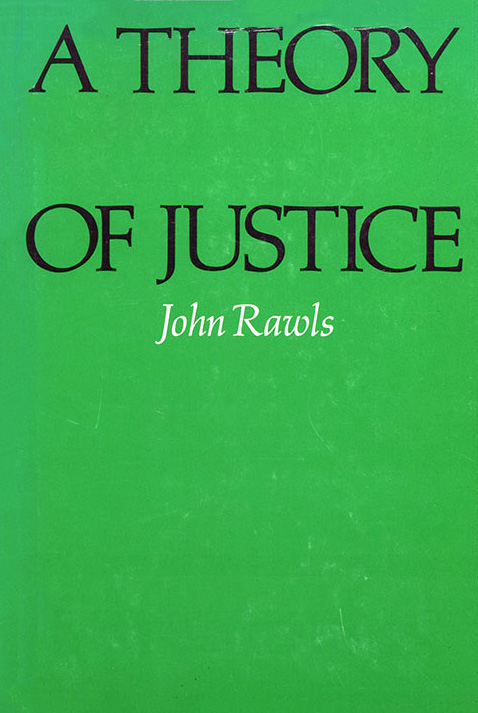
In his A Theory of Justice, John Rawls used a social contract argument to show that justice, and especially distributive justice, is a form of fairness: an impartial distribution of goods. Rawls asks us to imagine ourselves behind a veil of ignorance that denies us all knowledge of our personalities, social statuses, moral characters, wealth, talents and life plans, and then asks what theory of justice we would choose to govern our society when the veil is lifted, if we wanted to do the best that we could for ourselves. We do not know who in particular we are, and therefore can not bias the decision in our own favor. So, the decision-in-ignorance models fairness, because it excludes selfish bias. Rawls said that each of us would reject the utilitarian theory of justice that we should maximize welfare (see above) because of the risk that we might turn out to be someone whose own good is sacrificed for greater benefits for others. Instead, we would endorse Rawls's two principles of justice:
Each person is to have an equal right to the most extensive total system of equal basic liberties compatible with a similar system of liberty for all.
Social and economic inequalities are to be arranged so that they are both
Adapted from the Wikipedia article Justice, available under CC BY-SA 4.0.
Connections
Proposed by
1

Discussed in
4


Key contributors
1
You might also explore
 The AbsurdModern EuropeanThe clash between our longing for meaning and a silent universe.
 Virtue★Excellence of character — the core of Greek, Confucian and much later ethics.
 KarmaIndianIntentional action and its consequences, which shape future experience and rebirth.DharmaIndianDuty, law, cosmic order — and in Buddhism, the teaching and the elements of reality.
 Natural lawMedieval LatinMoral standards built into human nature and knowable by reason.
 AhiṃsāIndianNon-violence toward all living beings.